
Bangladesh and Netherlands Explore Trade, Teesta Project, Water Management and Economic Cooperation
Bangladesh Prime Minister Tarique Rahman meets Dutch Minister Sjoerd Sjoerdsma in Dhaka to discuss trade, water management, Teesta and investment.

Reporter · CSB News USA
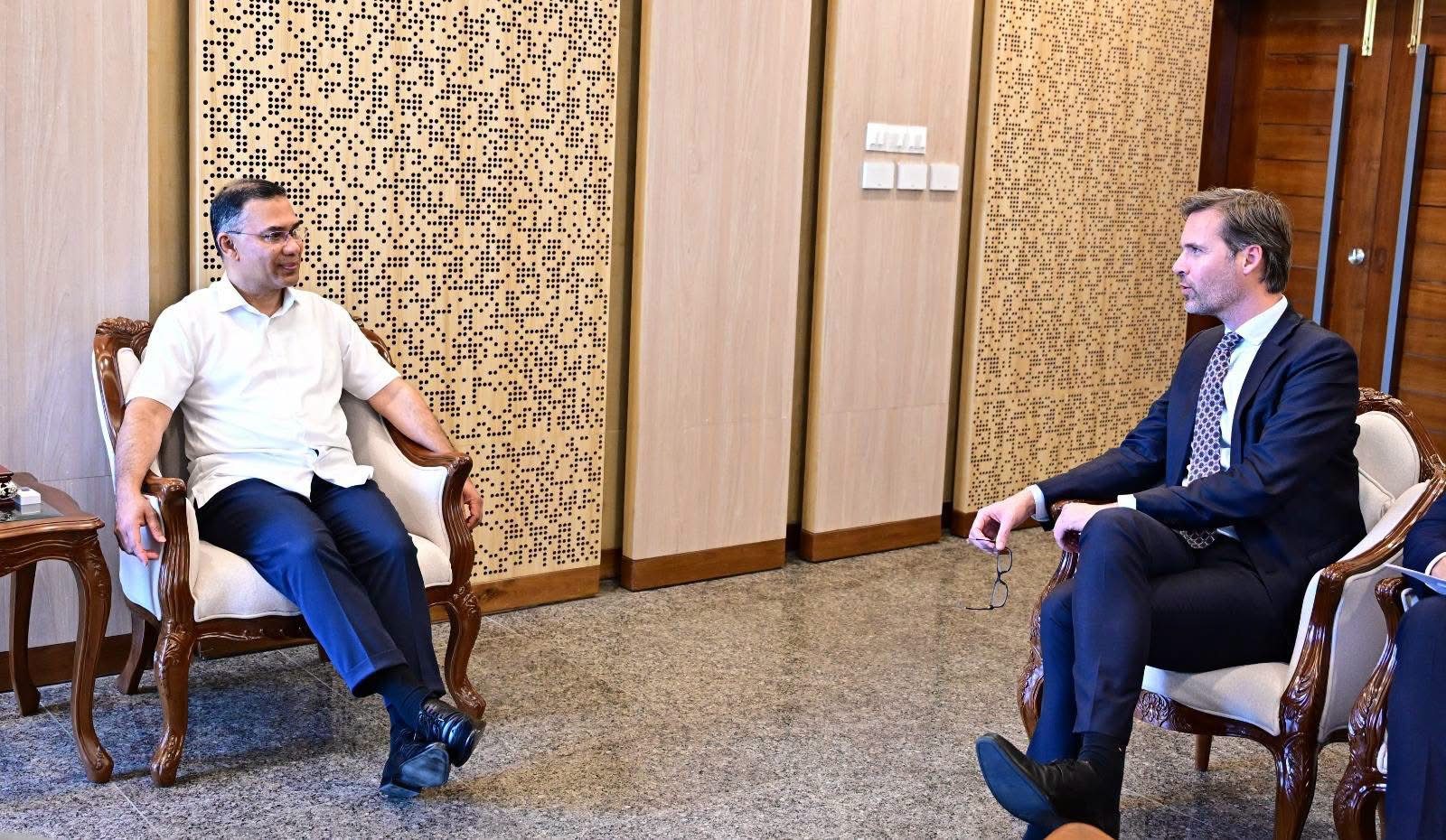
Bangladesh and the Netherlands have discussed expanding trade and investment, improving water management, strengthening maritime cooperation and exploring new economic opportunities during a high-level meeting in Dhaka. The talks also covered the proposed Teesta River project, Bangladesh’s trade relations with the European Union (EU), agricultural development, renewable energy and the continuing Rohingya crisis.
The meeting took place on Tuesday, October 13, 2026, at the Prime Minister’s Office at the Bangladesh Secretariat. Dutch Minister for Foreign Trade and Development Cooperation Sjoerd Sjoerdsma met Bangladesh Prime Minister Tarique Rahman as part of the Netherlands’ efforts to strengthen its partnership with Bangladesh.
Reports from The Business Standard, United News of Bangladesh (UNB) and Bangladesh Sangbad Sangstha (BSS) confirm the meeting and its main areas of discussion. The reports also identify the Teesta project and possible EU trade arrangements as important issues raised during the talks. Sources: The Business Standard, UNB, BSS.
Sjoerdsma said the two countries had an opportunity to strengthen their relationship through greater investment and closer cooperation. The discussions highlighted water resource management, the management of rivers that cross national borders, economic development and the exchange of technical knowledge.
Both countries have strong reasons to work together on these issues. Bangladesh is a densely populated delta country where river systems, flooding, erosion and climate change affect millions of people. The Netherlands has extensive experience in water engineering, flood protection, land reclamation and managing coastal areas. Cooperation could help Bangladesh explore new technical approaches to some of its long-standing environmental and infrastructure challenges.
One of the most important issues discussed was the proposed Teesta River project. Prime Minister Tarique Rahman welcomed the Netherlands’ interest in conducting a feasibility study and providing technical assistance and expertise for the project. A feasibility study can help determine whether a proposed project is technically practical, economically justified and environmentally sustainable before major investments are made.
The Teesta is an important river for northern Bangladesh, where water availability, irrigation, seasonal flooding and riverbank erosion affect agricultural production and livelihoods. Better river management could potentially support farming, improve water distribution and reduce some of the risks associated with floods and erosion. However, the scale of any benefits would depend on the project’s final design, funding, environmental assessment and cooperation among the relevant authorities.
The Netherlands’ experience in land reclamation and adaptive river management was another area of interest. Land reclamation involves creating or recovering usable land from water or wetlands through carefully planned engineering measures. In Bangladesh, where river erosion and shifting river channels regularly reshape landscapes, technical knowledge in this field may be useful. Any future programme would need to account for local ecosystems, community needs and the potential effects on river flows.
The discussions also addressed trade and investment, including the possibility of a free trade agreement between Bangladesh and the European Union. Bangladesh sought Dutch support in exploring this option and strengthening its access to European markets. The proposal is particularly important as Bangladesh prepares for the economic and trade adjustments associated with graduating from the least developed country category.
Bangladesh’s export sector relies heavily on international markets, especially for ready-made garments. Changes in trade preferences, tariffs and market access can affect the competitiveness of exporters. An agreement with the EU could create opportunities, but its terms, negotiating process and eventual implementation would determine the practical benefits for businesses.
A free trade agreement is not an agreement that can be concluded by the Netherlands alone on behalf of the entire EU. Any arrangement involving the EU would require the appropriate European and Bangladeshi negotiations and approval processes. The meeting therefore represents discussion of a possible trade pathway, not confirmation that a trade agreement has been signed or finalised.
The broader economic relationship also includes opportunities in agriculture, food processing, industrial modernisation, renewable energy and maritime transport. During a separate meeting on October 13, Commerce Minister Khandakar Abdul Muktadir discussed trade cooperation with Sjoerdsma, including Dutch support for agriculture, the jute industry, energy, port infrastructure and water management. The discussions show that the visit involved several areas of economic engagement beyond the Prime Minister’s meeting. Source: The Daily Star.
Agriculture could become an important area for practical cooperation. Dutch technology and research may help Bangladesh improve crop productivity, agricultural processing, storage and the quality of products intended for export. The two sides also discussed opportunities in the jute sector. With greater research, improved seeds and product development, Bangladesh could explore higher-value uses for jute, including environmentally friendly packaging and blended-fibre products.
Energy was another subject of discussion. Sjoerdsma reportedly asked about Bangladesh’s efforts to address its energy challenges and welcomed plans to expand renewable energy. Cooperation in solar power, energy efficiency and related technologies could help support industrial development and diversify the country’s energy sources. Any specific investment or project, however, would depend on future agreements and implementation plans.
Maritime development and port infrastructure also offer potential opportunities. Bangladesh’s ports are central to its export economy because they connect domestic manufacturers with international supply chains. Improvements in port operations, cargo handling, logistics and maritime transport could reduce delays and help businesses compete in overseas markets. Dutch technical expertise and investment could be relevant to these efforts, although the meeting reports do not establish that a new port project or investment contract was signed.
The Rohingya crisis was also discussed. Bangladesh continues to host Rohingya refugees who fled persecution and violence in Myanmar. A sustainable solution requires conditions that allow refugees to return voluntarily, safely and with dignity. Bangladesh has called for stronger diplomatic engagement and international support to address the underlying causes of the crisis. The issue remains an important part of its relations with international partners, including European countries.
The talks also touched on democracy and human rights. These issues form part of the wider political context of international cooperation, alongside trade, development and investment. Discussions in this area do not, by themselves, establish that new commitments or formal agreements were adopted.
Several senior officials attended the meeting, including Commerce Minister Khandakar Abdul Muktadir, Water Resources Minister Shahiduddin Chowdhury Anee, State Minister for Foreign Affairs Humayun Kabir, Prime Minister’s Adviser Mahdi Amin and Dutch Ambassador to Bangladesh Joris van Bommel, according to contemporaneous reporting by UNB. The presence of officials responsible for trade, water resources and foreign affairs reflected the broad range of issues under consideration.
Sjoerdsma also invited the Bangladeshi prime minister to visit the Netherlands, according to UNB. Such an invitation could provide an opportunity for further discussions, but no confirmed date for a visit was established in the reports reviewed.
The meeting comes as Bangladesh seeks new investment, stronger export opportunities and technical cooperation to support its development priorities. For the Netherlands, closer engagement offers opportunities to build economic ties while sharing expertise in water management, agriculture, infrastructure and climate adaptation.
The key question now is whether the discussions will lead to practical steps, such as a feasibility study for the Teesta project, technical cooperation programmes, new investment proposals or progress towards formal trade negotiations. Those developments would require further announcements and, where relevant, detailed agreements.
For now, the meeting is a confirmed diplomatic engagement with a wide-ranging agenda. It signals interest on both sides in expanding cooperation, but it should not be presented as evidence that a free trade agreement has been concluded, that the Teesta project has received final approval or that new investment commitments have already been secured.