Bangladesh Condemns Deadly Riyadh Airport Attack After Two Nationals Are Killed
Bangladesh condemns the deadly Riyadh airport attack that killed two citizens, expresses solidarity with Saudi Arabia, and demands civilian protection.

Desk Reporter
CSB News USA
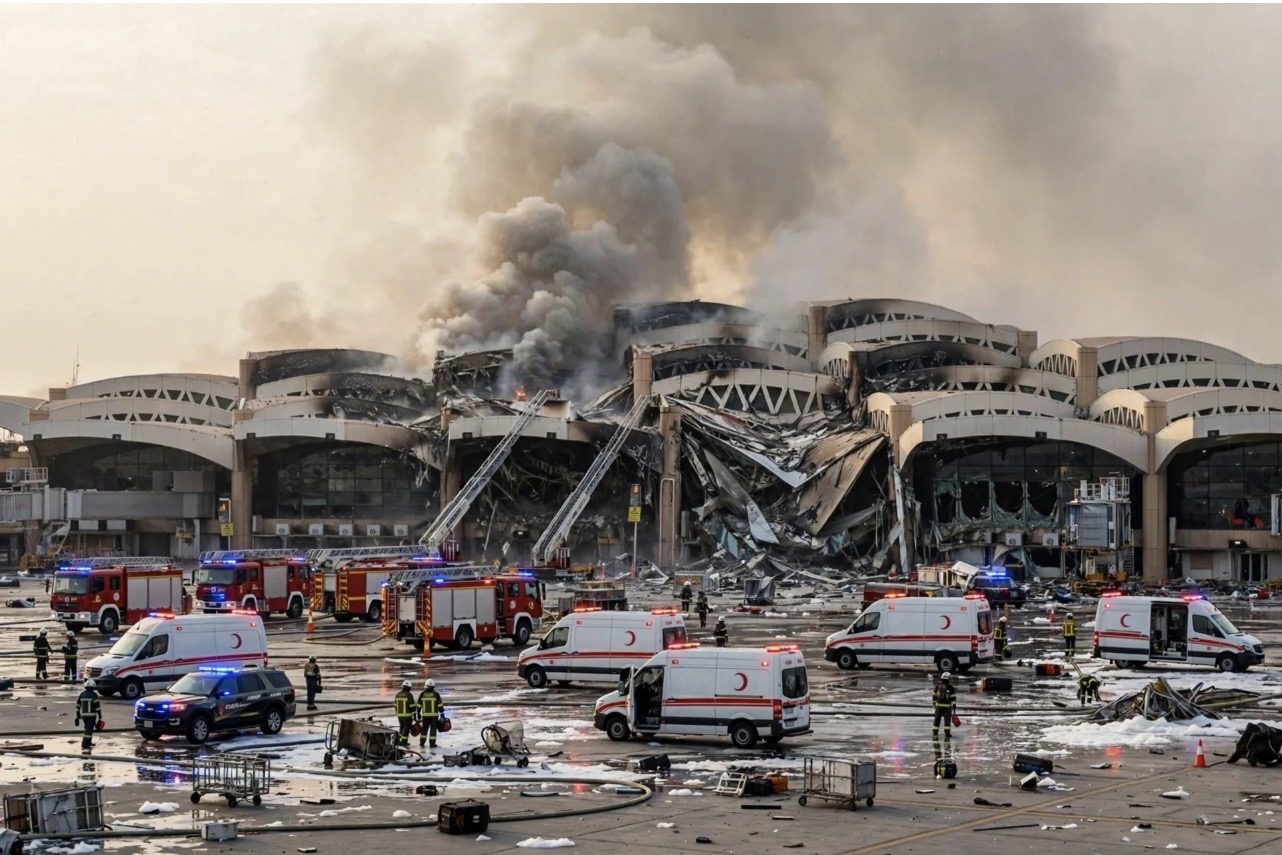
Bangladesh has strongly condemned the deadly attack on King Khalid International Airport in Riyadh, Saudi Arabia, that killed two Bangladeshi nationals and left hundreds of people injured. The attack, which took place on Saturday, October 10, has intensified concerns over civilian safety, regional security and the growing conflict involving Saudi Arabia and Yemen’s Houthi movement.
According to Saudi authorities, at least 12 people were killed and 309 others injured in the latest attack. The fatalities included four Saudi citizens, two Bangladeshis, and one citizen each from the United States, Jordan, Palestine, Syria, Sudan and Egypt. Several injured people were reported to be in critical condition, adding to the pressure on emergency services and hospitals in the Saudi capital.
Bangladesh’s Ministry of Foreign Affairs issued a statement on Sunday, October 11, expressing its strongest condemnation of the attack. The government described the loss of Bangladeshi lives as tragic and extended its deepest condolences and sympathies to the bereaved families. It also wished those injured a speedy and complete recovery.
The ministry stressed that attacks threatening civilian lives and targeting civilian infrastructure were unacceptable and must stop immediately. It reiterated Bangladesh’s solidarity with the government and people of Saudi Arabia, a country with which Bangladesh maintains longstanding diplomatic, economic and people-to-people ties.
Bangladesh’s diplomatic mission in Riyadh is in contact with Saudi authorities to establish further details about the deceased and injured Bangladeshi nationals and to help facilitate necessary assistance for those affected. As of Sunday, publicly available reports had not provided complete details about the victims’ identities, hometowns or family circumstances. Those details should be confirmed by the relevant authorities before being reported as established facts.
The attack occurred at King Khalid International Airport, one of Saudi Arabia’s principal aviation hubs, serving Riyadh and its surrounding region. Reports from international news agencies said the incident forced authorities to suspend airport operations temporarily while emergency responders attended to casualties and officials assessed the security situation.
Witness accounts described a sudden explosion, injured people inside the airport and ambulances rushing to the scene. The incident disrupted air travel and prompted airlines and aviation authorities to reassess operations. Travellers were advised to check with their airlines before travelling to the airport because flight cancellations, diversions and further delays remained possible.
The latest incident followed two earlier attacks on the same airport during the week. Saudi aviation authorities reported that those incidents had caused additional fatalities and injuries, while a commercial aircraft belonging to Saudi carrier Saudia was also severely damaged in an earlier incident. The repeated attacks have raised questions about the security of civilian aviation facilities and the risks faced by passengers, airport employees and other workers.
The attacks have taken place amid a renewed escalation in the conflict involving Saudi Arabia and Yemen’s Houthi movement. The Houthis, who are backed by Iran, have expanded their campaign against Saudi targets as fighting in Yemen has intensified. Reuters reported that the Houthis claimed responsibility for the latest strike, although some early reports initially noted that responsibility had not immediately been established. The circumstances and precise sequence of events should therefore be understood in the context of evolving official statements.
The conflict has broader regional implications. Saudi Arabia has supported Yemen’s internationally recognised government in its long-running conflict with the Houthis. The renewed fighting has increased concerns about missile attacks, the safety of civilian infrastructure and the possibility that the conflict could spread further across the region.
The airport attack has also disrupted international travel at a time when Riyadh is preparing to host major energy and investment gatherings. Aviation interruptions can affect migrant workers, business travellers, religious pilgrims and families travelling between Saudi Arabia and other countries. For Bangladesh, whose citizens form a significant part of the migrant workforce in the kingdom, reliable flight information and consular assistance are particularly important.
Bangladesh’s response emphasised diplomacy rather than further escalation. The government called for an immediate cessation of hostilities, protection of civilians and civilian infrastructure, and a peaceful resolution through dialogue and diplomatic engagement. Its statement highlighted the importance of regional peace, security and stability.
The deaths of the two Bangladeshi nationals have brought the consequences of the escalating conflict into sharp focus for families in Bangladesh. Many Bangladeshis live and work in Saudi Arabia, making the safety of airports, roads, workplaces and other public facilities a major concern for the country.
The immediate priorities are to confirm the identities of the Bangladeshi victims, provide appropriate assistance to affected families, establish the condition of any injured citizens and ensure that travellers receive accurate information about flight disruptions. Saudi authorities and Bangladesh’s diplomatic mission will be central to those efforts.
The reported death toll and injury figures reflect information available on October 11 and could change as authorities update their assessments. The incident underscores the urgent need to protect civilians, prevent attacks on civilian infrastructure and pursue a diplomatic solution to the wider conflict. Bangladesh has made clear that civilian casualties are unacceptable and that regional stability must remain a priority.