IMF Warns Middle East and Central Asia Economy Could Shrink 0.3% in 2026
The IMF warns that war and Strait of Hormuz shipping disruptions could push the Middle East and Central Asia into economic contraction in 2026, with Gulf economies facing severe downturns.

Desk Reporter
CSB News USA
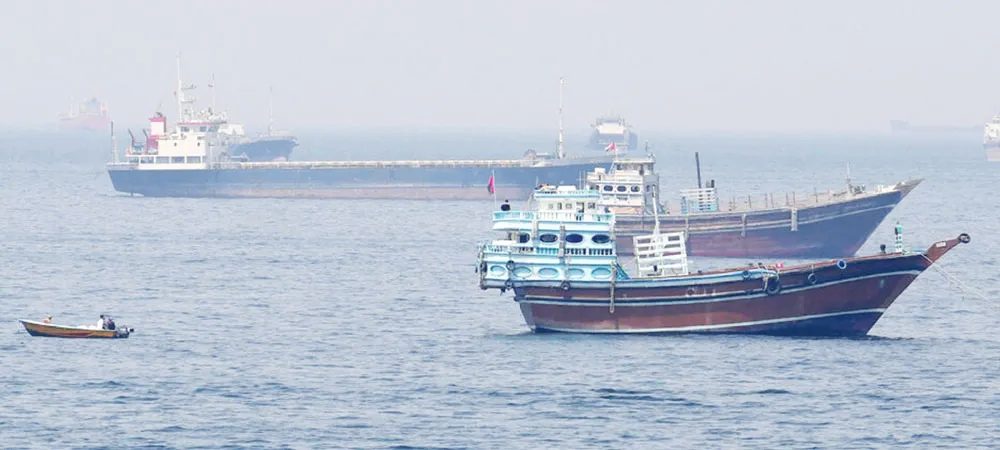
The International Monetary Fund (IMF) has warned that the economy of the Middle East and Central Asia could contract in 2026 as prolonged conflict and disruptions to energy shipments through the Strait of Hormuz place mounting pressure on regional economic activity.
According to the IMF’s latest World Economic Outlook, released on October 13, the region’s gross domestic product (GDP) is projected to shrink by 0.3% this year. The forecast marks a sharp reversal from the 1.9% economic growth projected in April, highlighting the increasingly severe economic consequences of the conflict.
The Strait of Hormuz, a critical maritime passage connecting the Persian Gulf with international shipping routes, is central to the region’s economic outlook. Before the conflict, approximately one-fifth of global oil supplies passed through the strait. Prolonged disruption to shipping has affected energy exports and increased uncertainty for governments and businesses that depend heavily on oil and gas revenues.
The consequences could be particularly severe for several Gulf economies. The IMF’s latest projections indicate that Kuwait’s economy could contract by 16.7% in 2026, while Iraq could experience a 16% contraction. Qatar’s GDP is forecast to decline by 15.6%, and Bahrain’s economy could shrink by 11.3%. Iran’s economy is also projected to contract by 7.6%.
Saudi Arabia, the region’s largest economy, is facing a significant downward revision as well. The IMF now expects the kingdom’s economy to contract by 3.3% in 2026, compared with an earlier forecast of 1.7% growth in July. The country has sought to offset some of the disruption to its energy sector by increasing oil exports through its East-West pipeline, which provides an alternative route that bypasses the Strait of Hormuz.
The scale of the projected downturn reflects the vulnerability of energy-dependent economies to prolonged disruptions in production, transportation and international trade. When oil and gas shipments are interrupted, exporting countries can lose significant revenue, while uncertainty can discourage investment and complicate government spending plans. The impact may also extend to businesses and households through higher energy costs, inflationary pressures and weaker economic confidence.
However, the outlook is not equally negative across the entire region. The IMF projects that Kyrgyzstan’s economy will expand by 9% in 2026, making it one of the strongest performers in the regional forecast. This contrast illustrates how countries’ economic structures, trade links and exposure to the conflict can produce sharply different outcomes.
The projected regional contraction also stands in contrast to the broader global outlook. The IMF expects the world economy to grow by 3.1% in 2026, slightly above its previous forecast of 3%. Strong investment in artificial intelligence infrastructure and other sources of economic resilience have helped support global growth, even as geopolitical tensions and elevated energy prices create significant risks.
Nevertheless, the IMF has cautioned that the global economy remains vulnerable to further escalation of conflicts, renewed trade tensions, fiscal pressures and a possible reassessment of expectations surrounding artificial intelligence investment. A prolonged energy shock could intensify inflation and weaken economic activity, particularly in countries already facing financial and structural challenges.
The IMF’s projections also depend on assumptions about the future of maritime transport. According to Reuters’ report on the outlook, the baseline forecast assumes that the Strait of Hormuz will reopen in March 2027, with shipping conditions broadly returning to their pre-war state by October 2027. If the conflict worsens or the disruption lasts longer than expected, the economic consequences could be more severe.
A recovery in regional growth therefore remains possible, but it is not guaranteed. The timing and strength of any rebound will depend on developments in the conflict, the restoration of reliable shipping routes, the recovery of energy production and the ability of governments to stabilize their economies.
The IMF’s latest assessment underscores how a prolonged regional conflict can extend far beyond the battlefield, affecting oil markets, trade flows, government revenues and economic prospects across multiple countries. For the Middle East and Central Asia, the coming months will be critical in determining whether the projected contraction remains limited or develops into a deeper and more prolonged economic downturn.