Judge Orders Trump Administration to Halt Taxpayer-Funded Ads Ahead of Midterm Elections
A federal judge temporarily blocked taxpayer-funded television ads featuring Donald Trump, as lawsuits challenge their legality before November’s midterm elections.

Desk Reporter
CSB News USA
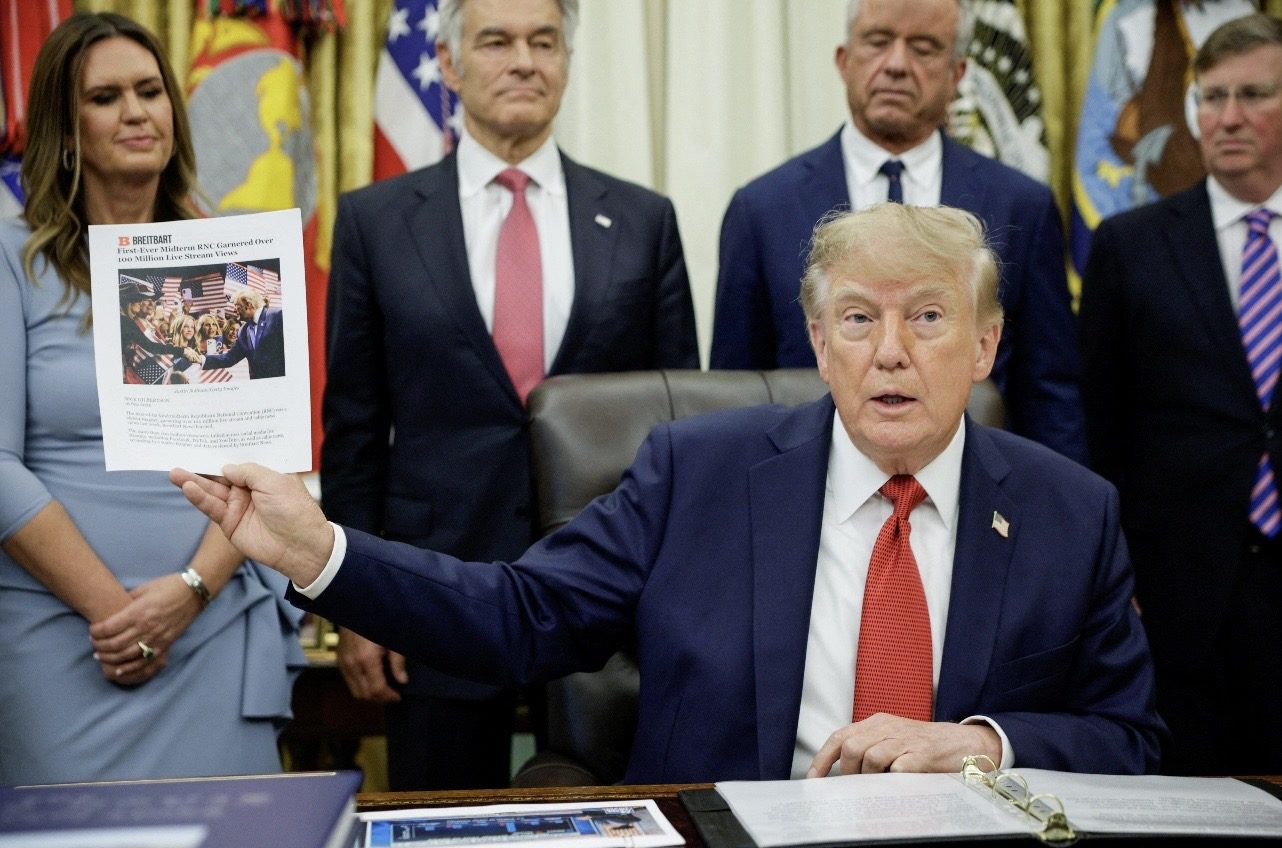
A federal judge has ordered the Trump administration to stop airing taxpayer-funded television advertisements featuring President Donald Trump, intensifying a legal and political controversy over the use of public money ahead of the November 3 midterm elections. The temporary restraining order, issued on Sunday, October 11, requires the administration to cancel any remaining advertisements covered by the lawsuit and restricts new or expanded agreements involving the disputed campaign for two weeks.
U.S. District Judge Jennifer L. Rochon, based in New York, issued the order after considering a lawsuit brought by a coalition that includes Common Cause, a nonpartisan government watchdog. The plaintiffs argue that the advertisements go beyond legitimate public information campaigns and instead promote Trump’s political message using money collected from taxpayers. Their case raises questions about federal spending rules and whether government resources may be used in ways that could benefit a political party before an election.
According to reporting by Reuters and The Associated Press, the Department of Homeland Security allocated $20 million for the advertising campaign. The money was drawn from funds associated with U.S. Customs and Border Protection. A court filing cited by CNN indicated that approximately $19 million had already been spent by October 11. The distinction is important: $20 million was allocated for the campaign, while the reported $19 million represents money already spent, not the total amount necessarily paid under every related contract.
The advertisements began airing in late September and appeared during prominent television programming, including football broadcasts and “Saturday Night Live.” They highlighted Trump, his administration’s policies and his political message. The advertisements also included statements identifying the U.S. government as their funding source.
The plaintiffs contend that the campaign amounted to political propaganda rather than a conventional public-service initiative. They argue that federal money must be spent for purposes authorized by Congress and that public funds cannot be used for unauthorized political publicity. In their view, promoting a president’s political image in the weeks before congressional elections risks giving the governing party an advantage that privately funded campaigns must otherwise pay for themselves.
The judge’s order represents a significant procedural development, but it does not constitute a final ruling that the administration has definitively broken the law. The court granted temporary relief while the litigation proceeds. The plaintiffs have argued that they are likely to succeed on the merits, that they could suffer irreparable harm without an injunction and that stopping the disputed spending serves the public interest. Those findings support the temporary order but do not resolve every legal question raised by the case.
The administration has defended the advertisements as public-service announcements intended to communicate government policies and promote the country’s interests. Officials have argued that previous administrations, from both major political parties, used taxpayer-funded advertising to explain government programs and policy priorities. The central legal dispute is whether the content and purpose of these particular advertisements fall within legitimate government communications or cross the line into political promotion.
The court intervened even though the administration had already indicated that the advertising campaign was scheduled to end on Sunday. In a filing, the Justice Department argued that an emergency order was unnecessary because the campaign was due to conclude. Judge Rochon nevertheless ordered the government to cancel any remaining advertisements, including those scheduled to air that evening, and barred the defendants from entering, renewing or expanding agreements authorizing the development, placement or broadcast of the challenged advertisements during the two-week period.
The controversy has also drawn criticism beyond the plaintiffs who filed the New York case. Questions have been raised about whether the spending was appropriate, particularly because the advertisements appeared during a politically sensitive period. Critics say that public money should not be used to create an advantage for the president’s party. Supporters of the administration, however, maintain that communicating government priorities to the public is a legitimate function of the executive branch.
Trump has said that future advertising of this kind would be funded through his political fundraising operation rather than taxpayer money. However, the administration has not committed to reimbursing the government for the millions of dollars already spent on the disputed advertisements. That leaves a separate question about accountability for past spending, even if the campaign no longer continues with public funding.
The New York lawsuit is not the only legal challenge. The Democratic National Committee filed a separate case in federal court in Washington, arguing that the administration’s use of taxpayer money for the advertisements violates restrictions on government-funded publicity and unauthorized expenditures. The separate litigation could broaden scrutiny of how the administration financed and approved the campaign.
A hearing in the New York case was scheduled for October 13 to consider the next steps, according to Axios. The proceedings could clarify the scope of the restrictions and the legal arguments on both sides. The administration may continue to defend its spending decisions, while the plaintiffs are expected to press their claims that the campaign lacked proper authorization.
The broader implications extend beyond this particular advertising campaign. Federal agencies routinely use public funds to inform residents about government services, security measures and policy changes. But when advertisements prominently feature a sitting president and echo political campaign messaging, questions about their purpose, authorization and timing become more significant.
For now, the court’s order temporarily blocks further taxpayer-funded promotion covered by the case. It does not establish that the advertisements changed voters’ decisions or that every dollar spent was unlawful. Those conclusions would require additional evidence and legal findings. The eventual outcome may influence how future administrations distinguish public-service announcements from political messaging and how federal advertising budgets are monitored during election periods.
With the midterm elections approaching, the dispute has placed government spending, political neutrality and public accountability under renewed scrutiny. The decisive questions will be whether the administration had lawful authority to finance the advertisements, whether their purpose was consistent with federal spending restrictions and whether the court will extend or modify its temporary order as the case progresses.
Related News

Trump’s Russia Diesel Deal Faces Legal Challenge From Seven Bipartisan US Senators
Trump Urges Democratic Senator Fetterman to Join the Republican Party Ahead of Midterms
Trump Says Russia Agrees to Supply Over 300,000 Tons of Diesel to the US