

If Sheikh Hasina Returns to Bangladesh, Could Her Death Sentence Actually Be Carried Out Under Law?
Sheikh Hasina has expressed her intention to return to Bangladesh, where she faces a death sentence handed down by the International Crimes Tribunal. But could the sentence actually be carried out if she returns? Bangladesh’s laws, constitutional provisions and international precedents offer important context.

CSB News USA
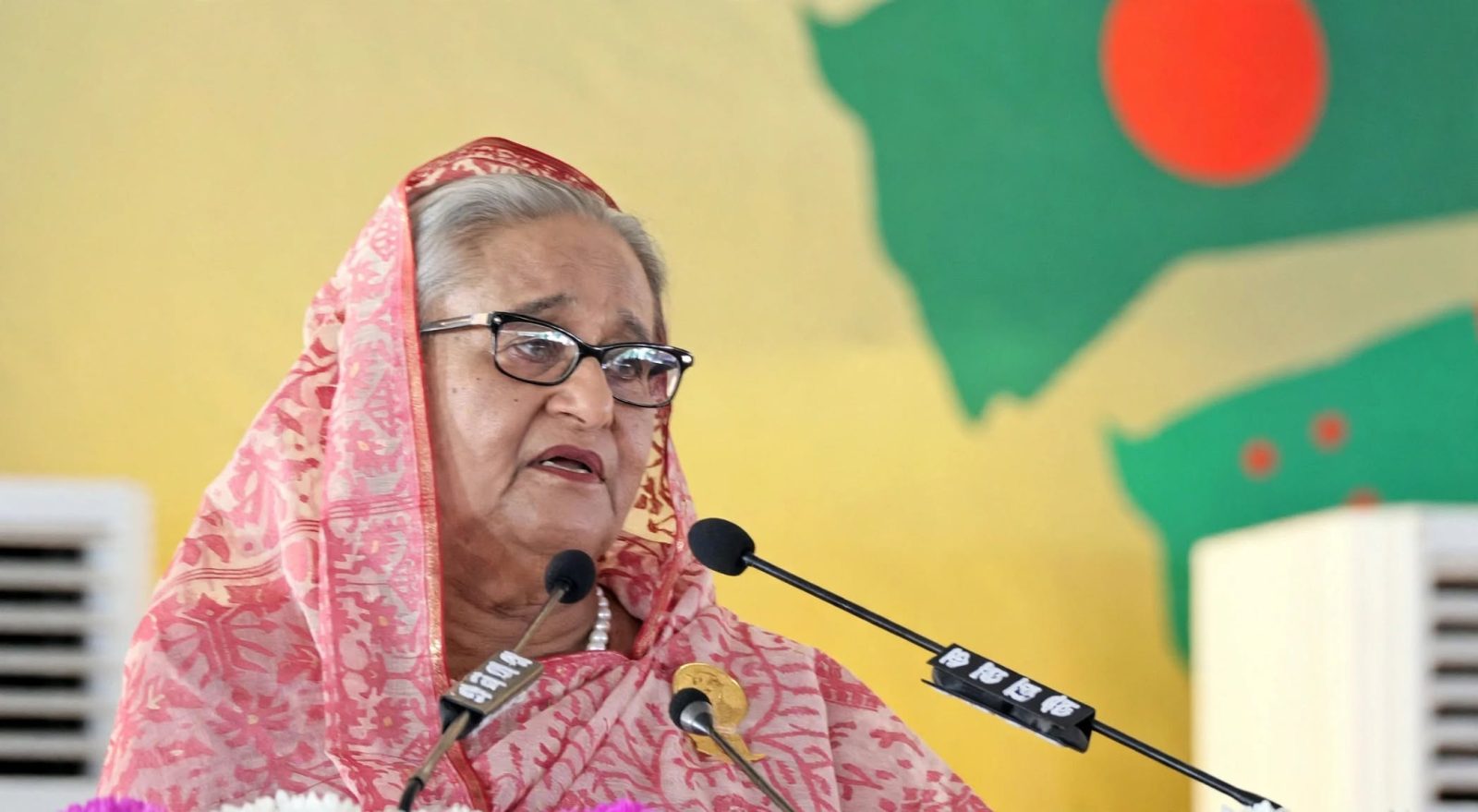
The possible return of former Bangladesh Prime Minister Sheikh Hasina has sparked renewed debate over her legal future, particularly the death sentence imposed on her by Bangladesh’s International Crimes Tribunal.Hasina left Bangladesh on August 5, 2024, following the student-led mass uprising that ended her 15-year rule. She subsequently travelled to India, where she has remained.
On November 17, 2025, Bangladesh’s International Crimes Tribunal sentenced her to death in absentia after finding her guilty of crimes against humanity related to the violent crackdown on protesters during the July–August 2024 uprising.Hasina has rejected the allegations and questioned the legitimacy of the proceedings.
Reports published on November 5, 2026, indicated that Hasina had expressed an intention to return to Bangladesh in December. However, no confirmed date for her return has been announced.
Her possible return has raised several important questions: Could she be arrested immediately? Would she have an opportunity to appeal? Could the death sentence be carried out? And have other countries executed former heads of state following criminal convictions?
What Could Happen If Hasina Returns?
If Sheikh Hasina returns to Bangladesh, the authorities could take legal action against her under the existing court orders and applicable laws.Her return would not automatically mean that the death sentence would be carried out immediately.
The authorities would have to address the legal status of the existing judgment, any available judicial remedies and the relevant constitutional procedures.
There is an important distinction between returning to the country, being arrested and having a death sentence executed. These are separate legal stages.
Would She Have the Right to Appeal?
One of the most significant legal questions concerns the possibility of an appeal.Under Section 21 of Bangladesh’s International Crimes (Tribunals) Act, 1973, a person convicted by the tribunal has the right to appeal to the Appellate Division of the Supreme Court within 30 days of the judgment.The law also establishes a strict time limit for filing an appeal.
Because Hasina was convicted in absentia and did not file an appeal within the prescribed period, the question of whether she could obtain any further judicial remedy has become controversial.
On September 7, 2026, the chief prosecutor of the International Crimes Tribunal, Mohammad Aminul Islam, reportedly stated that Hasina had lost the opportunity to appeal because the 30-day deadline had expired.
However, questions concerning delayed appeals and other possible legal remedies may still arise if she returns and appears before the relevant authorities.Ultimately, the interpretation of the applicable law and any decision by the Supreme Court would be crucial.
Can the President Pardon Her?
Bangladesh’s Constitution provides the president with the power to grant pardons and to suspend, remit or commute sentences.Article 49 of the Constitution establishes this authority.
This means that, under the constitutional framework, a death sentence may be subject to the president’s clemency powers.However, such relief is not automatic. It would depend on the applicable constitutional and administrative procedures.
Can India Be Required to Send Her Back?
India's role is another important factor in Hasina's possible return.Bangladesh and India signed an extradition treaty in 2013, which was amended in 2016.
Under the agreement, both countries can request the extradition of individuals facing criminal proceedings or convictions, subject to the treaty's provisions and applicable legal conditions.
Bangladesh has previously made a formal request to India for Hasina's return.However, India has not handed her over.On November 5, 2026, Bangladesh's State Minister for Foreign Affairs, Humayun Kabir, reportedly stated that the government intended to pursue her return under the existing extradition agreement rather than through ordinary passport or travel-document arrangements.
The outcome will depend on legal and diplomatic developments between the two countries.
Global Precedents: Former Leaders Who Faced Execution
History provides several examples of former national leaders who were prosecuted and executed after losing power.
Although these cases offer historical context, they do not automatically determine the legal outcome of Hasina's case.
1. Saddam Hussein – Iraq Former Iraqi president
Saddam Hussein remains one of the most widely discussed examples of a former head of state receiving the death penalty.His government was overthrown in 2003 following the US-led invasion of Iraq. He was subsequently captured and put on trial.
An Iraqi special tribunal convicted him in connection with the killings in Dujail and sentenced him to death for crimes against humanity.The verdict was upheld on appeal.
On December 30, 2006, Saddam Hussein was executed by hanging.His trial, however, attracted international criticism over questions of judicial independence, procedural fairness and the protection of the defendant's rights.
2. Nicolae Ceausescu – Romania Former Romanian president
Romanian President Nicolae Ceausescu was removed from power during the Romanian Revolution of 1989.He and his wife, Elena Ceausescu, were arrested and tried before a military tribunal on December 25, 1989.
Following a brief trial, both were sentenced to death and executed by firing squad on the same day.The proceedings later became controversial because of concerns about due process, the limited opportunity for defence and the fairness of the trial.
3. Bashar al-Assad – Syria Former Syrian president
The legal and political situation surrounding former Syrian President Bashar al-Assad has also attracted international attention.Following the collapse of his government in December 2024, Assad fled to Russia.
Reporter
CSB News USA
Related News
Bangladesh Forms Wage Board as Garment Protests Shut 529 Factories Nationwide Today

From Technology Entrepreneur to Industry Leadership: Faisal Salam Elected BACCO Director

I-Global Services Signs MoU with Sri Lanka’s IIT to Expand Global Education Opportunities

Comments 0
Log in or create a free account to join the conversation. You can comment anonymously.
No comments yet. Be the first.