

Palestinian American Aber Kawas Makes History With New York State Senate Victory
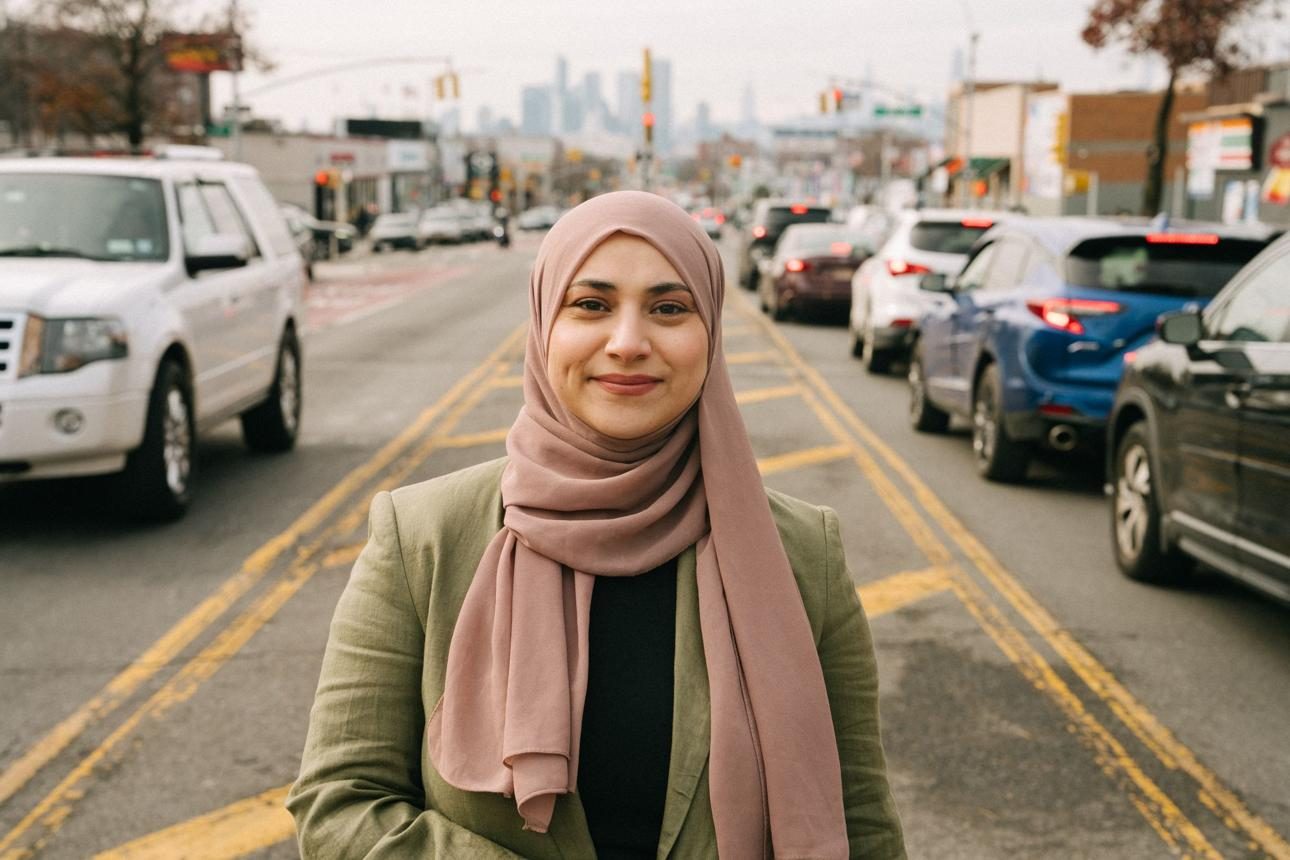
Palestinian American Aber Kawas wins New York’s 12th Senate District, marking a historic breakthrough for Palestinian and Muslim women in American politics.

Reporter · CSB News USA
3,458 views 7 min read
Listen to this article7 min
Kawas defeated Republican candidate Han Khon To in the November 3, 2026, general election. The victory makes her the first Palestinian American elected to the New York State Legislature. She is also being recognized as the first woman wearing a hijab to serve in the state's legislature, according to reports published after the election.
The result is particularly significant for Palestinian American and Muslim communities, which have long sought greater representation in American political institutions. Kawas's victory also highlights the growing influence of grassroots political movements and immigrant communities in local and state elections.
According to preliminary results published by the New York State Board of Elections, Kawas received 47,294 votes, while her Republican opponent Han Khon To received 16,165 votes. The official election website listed her share at 70.13 percent and To's at 23.97 percent in its reported results. The figures may be updated as election authorities complete their final certification process.
The election was held as part of the November 3 United States midterm elections. Voters across the country participated in races for congressional seats, state legislatures and other public offices. New York's 12th State Senate District attracted particular attention because of Kawas's background, political platform and historic candidacy.
Born and raised in New York City, Kawas is the daughter of Palestinian parents who came to the United States. Her family's experience with the immigration system played an important role in shaping her political interests. She has spoken publicly about the impact of immigration enforcement on her childhood, including the detention and deportation of her father by United States immigration authorities.
That experience influenced her decision to become involved in community organizing and advocacy. Rather than entering electoral politics immediately, she spent more than 15 years working with immigrant communities, low-income families, workers and civil rights organizations.
Her work included campaigns for better wages, stronger protections for immigrant families, economic equality and greater accountability in policing. She also became involved in advocacy concerning Palestinian rights and the treatment of Palestinian communities.
Kawas's political career took a major step forward on June 23, 2026, when she won the Democratic Party primary for State Senate District 12. She defeated Democratic Assemblymember Steven Raga, receiving approximately 60.3 percent of the vote, compared with Raga's 39.3 percent.
That primary victory was an important turning point. In a district where Democratic voters hold a significant advantage, winning the party nomination gave Kawas a strong position heading into the general election.
Her campaign also attracted support from prominent progressive political figures and organizations. New York City Mayor Zohran Mamdani, Senator Bernie Sanders and Congresswoman Rashida Tlaib were among the political figures associated with support for her campaign. The Democratic Socialists of America also backed her candidacy.
Kawas will represent the 12th State Senate District, which covers several communities in western and northwestern Queens, New York City. These include Astoria, Long Island City, Sunnyside, Woodside, Jackson Heights, Ridgewood, Maspeth, Elmhurst and Glendale.
The district is home to people from different ethnic, cultural and religious backgrounds. Immigrant families, working-class residents and small-business owners make up an important part of the local population. Many residents face challenges involving housing costs, transportation, healthcare, employment and immigration policies.
Kawas has made these issues central to her political agenda. Her campaign slogan, “Fund Dignity, Fight Destruction,” reflected her promise to prioritize the everyday needs of working families while challenging policies she believes harm vulnerable communities.
Affordable housing was one of the major issues in her campaign. New York City is among the most expensive places to live in the United States. Rising rents, housing shortages and the increasing cost of everyday necessities have placed considerable pressure on families. Kawas has supported stronger tenant protections, more affordable housing and policies designed to make living in New York financially sustainable for ordinary residents.
Healthcare was another important part of her platform. She has advocated for broader access to healthcare services and policies that would reduce the financial burden on families seeking medical treatment. Her campaign also emphasized the need for reliable and affordable public transportation, an issue that directly affects thousands of workers who travel daily across Queens and other parts of New York City.
Immigration rights have remained central to her political identity. Having experienced the consequences of immigration enforcement within her own family, Kawas has consistently advocated for immigrant communities. She has supported stronger protections for immigrant families and greater access to legal assistance for people facing immigration-related challenges.
Her political work has also included criticism of police surveillance and practices that she believes disproportionately affect minority communities. She has argued that public safety policies should respect civil liberties and protect the rights of all residents, regardless of their background or immigration status.
Another significant part of her political platform concerns Palestine. Kawas has publicly advocated for Palestinian rights and criticized American financial and political support for Israeli military actions. She has also been associated with the Not On Our Dime campaign, an initiative seeking to prevent New York-based tax-exempt organizations from supporting Israeli settlement activities in occupied Palestinian territories.
Her position on Palestine has attracted both strong support and criticism. Supporters see her as an important voice for Palestinian rights in American politics, while critics have questioned aspects of her political positions. Nevertheless, the issue has remained a prominent part of her public advocacy.
Kawas's victory is also significant because it demonstrates how community organizing can become a pathway to political leadership. For many years, she worked outside elected office, helping organize campaigns and advocating for communities that often feel underrepresented in government. Her successful election campaign shows how those relationships can translate into electoral support.
Her victory also comes at a time when Muslim American and Palestinian American participation in politics is receiving increased national attention. Across the United States, candidates from immigrant and minority backgrounds are seeking elected office and raising issues that directly affect their communities.
There is an important distinction in describing Kawas's historic achievement. New York already had a Muslim member of its State Senate, Robert Jackson, who made history in 2018 as the first Muslim elected to that chamber. Therefore, describing Kawas as the first Muslim person ever elected to the New York State Senate would be inaccurate. Her more specific distinction is that she is the first Palestinian American elected to the New York State Legislature and the first hijab-wearing woman to serve there. Reports have also described her as the first Palestinian Muslim woman elected to the legislature.
The New York State Senate is based in Albany, the state capital. It is different from the United States Senate in Washington, D.C. State senators represent individual districts and participate in making laws governing matters such as education, housing, healthcare, transportation, public safety and state spending.
Kawas's election means that residents of western Queens will have a new representative in the state legislature. She is expected to take office in January 2027 as part of the incoming legislative class. Her responsibilities will include representing district residents, participating in legislative debates, voting on state laws and working with other elected officials on local priorities.
For Palestinian Americans, the election carries significance beyond the boundaries of Queens. Her success provides a new example of someone with Palestinian family roots reaching an important elected position in American government. It may also encourage more young people from immigrant and minority communities to participate in public service and electoral politics.
For Muslim women, particularly women who wear the hijab, her election is another important moment of visibility in a political environment where representation has often been limited. Her achievement challenges the idea that cultural or religious identity should prevent someone from participating fully in public leadership.
Kawas also faces considerable expectations. Winning an election is only the beginning of the responsibility that comes with public office. Residents will be looking for practical progress on housing affordability, healthcare access, public transportation, workers' rights and immigrant protections.
Her ability to turn campaign promises into legislation and meaningful improvements will determine how her political career develops in the coming years. She will also need to work with colleagues who may hold different political views and navigate the complex process of passing legislation in Albany.
For now, her victory has already secured an important place in New York's political history. A community organizer born and raised in New York to Palestinian parents has won a state Senate seat after years of grassroots advocacy and a successful election campaign.
Following the announcement of her victory, Kawas shared a brief message on social media: “We made history.” The message reflected the significance of the result for her supporters and the communities that stood behind her campaign.
Her election is not only a personal political achievement but also a milestone for Palestinian American representation. As she prepares to begin her work in the New York State Senate, many residents and supporters will be watching to see how she uses her new position to address the challenges facing their communities.
Related News

White House Reminds Americans ‘Trump Is Still Your President’ After Election Defeat
New York Mayor Mamdani Threatens Legal Action Against ICE Over Use of City Parking Lots

Texas Voters Await Governor Results as Abbott Seeks Fourth Term Against Hinojosa
Comments 0
Log in or create a free account to join the conversation. You can comment anonymously.
No comments yet. Be the first.