

Bangladesh Forms Wage Board as Garment Protests Shut 529 Factories Nationwide Today
Bangladesh forms a six-member wage board as garment workers demand higher pay, while protests disrupt 529 factories and threaten major export shipments.

Reporter · CSB News USA
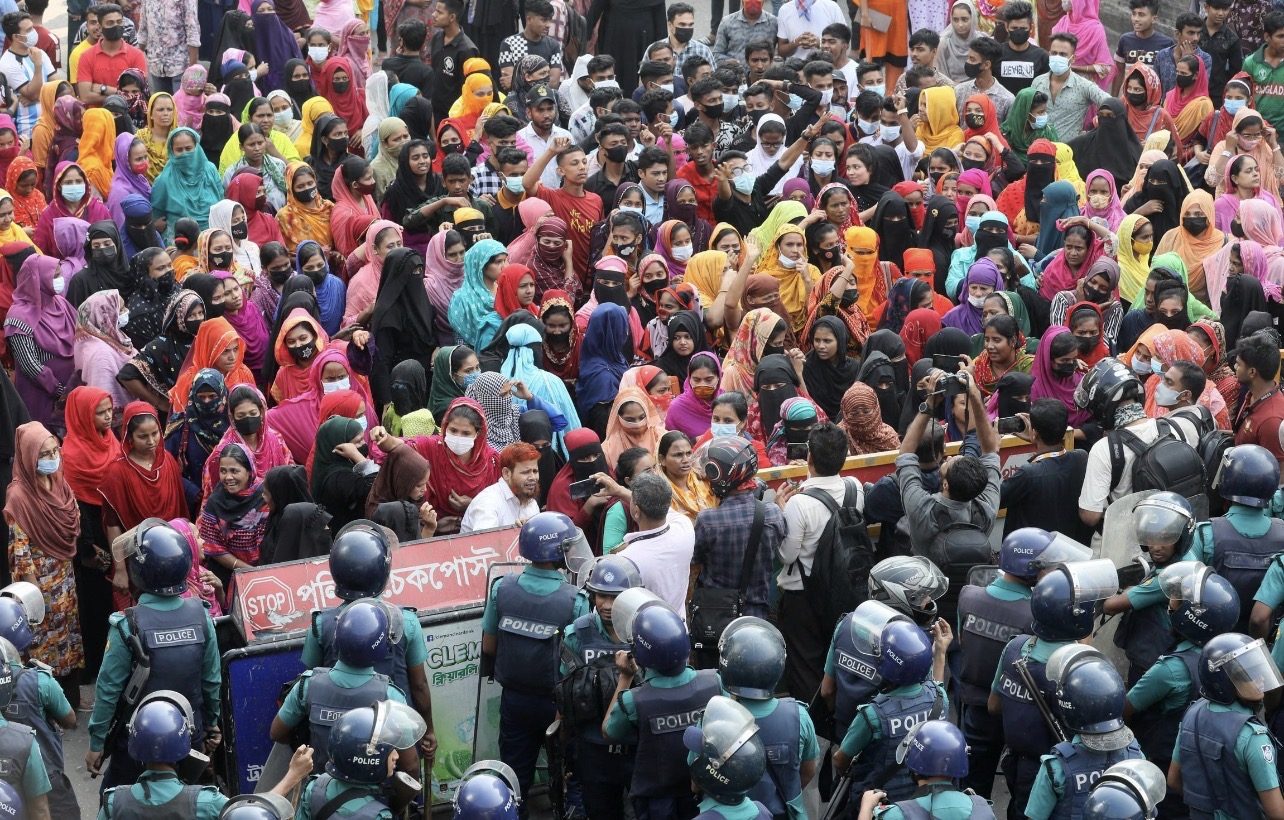
Bangladesh has formed a six-member wage board to review the minimum wages of garment workers after widespread protests disrupted production at 529 factories across the country’s major industrial areas. Thousands of workers took to the streets on Sunday, November 1, demanding a minimum monthly salary of 30,000 taka, more than double the current minimum wage of 12,500 taka.
The announcement came as tensions continued in Dhaka, Gazipur, Savar and Ashulia, where workers blocked major roads and highways, disrupting traffic and industrial activities. Police used tear gas and water cannons to disperse demonstrators in some areas after clashes broke out. Authorities also deployed members of the Border Guard Bangladesh to help maintain order.
According to the Bangladesh Garment Manufacturers and Exporters Association (BGMEA), labour unrest affected 529 garment factories on Sunday. The disruption left approximately 987,190 workers away from their workplaces across the country’s major industrial hubs.
The figures highlight the growing pressure on Bangladesh’s garment industry, which is one of the country’s most important sources of employment and foreign currency. The sector employs approximately four million people and accounts for more than 80 percent of Bangladesh’s export earnings.
Workers say their current salaries are no longer sufficient to cover the rising costs of everyday necessities. Food, house rent, transportation, medical expenses and children’s education have become increasingly difficult to afford, particularly for employees supporting families on minimum wages.
Many workers argue that their monthly earnings have failed to keep pace with the rising cost of living. They say that after paying rent and other essential bills, very little money remains for food, healthcare and education.
One garment worker, Mahin Hossain, told Reuters that the rising cost of living had increased far beyond workers’ incomes. He explained that many employees were struggling to support their families after paying rent and other necessary expenses.
Workers are therefore demanding that the government raise the minimum monthly wage from 12,500 taka to 30,000 taka. Their proposed increase represents a substantial change in the existing wage structure and has become the central issue behind the latest demonstrations.
Labour and Employment Minister Ariful Haque Choudhury announced the formation of the six-member wage board following discussions with representatives of garment workers and industry leaders.
The board has been established to examine the existing wage structure and recommend revised minimum salaries for employees in the ready-made garment sector.
According to information released by the Ministry of Labour and Employment, the board includes representatives of workers, employers and independent members. Sheikh Ashfakur Rahman has been appointed chairman.
The other members include Professor Mosleh Uddin Ahmed of the University of Dhaka as an independent representative. Asif Ayub of the Bangladesh Employers’ Federation and ABM Shamsuddin of the Bangladesh Garment Manufacturers and Exporters Association will represent employers.
Workers will be represented by Anwar Hossain, president of the Bangladesh Jatiyatabadi Sramik Dal, and Babul Akhter, general secretary of the Bangladesh Garments and Industrial Workers Federation.
The government issued official notifications appointing the members under the Bangladesh Labour Act, 2006, as amended in 2026. The board has been instructed to begin the necessary proceedings to determine a revised minimum wage in consultation with the relevant representatives.
However, the formation of the board does not mean that workers will immediately receive a salary increase. The board must review the existing wage structure, consult both sides and make recommendations before a revised minimum wage can be implemented.
Despite the government’s announcement, demonstrations continued in several industrial areas on Sunday. Workers in Mirpur, Gazipur, Savar and Ashulia continued to demand higher salaries and improvements to their employment conditions.
The protests also involved other grievances, including demands to reinstate dismissed workers and end the practice of blacklisting employees who participate in labour movements.
In some locations, protesters blocked important roads, creating severe traffic congestion and disrupting public transportation. The Dhaka-Tangail Highway was among the major routes affected by demonstrations in the Gazipur industrial region.
Police attempted to clear the roads and restore normal movement. Clashes occurred in some locations after demonstrators threw bricks at officers. Reports also indicated that a police vehicle and a police box were set on fire in separate incidents.
Authorities deployed Border Guard Bangladesh personnel in affected areas to support law enforcement operations and prevent further violence.
The latest unrest follows demonstrations in Ashulia, one of Bangladesh’s major garment manufacturing centres. Workers began protesting there before the November 1 announcement, forcing several factories to suspend operations.
The situation subsequently spread to other industrial locations, including Gazipur and parts of Dhaka.
According to BGMEA figures reported on Sunday, Gazipur and Mymensingh were among the worst-affected areas, with 276 factories experiencing disruptions involving approximately 645,360 workers. In Savar, Ashulia and Zirabo, 185 factories were affected, involving around 290,205 workers.
In the Mirpur area of Dhaka, 68 factories were affected, with approximately 51,625 workers leaving their workplaces. The association reported no similar disruptions in Narayanganj or Chattogram on that day.
The figures demonstrate how quickly labour disputes in a concentrated industrial region can affect a large number of factories and employees.
The government has urged workers to return to their workplaces following the formation of the wage board. Labour Minister Ariful Haque Choudhury said the decision to establish the board had been taken after discussions with labour representatives and industry leaders.
He also warned that continued disruption could create serious economic difficulties for both manufacturers and workers.
One of the major concerns is the possibility of delayed export shipments. International clothing buyers generally operate according to strict production and delivery schedules. If factories cannot maintain normal production, shipments may be delayed, potentially affecting payments and future business orders.
Such disruptions could create financial pressure for factory owners, suppliers and workers who depend on regular production and export activities.
Bangladesh’s ready-made garment industry is particularly important because it supplies clothing to many leading international fashion and retail brands. The industry is the country’s largest export sector and contributes approximately 10 percent of gross domestic product.
The country has developed a major position in the global clothing market, becoming one of the world’s largest garment exporters after China.
However, manufacturers say the industry is already facing several economic challenges. Rising production costs, higher prices for raw materials, energy shortages and uncertainty in international markets have placed additional pressure on factory operations.
Manufacturers also point to periodic shortages of gas and electricity, which can affect production schedules and increase operating expenses.
Salim Rahman, first vice-president of the manufacturers’ association, questioned the workers’ demand for a minimum monthly wage of 30,000 taka. He argued that such a significant increase would be difficult for manufacturers to absorb while operating under tight profit margins and competing with other garment-producing countries.
Factory owners say a sharp increase in wages could raise production costs and make it harder for Bangladeshi exporters to compete internationally, particularly if overseas buyers are unwilling to accept higher prices.
Workers, however, argue that businesses cannot expect employees to maintain production under conditions where their salaries are insufficient to meet basic living expenses.
The dispute therefore reflects a broader challenge facing Bangladesh’s export-oriented manufacturing economy: balancing workers’ demands for fair wages with the financial pressures faced by manufacturers competing in the international market.
Bangladesh’s garment industry also plays an important role in the lives of millions of families. A large proportion of its workforce consists of women, making factory employment an important source of income and economic opportunity for households across the country.
For many employees, even a relatively small increase in monthly expenses can create significant financial difficulties. Higher rent, food prices and transportation costs can reduce the amount of money available for savings, children’s education and medical treatment.
The wage dispute is also attracting attention from international clothing buyers because Bangladesh is a major supplier to global fashion brands. Prolonged industrial unrest could affect production schedules, supply chains and delivery commitments.
For now, the government’s newly formed wage board represents an important step toward addressing the dispute, but the final outcome remains uncertain.
The central question is whether the board can recommend a wage structure that workers consider sufficient to meet their living expenses while also addressing manufacturers’ concerns about rising production costs and international competition.
The coming days will be important for Bangladesh’s garment industry. Workers are waiting for meaningful progress on their salary demands, while manufacturers are hoping that normal production will resume.
If the negotiations move forward successfully, the wage board could help reduce tensions and restore stability in the country’s most important export industry. However, without an agreement that addresses the concerns of both workers and employers, the risk of further demonstrations and production disruptions may remain.
The immediate priority for Bangladesh is to restore normal factory operations, protect workers’ rights and prevent further damage to an industry that supports millions of livelihoods and plays a central role in the national economy.
Related News

From Technology Entrepreneur to Industry Leadership: Faisal Salam Elected BACCO Director

I-Global Services Signs MoU with Sri Lanka’s IIT to Expand Global Education Opportunities

Who Controls Bangladesh’s Oscar Committee? Questions Raised Over Film Selection and Funding

Comments 0
Log in or create a free account to join the conversation. You can comment anonymously.
No comments yet. Be the first.