

Part of: US Midterm Election 2026
Trump Makes Final Midterm Push as Democrats Lead Seven Senate Battleground Polls
Trump campaigned in Iowa and Kansas as polling showed Democrats ahead in seven Senate battlegrounds, with five races statistically uncertain.

International Broadcast Journalist · CSB News USA
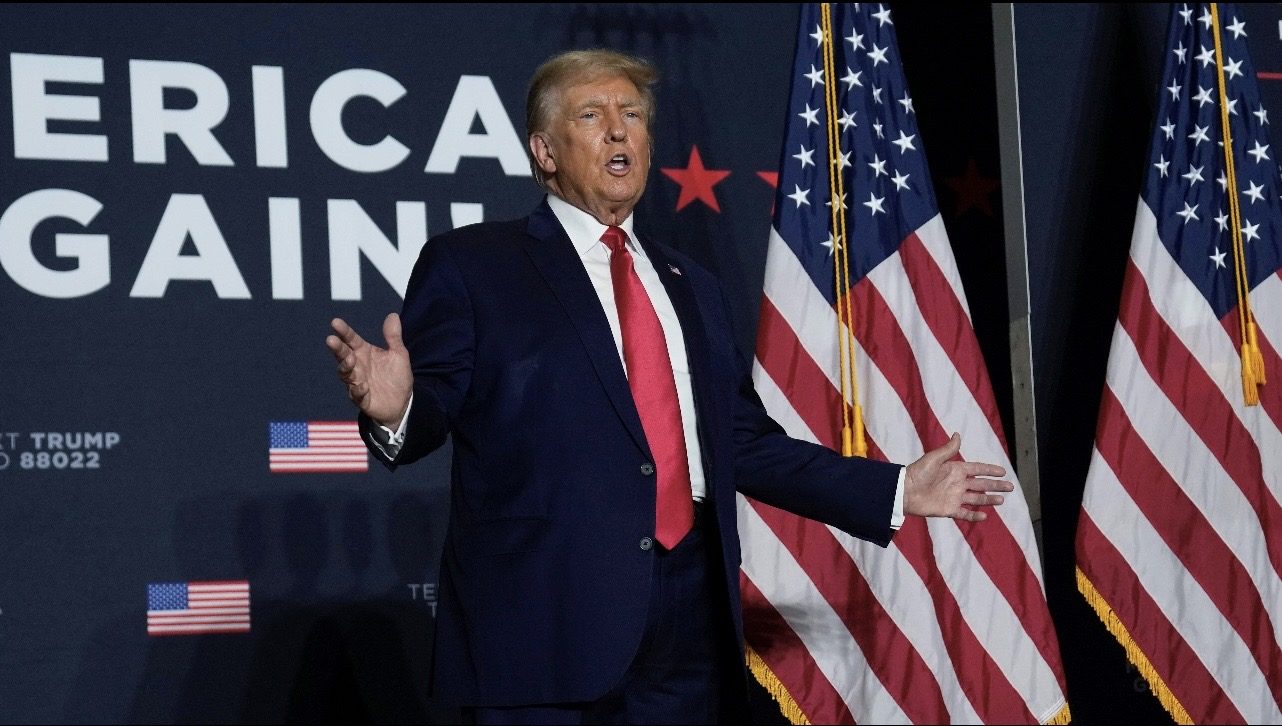
President Donald Trump made a final push to help Republicans retain control of Congress on Sunday, campaigning in Iowa and Kansas as new polling showed Democrats leading in seven closely watched Senate races. The findings, released by The New York Times and Siena Research Institute on November 1, highlighted the difficult political environment facing Republicans just two days before the November 3 midterm elections.
The surveys showed Democratic candidates ahead in all seven Senate battlegrounds examined, including traditionally Republican-leaning states such as Texas and Kansas. However, most of the leads were within the polls’ margins of error, meaning the results should not be interpreted as predictions of certain victories. The original Siena release described a Democratic Senate majority as a distinct possibility while emphasizing that either party could still win control.
Trump held rallies in Dubuque, Iowa, and Salina, Kansas, on Sunday, urging voters to support Republican candidates and defend his administration’s agenda. According to The Associated Press, the president told supporters in Iowa that Republicans were on the verge of sweeping victories. His appearance in Kansas followed an outdoor rally at an airport, where he continued his appeal to voters.
The events marked the culmination of an intensive campaign effort. Trump had held more than two dozen rallies across 19 states since October 1, attempting to mobilize his core supporters and strengthen Republican candidates in competitive races. He was scheduled to deliver another closing campaign message in Washington on Monday.
The election is a major test of Trump’s political influence during his second term. Republicans currently hold narrow majorities in both chambers of Congress, and losing either chamber would complicate the administration’s ability to advance legislation. Democrats could also use congressional control to conduct investigations and challenge administration policies.
All 435 seats in the House of Representatives and 35 Senate seats are being contested. The Senate outcome is expected to depend heavily on a handful of closely divided states, where relatively small changes in turnout could determine which party controls the chamber.
The final Times-Siena surveys covered Alaska, Iowa, Kansas, Maine, Michigan, Ohio and Texas. In Michigan, Democrat Abdul El-Sayed led Republican Mike Rogers, 53% to 42%. In Texas, Democrat James Talarico held a 50% to 43% advantage over Republican Ken Paxton.
The results were particularly notable in Texas, where Democrats have not won a U.S. Senate election since 1988. Kansas also emerged as a surprising battleground, with Democrat Adam Hamilton leading incumbent Republican Senator Roger Marshall, 49% to 44%. The state has not elected a Democratic senator since 1932.
In Maine, Democrat Troy Jackson led Republican Senator Susan Collins, 51% to 45%. In Ohio, former Democratic Senator Sherrod Brown held a 49% to 44% lead over Republican Senator Jon Husted. Brown is seeking to return to the Senate after losing his previous election, while Husted is defending the seat he took after becoming vice president JD Vance’s successor in the Senate.
Alaska and Iowa showed much narrower contests. Democrat Mary Peltola led Republican Senator Dan Sullivan, 48% to 46%, while Democrat Josh Turek led Republican Ashley Hinson, 48% to 47%. These margins suggest that both races remain highly competitive.
Siena Research Institute Executive Director Don Levy said the Democratic leads in Michigan, Texas, Maine, Kansas and Ohio ranged from five to 11 percentage points. But he stressed that the Alaska and Iowa races were effectively close contests and that the overall margins of error meant a Republican Senate majority remained possible.
The survey margins of error ranged from approximately 3.4 percentage points in Texas to five points in Alaska. A margin of error measures sampling uncertainty; it does not account for every possible source of polling error, including turnout differences, nonresponse or changes in voter preferences. Consequently, a candidate leading by one or two points may still lose, while even a larger lead is not an absolute guarantee.
The Democratic campaign also faced internal tensions in Michigan. Representative Haley Stevens, who lost the Democratic Senate primary to El-Sayed, endorsed Republican Mike Rogers on Sunday. The move came after a dispute over campaign events and criticism related to an advertisement concerning Israel and grocery prices.
Stevens’ endorsement created an unexpected complication for Democrats in a state considered essential to their Senate strategy. Senate Democratic leader Chuck Schumer and other party officials reiterated their support for El-Sayed, seeking to prevent the dispute from weakening the nominee’s campaign.
Economic concerns have been central to the final days of campaigning. Voters have expressed anxiety about the cost of living, grocery prices, fuel costs and the effects of tariffs. The ongoing conflict involving Iran has also contributed to uncertainty about energy prices and the broader economy, giving both parties competing arguments about the administration’s record.
Democrats have emphasized affordability and economic pressure, while Republicans have defended Trump’s policies and urged voters to maintain congressional support for his agenda. The election is therefore being treated by both parties as a referendum on the president’s leadership and the direction of the country.
More than 54 million ballots had already been cast by Sunday, according to the Associated Press. Early voting can indicate strong voter engagement, but it does not reveal which candidates those voters supported. The final outcome will depend on Election Day participation, local campaign dynamics and the counting of ballots.
With voting scheduled for Tuesday, November 3, the polling offers a snapshot of a volatile political landscape rather than a definitive forecast. Democrats have momentum in several Senate contests, but Republicans retain a path to victory. The final decision rests with voters, and the balance of power in Washington will not be settled until the votes are counted.
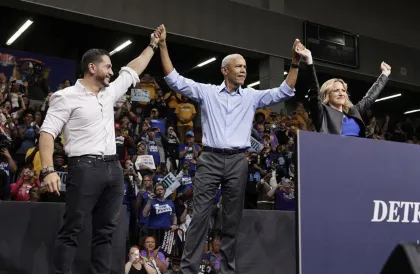
Obama Leads Democrats’ Final Push Against Trump Ahead Of Crucial Midterm Elections
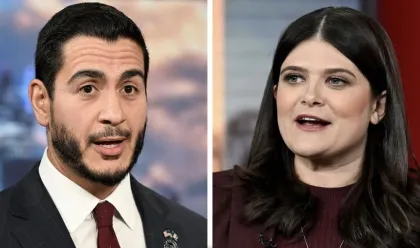
Democrat Haley Stevens Backs Republican Rogers, Deepening Michigan Senate Election Turmoil
Federal Judge Orders Trump Administration to Stop Threatening California Election Officials

Trump Takes Final Campaign Push to Iowa and Kansas Ahead of 2026 Midterm Elections
Related News
Obama Leads Democrats’ Final Push Against Trump Ahead Of Crucial Midterm Elections
Democrat Haley Stevens Backs Republican Rogers, Deepening Michigan Senate Election Turmoil

Federal Judge Blocks Trump Administration’s Medicaid Restrictions, Protecting Healthcare Access for Millions
Comments 0
Log in or create a free account to join the conversation. You can comment anonymously.
No comments yet. Be the first.