

Part of: US Midterm Election 2026
Obama Leads Democrats’ Final Push Against Trump Ahead Of Crucial Midterm Elections
The former president rallied in Ohio, Michigan and Georgia, urging voters to check Trump’s power and support Democratic candidates nationwide.
INTERNATIONAL BROADCAST JOURNALIST · CSB News USA
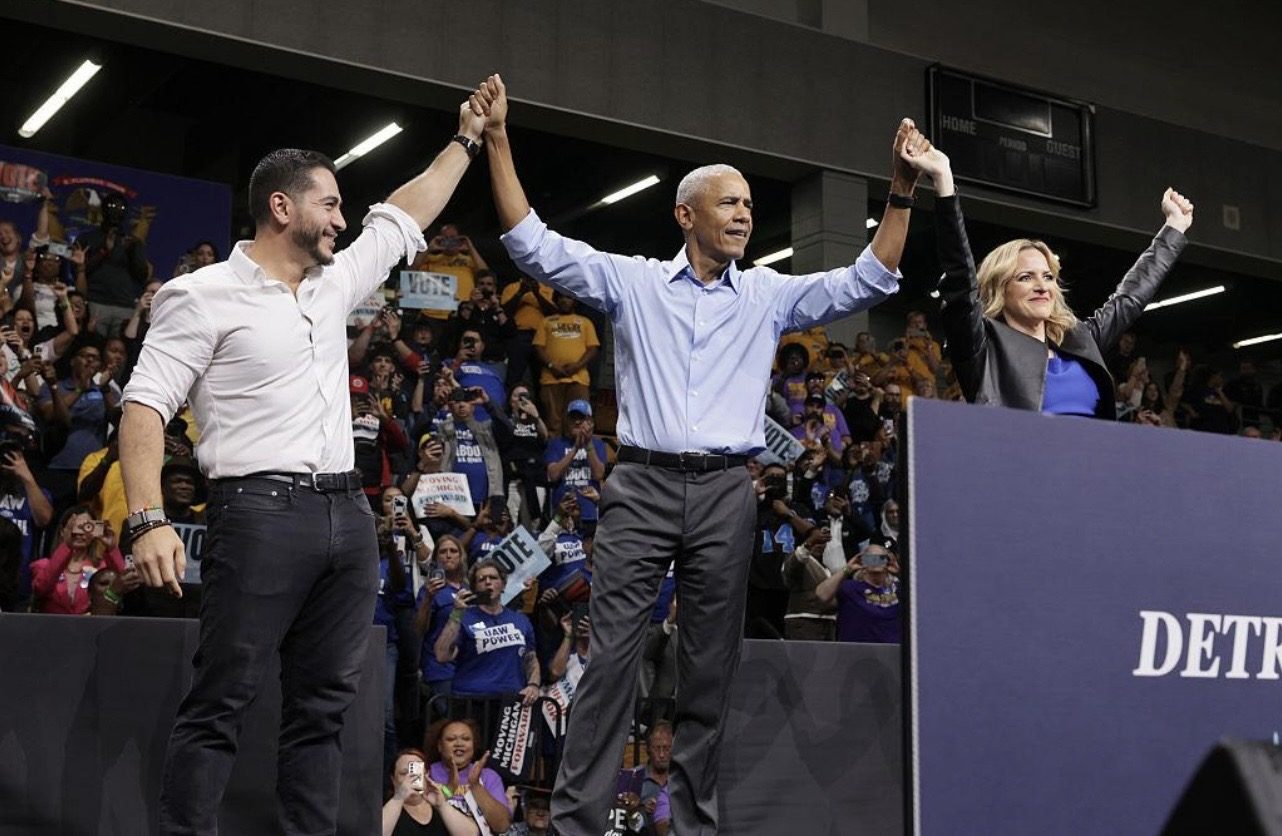
Former U.S. President Barack Obama has intensified his campaign appearances for Democratic candidates ahead of the November 3 midterm elections, delivering a series of forceful speeches attacking President Donald Trump’s administration and urging Americans to support Democrats in crucial congressional and state-level races.
Obama’s appearances in Ohio, Michigan and Georgia have become an important part of the Democratic Party’s final election push. Party strategists are hoping his popularity, political experience and ability to attract large crowds will help increase voter participation, particularly among young Americans and Black voters.
The former president began his latest round of campaign appearances on October 24, visiting Cleveland, Ohio, before travelling to Detroit, Michigan. Both states are considered politically significant because their competitive elections could influence the balance of power in Washington.
In Cleveland, Obama campaigned alongside Democratic Senate candidate Sherrod Brown and gubernatorial candidate Amy Acton. Brown, a former three-term senator, is attempting to defeat Republican Senator Jon Husted and return to the Senate. Acton is challenging Republican gubernatorial candidate Vivek Ramaswamy in the Ohio governor’s race.
During the Cleveland event, Obama criticised Republican policies and questioned the direction of the Trump administration. He argued that Americans were facing serious economic and political challenges, including rising living costs, concerns about government accountability and the consequences of the administration’s decisions.
He also criticised Republican campaign tactics, particularly attacks directed at Democratic candidates. Obama urged voters to consider candidates’ policies and records rather than political advertisements designed to create fear or division.
Later that day, Obama arrived in Detroit to campaign for Democratic Senate nominee Abdul El-Sayed and gubernatorial candidate Jocelyn Benson. The rally took place at Cass Technical High School, attracting thousands of supporters.
The Detroit appearance was particularly significant because El-Sayed represents the progressive wing of the Democratic Party. He defeated moderate Democratic Representative Haley Stevens in the August primary, overcoming a difficult internal party contest.
El-Sayed is now facing Republican candidate Mike Rogers in a closely watched race for an open Senate seat. The result could have important consequences for the national balance of power.
Obama’s decision to campaign alongside El-Sayed attracted considerable attention because the two politicians have previously disagreed over policy issues. El-Sayed had criticised Obama’s record on progressive reforms, including healthcare.
Addressing those differences, Obama used humour to explain that political disagreements do not necessarily prevent people from working together.
He joked that even his wife, Michelle Obama, does not agree with everything he does. The remark drew laughter from supporters and helped communicate his message that Democrats should prioritise shared objectives over internal disagreements.
Obama also defended El-Sayed against criticism targeting his Muslim background and name. He compared the attacks to the personal and political scrutiny he experienced during his own presidential campaigns.
The former president described El-Sayed as a candidate fighting for meaningful political change and encouraged Michigan voters to support the Democratic ticket.
His Detroit speech also included sharp criticism of Trump’s economic policies, personal business interests and approach to governing.
Obama accused the president of placing too much attention on personal wealth and White House renovations while ordinary Americans were struggling with economic pressures.
His jokes about Trump’s renovation projects attracted national attention. Obama suggested that the president appeared more interested in redecorating the White House than addressing the country’s most pressing problems.
The comments prompted responses from Trump and Republican allies, adding another dimension to the increasingly personal political contest between the two presidents.
The Michigan campaign also comes amid controversy surrounding El-Sayed’s candidacy. Trump has repeatedly attacked the Democratic nominee over his Muslim identity and alleged political associations. El-Sayed has rejected the accusations, describing them as attempts to distract voters from important issues.
Republican candidate Mike Rogers has also challenged El-Sayed’s political positions and associations. The dispute has intensified tensions surrounding an already competitive Senate race.
Obama continued his campaign activities in Georgia on October 28, appearing at a rally in suburban Atlanta with Democratic Senator Jon Ossoff and gubernatorial candidate Keisha Lance Bottoms.
The event took place in Morrow, Georgia, as Democrats attempted to strengthen their position in another important electoral battleground.
Ossoff is seeking reelection to the Senate, while Bottoms is competing for the governorship. Both contests are important to Democrats hoping to expand their influence in Washington and across state governments.
At the Georgia gathering, Obama again criticised Trump’s administration and encouraged voters to use the midterm elections as an opportunity to influence the country’s political direction.
He also responded to criticism surrounding his earlier comments about White House renovations, using humour to defend his position while questioning Republican priorities.
The timing of Obama’s appearances is particularly important. The November 3 elections will determine all 435 seats in the House of Representatives and 35 Senate seats, alongside numerous gubernatorial and state legislative contests.
Control of Congress is a central issue. Democrats are seeking to challenge Republican majorities and create stronger congressional oversight of Trump’s administration.
If Democrats gain control of either chamber, they could increase scrutiny of government policies, influence legislative priorities and create political obstacles for the president.
Republicans, meanwhile, are working to protect their congressional majorities and maintain support for Trump’s legislative agenda.
Economic concerns are playing a significant role in the campaign. Rising household expenses, fuel prices, inflation and the financial consequences of the conflict involving Iran have become major subjects in political discussions.
Democrats argue that the administration has failed to adequately address the financial difficulties experienced by ordinary families. Republicans have defended their economic policies and blamed several international and domestic factors for continuing cost pressures.
Obama’s involvement is part of a broader Democratic strategy. According to the Associated Press, he has recorded campaign advertisements and participated in several appearances supporting Democratic candidates across the country.
His political influence remains considerable, even though he left the White House nearly a decade ago. Democratic strategists believe he can attract voters who might otherwise remain disengaged from the electoral process.
However, his involvement does not guarantee electoral success. Democratic candidates continue to face disagreements within their own party, particularly over foreign policy, economic inequality, healthcare and the conflict involving Israel.
Michigan has become a particularly difficult contest because El-Sayed must unite voters who supported different candidates during the Democratic primary.
The divisions became even more serious on November 2, when former primary rival Haley Stevens endorsed Republican Mike Rogers, a significant setback for Democratic efforts to demonstrate party unity. The development highlights the challenges El-Sayed faces in the final hours of the campaign.
For Obama, the immediate objective is to encourage Democratic supporters to participate in the election and prevent internal disagreements from weakening the party’s chances.
His popularity gives Democrats a powerful campaign messenger, but the final outcome will depend on voter participation, local political conditions and the strength of individual candidates.
With Election Day approaching, the political contest has become increasingly intense. Obama’s campaign appearances have provided Democrats with a high-profile opportunity to challenge Trump, energise supporters and make their final arguments to voters.
Whether his influence translates into enough votes to change control of Congress will become clear after Americans cast their ballots on November 3.
Trump Makes Final Midterm Push as Democrats Lead Seven Senate Battleground Polls
Democrat Haley Stevens Backs Republican Rogers, Deepening Michigan Senate Election Turmoil
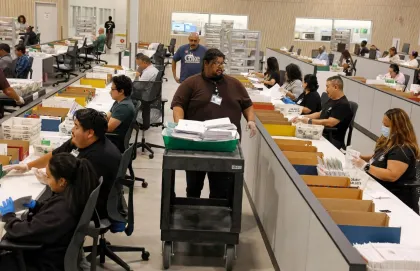
Federal Judge Orders Trump Administration to Stop Threatening California Election Officials
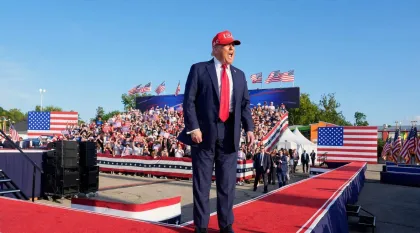
Trump Takes Final Campaign Push to Iowa and Kansas Ahead of 2026 Midterm Elections
Related News
Trump Makes Final Midterm Push as Democrats Lead Seven Senate Battleground Polls
Democrat Haley Stevens Backs Republican Rogers, Deepening Michigan Senate Election Turmoil
Federal Judge Blocks Trump Administration’s Medicaid Restrictions, Protecting Healthcare Access for Millions
Comments 0
Log in or create a free account to join the conversation. You can comment anonymously.
No comments yet. Be the first.