

Part of: US Midterm Election 2026
Democrat Haley Stevens Backs Republican Rogers, Deepening Michigan Senate Election Turmoil
Haley Stevens endorsed Republican Mike Rogers in Detroit, intensifying Democratic divisions less than two days before Michigan voters vote Tuesday.

INTERNATIONAL BROADCAST JOURNALIST · CSB News USA
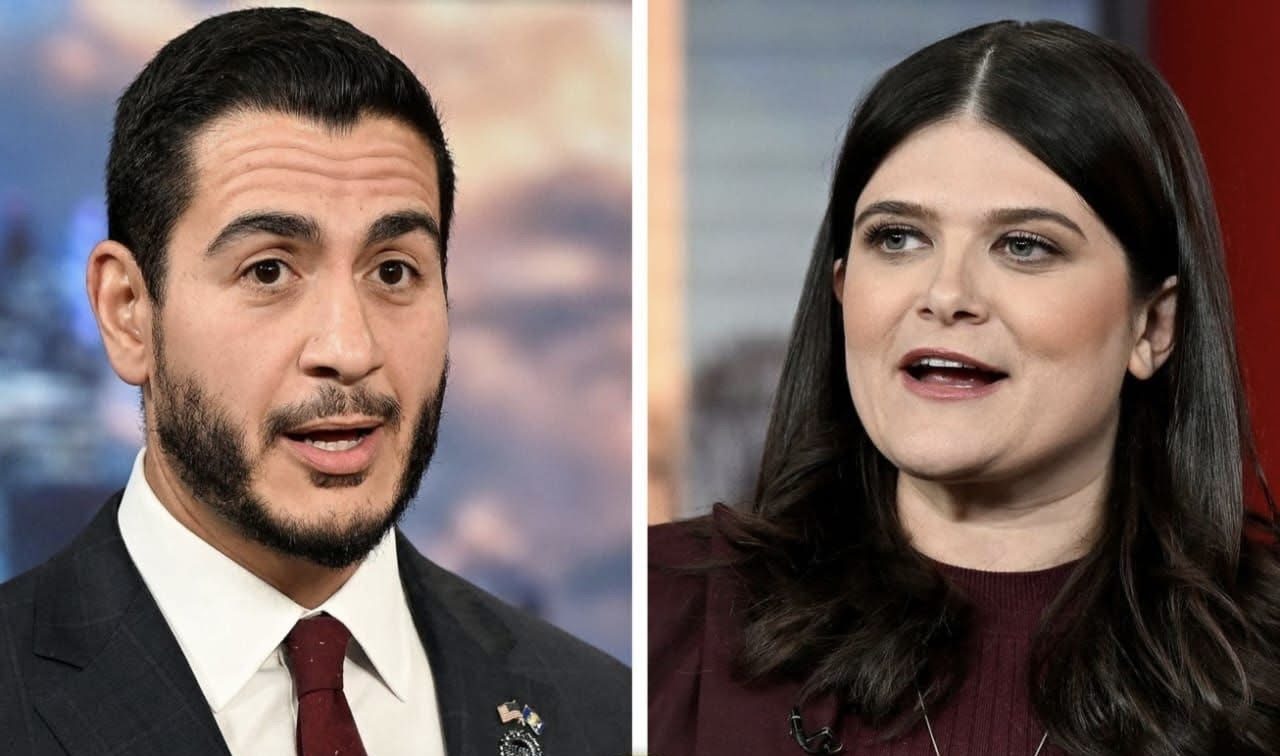
A dramatic political development has shaken Michigan’s closely contested U.S. Senate race after Democratic Congresswoman Haley Stevens publicly endorsed Republican candidate Mike Rogers, abandoning her party’s nominee, Abdul El-Sayed, just two days before Election Day. The unexpected endorsement has intensified divisions within the Democratic Party and raised questions about whether internal disagreements could affect the outcome of one of the country’s most closely watched Senate contests.
Stevens announced her decision on Sunday, November 1, appearing alongside Rogers at Perfecting Church in Detroit. Her endorsement came less than 48 hours before Michigan voters were scheduled to cast their ballots on Tuesday, November 3. The announcement surprised Democratic leaders because Stevens had previously indicated that she would support the party’s nominee despite losing the Democratic primary to El-Sayed in August.
In a video posted on social media, Stevens explained that El-Sayed had indicated she was no longer welcome in his campaign and should stay away. She said that decision had influenced her choice to support Rogers instead. Her announcement represented a significant departure from her earlier public commitment to back the Democratic nominee in the general election.
The dispute is particularly significant because Stevens and El-Sayed competed against each other in a bitter Democratic primary. El-Sayed defeated Stevens in August, securing the party’s nomination for the Senate seat currently held by retiring Democratic Senator Gary Peters. Although the two initially appeared willing to move beyond their primary rivalry, tensions gradually increased as the general election approached.
At the center of the disagreement are differences over Israel, the war in Gaza, political messaging and the Democratic Party’s relationship with Jewish and Black voters. Stevens has consistently expressed strong support for Israel and criticized political rhetoric that she believes could encourage antisemitism. El-Sayed, meanwhile, has been outspoken in criticizing Israel’s military operations in Gaza and American military assistance to the Israeli government.
The latest confrontation intensified after an advertisement circulated by an outside political group linked American assistance to Israel with the rising cost of groceries and other household expenses. Stevens criticized the advertisement, arguing that its message unfairly blamed Israel for economic problems facing American families and could reinforce antisemitic attitudes.
She subsequently called on El-Sayed to publicly condemn the advertisement. El-Sayed responded that the advertisement was not produced by his campaign and said he did not support its message. However, the disagreement continued to damage relations between the two Democrats.
Another source of controversy involved online political commentator Hasan Piker, who had appeared alongside El-Sayed during the primary campaign. Stevens expressed concern about Piker’s controversial remarks concerning Israel and Jewish people. El-Sayed sought to distance his campaign from those comments, although the disagreement remained a point of contention between the former primary rivals.
According to reporting by NPR, Stevens had also raised concerns about whether El-Sayed was doing enough to reassure Jewish and Black voters who had supported her during the Democratic primary. Her eventual endorsement of Rogers therefore reflected a broader political disagreement rather than simply a personal dispute over the primary results.
The timing of the endorsement made the situation even more damaging for Democratic leaders. Party officials had hoped to present a united front during the final weekend of campaigning. Stevens had been expected to participate in a joint political and religious event involving El-Sayed and other prominent Democrats. Instead, she appeared with Rogers at Perfecting Church in Detroit.
The development prompted strong reactions from Democratic officials. Michigan Democratic Party Chairman Curtis Hertel criticized Stevens for supporting the Republican candidate. Senate Democratic Leader Chuck Schumer also condemned her decision, describing the move as a betrayal of the party’s efforts to retain the Senate seat.
Representative Debbie Dingell, another influential Michigan Democrat, also expressed frustration over the controversy. She indicated that Stevens had been disinvited from the planned unity event because the dispute was becoming a distraction from the campaign’s broader message.
The consequences were not limited to public criticism. Stevens’ longtime chief of staff, Justin German, resigned following the endorsement, according to the Associated Press. Additional staff departures were also expected, highlighting the internal consequences of her decision.
Republican candidate Mike Rogers welcomed Stevens’ support. The former congressman has been campaigning to win the seat for the Republican Party and has received an endorsement from President Donald Trump. Rogers’ campaign has increasingly emphasized the possibility of attracting Democratic voters who are dissatisfied with El-Sayed’s political positions.
Rogers has described the emergence of Democrats supporting his campaign as an encouraging development. He believes disagreements within the Democratic coalition could help him attract voters who might otherwise support the party’s nominee.
For El-Sayed, however, the endorsement has not changed his campaign’s central message. Speaking to reporters outside a Detroit church event on Sunday, he dismissed the political significance of Stevens’ decision and redirected attention to the everyday concerns of Michigan residents.
He emphasized the rising cost of living, access to education, healthcare expenses and the financial pressures facing working families. He argued that voters were more concerned about whether they could afford groceries, support their children and pay medical bills than about disagreements between political candidates.
The Michigan Senate contest has attracted national attention because the outcome could influence control of the U.S. Senate. Gary Peters’ retirement has created an open seat that both parties consider strategically important. A Republican victory could strengthen the party’s position in the chamber, while a Democratic victory would help Democrats defend their path toward a Senate majority.
Recent polling indicates that the contest remains highly competitive. A New York Times and Siena University survey published in September showed El-Sayed leading Rogers by 49 percent to 44 percent among likely voters. More recent surveys also generally showed El-Sayed holding a narrow advantage, although some polls suggested a much closer contest.
Inside Elections’ October 2026 polling compilation included several surveys showing El-Sayed ahead, including a CNN/SSRS survey conducted from October 20 to 27 that placed him at 49 percent compared with Rogers at 42 percent. Other surveys showed a smaller difference, underlining the uncertainty surrounding the final result. Polling figures represent voter preferences at the time of the surveys and cannot predict the final outcome with certainty.
Political observers are particularly interested in how the controversy could affect different voter groups. Michigan has significant Arab American, Jewish, Black and younger voting populations, all of which could influence the outcome in a close election. Rogers is attempting to attract voters dissatisfied with the Democratic nominee, while El-Sayed is seeking to maintain support among progressives, younger voters and working-class communities.
The dispute also highlights a wider debate within the Democratic Party over foreign policy, political identity and the balance between progressive and moderate positions. Differences over Israel and Gaza have become increasingly important in Democratic politics, creating challenges for candidates seeking to unite voters with sharply different views.
Nevertheless, it remains unclear whether Stevens’ endorsement will translate into a meaningful number of votes for Rogers. Her influence among Michigan voters, the reaction of Democratic supporters and the level of voter turnout will all be important factors.
With Election Day approaching, both campaigns are making their final appeals to voters. For Democrats, the immediate challenge is to prevent an internal political disagreement from undermining their efforts to retain the Senate seat. For Republicans, the endorsement offers an opportunity to highlight divisions among their opponents.
Ultimately, Michigan voters will determine whether Stevens’ dramatic intervention changes the direction of the Senate race or becomes another political controversy that fades once the ballots are counted. The result could have consequences far beyond Michigan, potentially influencing the balance of power in Washington and the direction of American politics for the remainder of President Trump’s term.
Obama Leads Democrats’ Final Push Against Trump Ahead Of Crucial Midterm Elections
Federal Judge Orders Trump Administration to Stop Threatening California Election Officials

Trump Takes Final Campaign Push to Iowa and Kansas Ahead of 2026 Midterm Elections
Trump’s $10 Billion Epstein Lawsuit Dismissed as Media Legal Battles Intensify Across America
Related News
Obama Leads Democrats’ Final Push Against Trump Ahead Of Crucial Midterm Elections

Federal Judge Blocks Trump Administration’s Medicaid Restrictions, Protecting Healthcare Access for Millions
Federal Judge Orders Trump Administration to Stop Threatening California Election Officials
Comments 0
Log in or create a free account to join the conversation. You can comment anonymously.
No comments yet. Be the first.