

Trump Says Canada Will End Farm Tariffs, but Trade Deal Remains Unfinished
Trump says Canada may eliminate tariffs on American farmers as trade talks advance, but both countries still need to finalize the agreement.

Reporter · CSB News USA
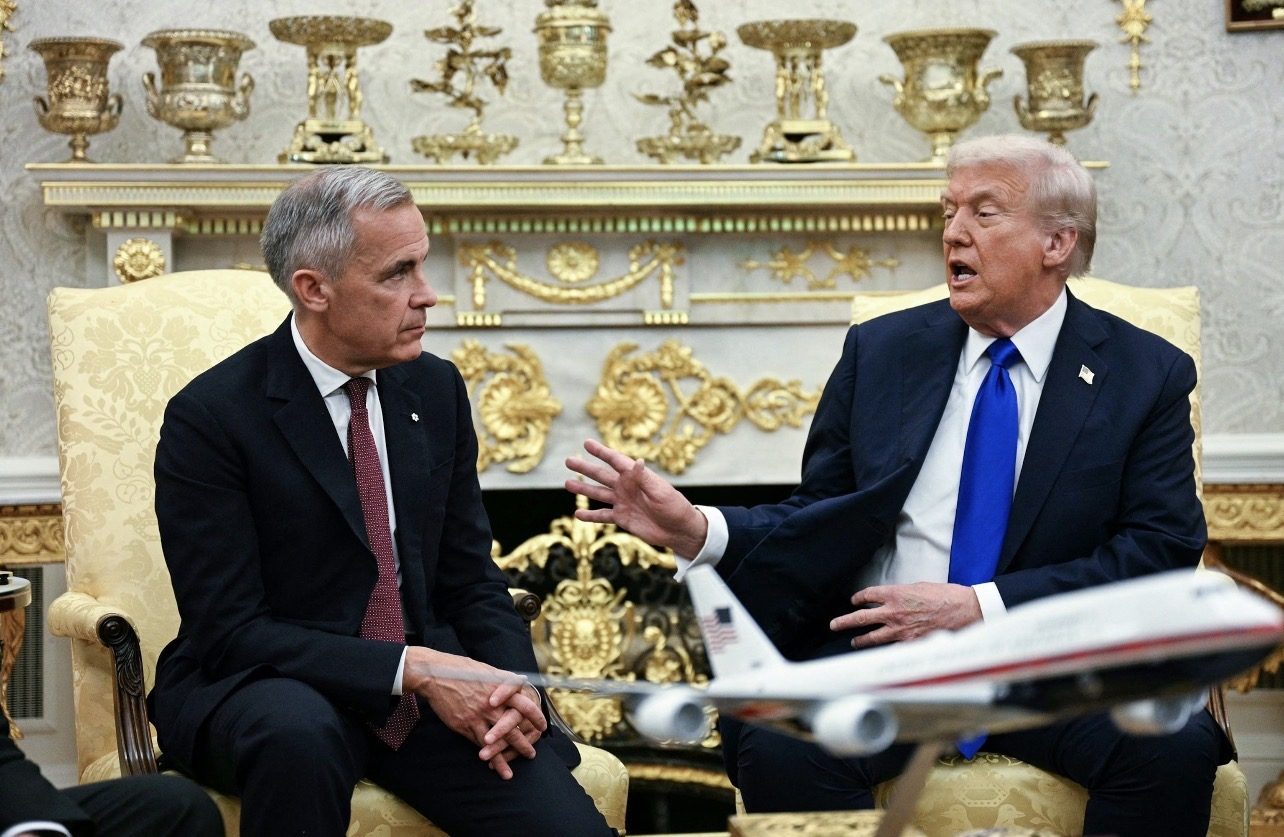
President Donald Trump has announced that the United States and Canada are moving closer to a possible trade agreement that could eliminate tariffs on American agricultural products entering the Canadian market. The announcement has raised expectations among American farmers, who have faced increasing trade barriers during the ongoing dispute between the two neighboring countries.
Trump described the potential agreement as a major victory for American agriculture, saying U.S. farmers would no longer have to pay tariffs when selling their products in Canada. However, Canadian officials have not confirmed that all agricultural tariffs will be eliminated, and the final terms of the agreement remain under negotiation.
According to the Associated Press, Canadian Prime Minister Mark Carney said Sunday that he had a constructive conversation with Trump about a potential trade agreement. Both governments are now expected to continue negotiations in the coming weeks to work toward a final arrangement.
Speaking after arriving in Iowa for a political rally, Trump said the two countries had developed the concept of a very good agreement.
“We have the concept of a very good deal with Canada,” Trump said.
He added that the agreement would benefit American farmers and the broader U.S. economy while also providing advantages for Canada.
Trump specifically discussed the possibility of removing tariffs paid by American farmers when exporting agricultural products to Canada.
“Part of the agreement is that our farmers will have to pay no tariffs,” he said.
The president has repeatedly argued that Canadian trade policies have placed American agricultural producers at a disadvantage. He has particularly criticized Canada’s dairy market, where restrictions and import quotas have been a longstanding source of disagreement between the two countries.
The latest announcement follows months of tensions over tariffs, agricultural trade, automobiles, steel, aluminum and other important industries.
The dispute intensified in August 2026 after negotiations between Washington and Ottawa broke down. The Trump administration subsequently moved forward with additional tariffs of 50 percent on approximately $20 billion worth of Canadian imports. Canada responded with retaliatory tariffs on selected American products.
The trade conflict has affected businesses on both sides of the border, including agricultural producers, manufacturers and companies that depend on cross-border supply chains.
American dairy producers have been particularly concerned about Canada’s market restrictions. Under Canada’s supply management system, the government regulates production and imports in certain agricultural sectors, especially dairy. Import quotas determine how much foreign dairy can enter the country at reduced or zero tariff rates.
Products imported beyond those limits can face significantly higher duties.
American dairy industry representatives have long argued that the system makes it difficult for U.S. producers to expand their business in Canada. The Trump administration has also made greater access to Canada’s dairy market an important demand during trade negotiations.
However, the situation is more complicated than simply eliminating a 400 percent tariff.
Research published by the University of Wisconsin Extension on September 30 explains that some Canadian dairy products face over-quota tariff rates ranging from approximately 241 percent to 298 percent. These rates apply when imports exceed established quotas and are generally designed to prevent additional imports rather than represent duties routinely paid on all American agricultural shipments.
The report also explains that Canada introduced new retaliatory tariffs on certain American dairy products in September. These include a 50 percent tariff on selected dairy ingredients and a 25 percent tariff on U.S. cheese.
This distinction is important because Trump’s reference to tariffs reaching 400 percent does not accurately describe every agricultural product exported from the United States to Canada.
The possible trade agreement could provide American farmers with better access to Canada’s agricultural market. However, the extent of any tariff reductions will depend on the final terms negotiated by both governments.
Canadian Prime Minister Mark Carney has also made it clear that his government wants an agreement that protects Canadian economic interests.
Following his conversation with Trump, Carney said the discussions focused on creating jobs, lowering costs for families and protecting Canada’s languages, culture and sovereignty.
He indicated that negotiating teams would continue working in the coming weeks to achieve those objectives.
The Canadian government has not announced a final agreement eliminating all tariffs on American agricultural products. Carney’s position also reflects Canada’s continued commitment to protecting its domestic agricultural industries, particularly its dairy sector.
This creates an important challenge for negotiators. Washington wants greater access for American farmers, while Ottawa wants to maintain its domestic agricultural protections.
The two sides must find a compromise that addresses both concerns.
The economic importance of the relationship is considerable. Canada is one of the largest markets for American agricultural exports. According to reporting by Harvest Public Media, Canada purchased approximately $28 billion worth of U.S. agricultural products in 2025, making it the second-largest foreign market for American agricultural goods after Mexico.
This trade relationship supports farmers, food processors, transportation companies and agricultural businesses across numerous U.S. states.
Wisconsin, Michigan, New York, Pennsylvania and other states have important economic connections with Canadian buyers. Dairy producers in particular depend on reliable access to international markets to sell milk, cheese and other products.
Tariff disputes can create additional expenses for businesses, reduce sales opportunities and make agricultural markets less predictable.
For American farmers, a reduction in Canadian trade barriers could create opportunities to increase exports and compete more effectively. It could also help agricultural businesses rebuild commercial relationships affected by the recent trade conflict.
However, experts warn that trade disputes can hurt producers on both sides.
A September 4 report by Harvest Public Media explained that American farmers were facing pressure from tariffs imposed by both countries. Higher costs for agricultural equipment, reduced export opportunities and uncertainty in dairy markets were among the major concerns.
The dispute also affects agricultural supply chains. Canada is a major supplier of potash, an important fertilizer used by American crop producers. Approximately 85 percent of the potash used in the United States comes from Canada, according to the report.
This means that maintaining a stable trading relationship is important not only for American exporters but also for U.S. farmers who depend on Canadian agricultural supplies.
The latest discussions have also included the future of the Keystone XL pipeline, which Trump mentioned as part of the broader economic discussions with Canada.
The pipeline proposal has been a longstanding issue in North American energy politics. However, its inclusion in Trump’s comments does not mean that a new pipeline agreement has been finalized.
Political developments are also adding pressure to the negotiations. The trade dispute has become an issue ahead of the November 3 U.S. midterm elections, particularly in states such as Michigan and Maine, where economic concerns and trade policies are important political issues.
Trump wants to demonstrate that his administration can secure better trade conditions for American businesses and agricultural producers. Meanwhile, Carney is under pressure to protect Canadian industries while maintaining access to the important U.S. market.
Canada is also working to reduce its economic dependence on the United States by expanding trade relationships with other international partners, including the European Union.
Despite the positive statements from both leaders, important questions remain unanswered. The governments have not published a final agreement, detailed tariff schedules or an official implementation date for the proposed agricultural trade changes.
For now, American farmers should not assume that all Canadian tariffs have already disappeared. Existing trade rules and duties remain relevant until the two governments announce and implement specific changes.
The latest developments nevertheless represent a potentially important step toward reducing trade tensions between two of North America’s largest economic partners.
If the negotiations produce a successful agreement, American agricultural exporters could gain improved access to Canadian consumers, while Canadian businesses could benefit from greater stability in cross-border trade.
For millions of people whose jobs and businesses depend on the U.S.-Canada economic relationship, the coming weeks could be particularly important.
Trump is presenting the proposed agricultural tariff reductions as a major win for American farmers. Whether that promise becomes a reality will depend on the final agreement and Canada’s willingness to approve the negotiated terms.
Related News

Federal Judge Blocks Trump Administration's Actions on Voter Registration Ahead of Midterm Elections

Pope Leo XIV Makes History by Voting in America’s 2026 Midterm Elections

Trump’s Golf Course Renovation Plan Faces Legal Challenges in Washington, D.C.

Comments 0
Log in or create a free account to join the conversation. You can comment anonymously.
No comments yet. Be the first.