

Part of: US Midterm Election 2026
Appeals Court Rejects Trump Administration Bid to Block 20,000 California Mail-In Ballots
A federal appeals court rejected the Trump administration’s request to isolate disputed California mail ballots, citing risks to eligible voters.

INTERNATIONAL BROADCAST JOURNALIST · CSB News USA
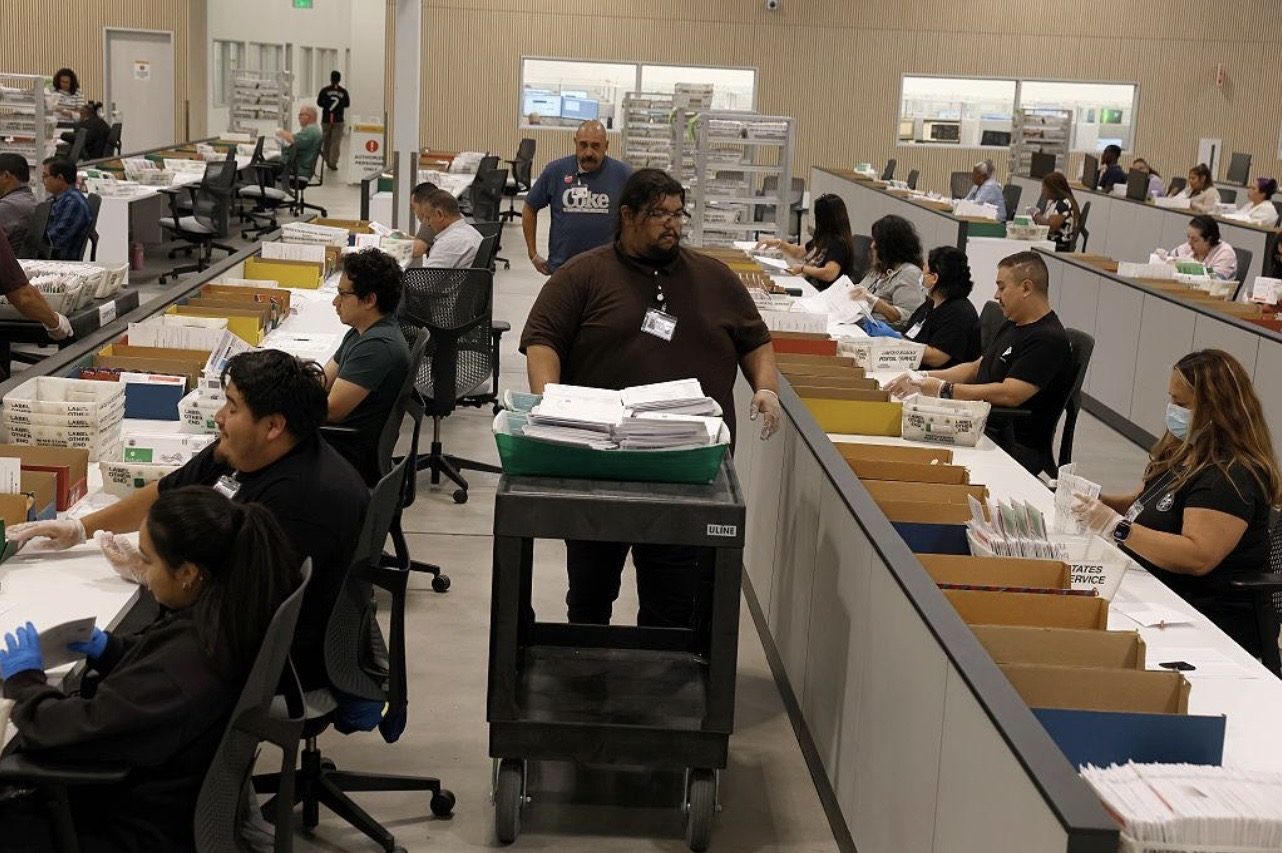
A major legal battle over voting rights and election administration has intensified in California after a federal appeals court rejected the Trump administration’s latest attempt to prevent the state from counting disputed mail-in ballots linked to more than 20,000 registered voters. The ruling represents another setback for President Donald Trump’s administration as it seeks to challenge voter registration records ahead of the November 3, 2026, midterm elections.
On October 30, the Ninth Circuit Court of Appeals ruled 2-1 against the Justice Department’s request to temporarily stop California from counting ballots associated with people the federal government suspects may not be United States citizens. The administration argued that the ballots should be separated until the citizenship status of the individuals concerned could be verified.
The court, however, concluded that granting the request could create serious disruption to the state’s election process and potentially prevent eligible American citizens from having their votes counted. The majority also agreed with concerns raised by a lower court about the reliability of the federal government’s list of suspected noncitizen voters.
The dispute began after the Justice Department identified approximately 20,930 names in California’s voter registration records that it believed could belong to noncitizens. Federal officials requested that state election authorities investigate the individuals and prevent associated ballots from being counted until their eligibility was established.
The Justice Department maintained that federal election laws prohibit noncitizens from voting in federal elections. It argued that the government has a responsibility to ensure that only eligible citizens participate in choosing members of Congress and other federal officials.
However, California officials strongly challenged the accuracy of the federal government’s information. They argued that the list contained significant errors and could include American citizens whose immigration or citizenship records had not been properly matched.
According to court filings, the federal government initially demanded that California review the disputed list within 48 hours. State officials rejected the demand, arguing that the request was impractical and that the government had not provided sufficient evidence to establish that the listed individuals were ineligible voters.
The Justice Department subsequently filed a lawsuit against California election officials on October 15. It asked a federal court to order the state to separate the disputed ballots and suspend their counting until citizenship checks were completed.
The case then moved through several stages of litigation. On October 26, the Ninth Circuit initially declined to intervene, finding that the federal government had not given the lower court sufficient time to consider its request. The case subsequently returned to the federal district court, where a judge rejected the administration’s attempt to block the ballots from being counted.
The Justice Department appealed again, arguing that the continued processing of ballots could make it impossible to identify votes associated with potentially ineligible individuals.
On October 30, the Ninth Circuit rejected that renewed request in another 2-1 decision. The majority said there was no practical way to identify and separate the specific ballots without potentially causing severe damage to the entire election process.
An important concern involved ballot secrecy. Once election officials process certain ballots, the voting choices are separated from identifying information to protect voter privacy. As a result, officials may be unable to reconnect already processed ballots with individual voters.
The court also considered the possibility that separating ballots at such a late stage could affect legitimate voters. Millions of Californians had already participated in the election process, and hundreds of thousands of ballots had been processed in Los Angeles County alone, according to court filings.
The ruling was not unanimous. Judge Patrick Bumatay dissented, arguing that federal law prohibits noncitizens from voting and that the administration’s request to separate potentially unlawful ballots was reasonable. The majority opinion was supported by Judges Mark Bennett and Gabriel Sanchez.
Meanwhile, new findings have raised further questions about the accuracy of the federal government’s voter list. A November 1 Associated Press report described an analysis by the UCLA Voting Rights Project of the Justice Department’s list of 20,930 names.
According to the researchers, 8,880 names, representing approximately 42 percent of the list, did not match anyone in California’s voter registration records. The analysis also identified at least 22 American citizens on the list. Researchers further estimated that nearly 7,500 naturalized citizens may have been incorrectly flagged as potential noncitizens.
These findings do not establish that every person on the federal list was eligible to vote. However, they raise significant concerns about the methods used to identify potentially ineligible voters. The Justice Department disputes the analysis and maintains that investigating possible violations of federal election law is necessary.
California Governor Gavin Newsom has also intensified his criticism of the federal government’s actions. On November 1, Newsom warned federal judges that the Trump administration might seek warrants to seize ballots and other election materials before the state officially certifies its election results.
In a letter to federal judges, the Democratic governor expressed concern that federal investigations and possible enforcement actions could interfere with lawful ballot counting and the certification process. He argued that election officials must be allowed to carry out their responsibilities without intimidation or unnecessary federal intervention.
The Associated Press has also reported that a separate federal judge ordered the Justice Department to stop threatening California election officials with prosecution over their refusal to comply with demands to separate the disputed ballots. The department has challenged aspects of the court’s intervention.
The controversy has become part of a broader national debate over the division of election-related powers between state governments and the federal government. Under the United States Constitution, states have major responsibilities for administering elections, while Congress and federal authorities retain powers to enforce applicable federal election laws.
The legal dispute is particularly significant because California is one of the country’s largest electoral states and plays an important role in national politics. The November 3 midterm elections will determine control of the House of Representatives and Senate, making election administration and voter participation politically consequential.
The Trump administration has indicated that it may take the dispute to the Supreme Court. However, as of November 1, there has been no confirmed final Supreme Court ruling ordering California to exclude the disputed ballots.
The central question remains whether the federal government can require a state to isolate ballots based on a disputed voter list without sufficient individual evidence of ineligibility. The courts’ decisions so far have emphasized the potential consequences for eligible voters and the practical difficulties of changing election procedures after voting has already begun.
For California, the immediate priority remains completing the election process while protecting the rights of eligible voters. For the federal government, the case represents an effort to strengthen enforcement of laws prohibiting noncitizen participation in federal elections.
As the November 3 election approaches, the dispute is likely to remain an important test of voting rights, election security and the constitutional balance of power in the United States. Whatever happens next, the case could have consequences extending beyond California and influence how similar election disputes are handled across the country.
Trump Uses Online Rallies to Help Republicans Win Key Midterm Election Battles
Federal Judge Blocks Trump Administration's Actions on Voter Registration Ahead of Midterm Elections
Judge Blocks Trump’s Election Threats Ahead of Crucial Midterm Vote

Pope Leo XIV Makes History by Voting in America’s 2026 Midterm Elections
Related News
Trump Uses Online Rallies to Help Republicans Win Key Midterm Election Battles
Judge Blocks Trump’s Election Threats Ahead of Crucial Midterm Vote
Georgia Early Voting Ends as Senator Jon Ossoff Urges Voters to Stand Up for Democracy and Justice
Comments 0
Log in or create a free account to join the conversation. You can comment anonymously.
No comments yet. Be the first.