
Part of: US Midterm Election 2026
Trump Heads to Kansas to Boost Republicans as Crucial Midterm Elections Approach
President Donald Trump visits Kansas to rally Republican supporters, boost Senator Roger Marshall, and strengthen party turnout before the November midterm elections.

Reporter · CSB News USA
9,535 views 7 min read
Listen to this article7 min
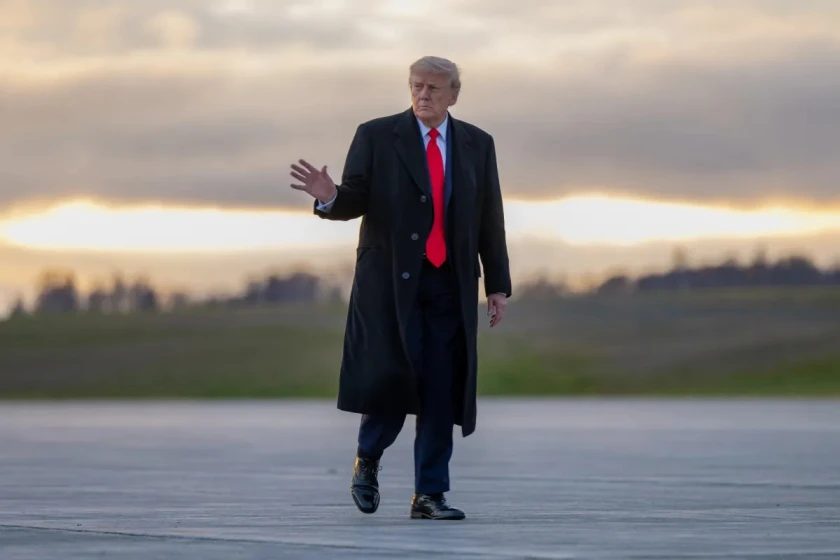
President Donald Trump’s visit to Kansas on October 19 marked another important stop in the Republican Party’s nationwide campaign effort ahead of the November 3 midterm elections. Trump traveled to the Wichita area to address supporters at Heartland Credit Union Arena in Park City, Kansas, as Republicans work to protect their congressional majorities and strengthen their candidates’ chances in competitive races. The rally focused particularly on supporting Republican Senator Roger Marshall, who is seeking re-election against Democratic challenger Adam Hamilton. Reports from the Associated Press, local Kansas news outlets and the event’s official Republican Party listing confirm the purpose and location of the visit.
The appearance was part of a broader strategy to use Trump’s national profile to increase Republican enthusiasm and encourage supporters to vote. Although Trump himself was not on the ballot, the outcome of the midterm elections could have a major impact on his administration’s ability to advance its legislative agenda during the final two years of his presidency.
The rally took place at Heartland Credit Union Arena, located in Park City, a community north of Wichita. Local media reported that the venue can accommodate approximately 6,500 people. The Republican National Committee announced the event as a campaign rally, with doors scheduled to open at 2:30 p.m. local time, the program beginning at 4:30 p.m. and Trump’s remarks initially scheduled for around 6 p.m.
Supporters began arriving early in the morning, and local reporting described lines forming outside the arena before sunrise. Some attendees traveled from outside the immediate Wichita area to see the president in person. The gathering demonstrated the continued enthusiasm among some Republican voters for Trump’s political appearances, even as national polling and competitive Senate contests present challenges for the party.
For many attendees, the event offered an opportunity to see a sitting president and hear directly from a politician who continues to play a central role in Republican campaigning. Local broadcaster KWCH interviewed supporters who described the visit as a significant occasion. Some expressed strong approval of Trump’s presidency, while others voiced support alongside reservations about aspects of his political rhetoric.
The main political objective of the Kansas visit was to help Senator Roger Marshall retain his seat. Marshall, a Republican representing Kansas in the U.S. Senate, faces Adam Hamilton, a Democratic challenger and Methodist minister from Leawood. The contest has drawn increased national attention because polling has indicated a more competitive race than Republicans might ordinarily expect in a state that has traditionally favored their party in federal elections.
Kansas voted decisively for Trump in the 2024 presidential election. According to the Associated Press, he won the state by approximately 16 percentage points against Democrat Kamala Harris. Nevertheless, a strong presidential performance in a state does not automatically guarantee victory for every candidate from the same party. Senate elections can be shaped by the candidates’ individual records, local concerns, independent voters and differences in turnout between elections.
Marshall’s race has become especially important because Democrats are seeking opportunities to gain Senate seats in states where Republican candidates have historically enjoyed an advantage. If Hamilton can attract independent voters and Republicans dissatisfied with their party’s performance, the contest could become more difficult for the incumbent. However, Kansas remains a Republican-leaning state, and Democratic candidates face structural challenges, including differences in party registration and voting patterns between rural communities and metropolitan areas.
The economic situation facing Kansas farmers also forms an important part of the political background. The state has a large agricultural sector, and farm incomes, fuel prices, fertilizer costs, crop prices and international trade policies can influence how rural voters evaluate the administration. The Associated Press reported on October 19 that rising diesel prices and increasing production expenses were putting additional pressure on farmers during the harvest season.
Kansas Farm Bureau President Glenn Brunkow described the period as a particularly demanding time for farmers, who must harvest crops, transport produce and prepare livestock for winter. Higher operating costs can reduce profits even when agricultural production remains strong. For some rural voters, these financial pressures have created questions about whether federal policies are delivering the results they expected.
The economic concerns create a challenge for Republicans. Trump has promoted policies intended to support American businesses, farmers and domestic industries, but the effects of tariffs, international trade disputes and higher input costs remain subjects of political debate. Some farmers have welcomed government assistance and tax measures, while others remain concerned about whether those measures are enough to offset their expenses.
The Associated Press reported that the administration had approved a $12 billion aid package for farmers and taken steps involving taxes on certain agricultural diesel fuel. Nevertheless, some producers continued to express dissatisfaction with the financial pressures affecting their operations. These concerns could influence voter enthusiasm in Kansas and other agricultural states, including Nebraska and Iowa, where Republicans are also working to defend important political positions.
Trump’s visit therefore served two related purposes: to support Marshall personally and to encourage Republican voters to remain engaged despite economic frustrations. Campaign rallies can attract substantial attention, but their political value ultimately depends on whether supporters follow through by voting. A large crowd at an event does not necessarily predict the final election result, because attendance and actual turnout measure different things.
The broader national stakes are considerable. The November 3 elections will determine the balance of power in the U.S. House of Representatives and Senate. Republicans currently hold majorities in both chambers, and Democrats are seeking to gain enough seats to change congressional control. The outcome will affect legislation, government oversight, federal spending and the administration’s ability to implement its priorities.
If Republicans retain control of Congress, Trump will have a stronger opportunity to advance his domestic agenda with support from lawmakers in his own party. If Democrats take control of one or both chambers, they could use committee leadership and investigative authority to scrutinize the administration and challenge its policy proposals. Even without unified control, the president retains executive powers, but congressional opposition could make major legislative changes more difficult.
National polling has added pressure to the Republican campaign. A Washington Post-ABC News-Ipsos survey reported by local public radio showed Trump’s approval rating at 33 percent. A separate Reuters/Ipsos poll published October 19 put his approval at 31 percent and found more registered voters favoring Democratic congressional candidates than Republican candidates in that survey. These figures represent different polls, not a single national result, and neither can independently predict the election outcome. Polls can vary according to methodology, sample composition, question wording and timing.
The president’s political standing could nonetheless influence down-ballot races. Republican candidates may benefit from his ability to attract committed supporters, but they may also face questions from voters who are dissatisfied with the economy or the administration’s handling of national issues. For Marshall, the challenge is to maintain the support of the Republican base while persuading enough undecided voters that he deserves another term in the Senate.
The Kansas rally also attracted attention beyond the main candidates. Local reports indicated that rock musician Ted Nugent, a longtime Trump supporter, was expected to attend. Meanwhile, opponents of the president planned a “No Kings” protest in downtown Wichita, reflecting the political divisions surrounding his visit. The presence of both supporters and critics illustrated how presidential campaign appearances can become focal points for competing views about leadership and the direction of the country.
Local authorities and event organizers also prepared for the increased traffic and security demands associated with the presidential visit. Public information issued ahead of the rally identified road closures around the arena, including sections of Broadway and Arena Drive. Attendees were directed to designated parking areas, with overflow parking and shuttle services arranged for those unable to park directly at the venue. Organizers also publicized restrictions on bags and prohibited items. These arrangements were intended to manage the large crowd and reduce disruption around the event.
The visit was particularly notable because it marked Trump’s first trip to the Wichita area in roughly a decade, according to local broadcaster KWCH. His previous campaign appearance in Wichita took place in 2016, when he was running for president. The return offered an opportunity to reconnect with supporters in a state that has consistently been important to the Republican coalition.
As the campaign moves toward Election Day, the key question is whether rallies like the one in Park City will translate into stronger Republican turnout. Trump’s presence can generate media coverage, energize committed voters and bring additional attention to candidates such as Marshall. However, economic conditions, candidate performance, local issues and the choices of independent voters will also help determine the result.
The Kansas event was therefore more than a presidential appearance. It was part of a nationwide effort to protect Republican congressional seats at a moment when economic concerns and uncertain polling have increased the stakes for both parties. For Marshall, the rally offered a high-profile show of support from the president. For Trump, it was an opportunity to demonstrate his continued influence over the Republican Party and encourage voters to support its candidates.
With Election Day approaching on November 3, both parties face the task of turning campaign energy into actual votes. The Kansas Senate contest will be one important measure of whether Republicans can maintain their advantage in traditionally conservative states while addressing concerns among voters about costs, economic security and political leadership. The final outcome will depend on the electorate, not the size of a rally or the strength of a campaign appearance.
More in US Midterm Election 2026
Trump’s Midterm Strategy Faces a Critical Test as Voters Focus on the Economy
Trump Endorses Netanyahu Ahead of Israeli Election, Sparking Political Debate
Latino Voters Who Helped Trump Win Are Growing Frustrated Ahead of Midterms
Trump Targets Democrats Over Trade Deals as Midterm Election Battle Heats Up
Related News
Trump Endorses Netanyahu Ahead of Israeli Election, Sparking Political Debate
Latino Voters Who Helped Trump Win Are Growing Frustrated Ahead of Midterms
Trump Targets Democrats Over Trade Deals as Midterm Election Battle Heats Up