

Wall Street Roars Back as AI Stocks Rise, but Inflation Fears Keep Investors on Edge
Artificial intelligence stocks helped Wall Street recover some recent losses, but inflation worries and rising borrowing costs continue to unsettle investors.

Reporter · CSB News USA
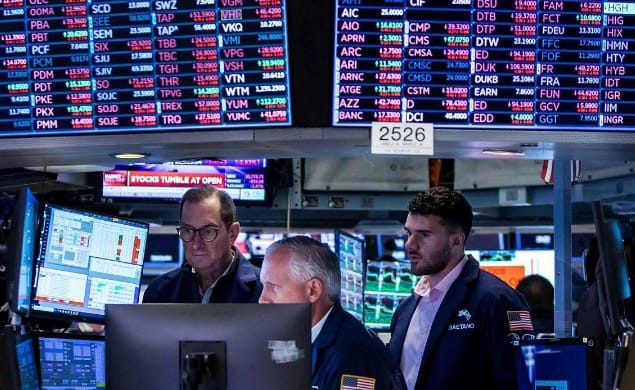
U.S. stocks began recovering on Monday as shares of artificial intelligence companies advanced, offering some relief after Wall Street suffered its worst weekly performance since June. However, continued uncertainty over inflation, interest rates and global financial markets kept investors cautious.
According to The Associated Press, the S&P 500 rose 0.4% in morning trading, while the Nasdaq Composite gained 0.9%. The Dow Jones Industrial Average moved in the opposite direction, slipping 44 points, or 0.1%, as of 10 a.m. Eastern time.
The gains were led by technology companies linked to the artificial intelligence industry, which has attracted significant investment from businesses and financial markets. Investors have continued to focus on AI-related companies because of expectations that the technology could reshape industries ranging from computing and manufacturing to healthcare and financial services.
Nvidia, one of the world's most influential suppliers of AI chips, rose 0.6% during the morning session. CoreWeave, a company that rents computing capacity powered by AI chips, gained 0.6% after falling 25.2% the previous week.
SpaceX also rose 1.6%, according to the AP report. Investors are closely watching major technology companies as they prepare to report earnings, with upcoming results from companies including Meta Platforms expected to provide additional clues about corporate spending and demand for AI infrastructure.
Despite Monday's recovery, recent market movements demonstrate how quickly investor confidence can change. Strong expectations for AI growth have supported technology valuations, but concerns about expensive investments and future profitability remain.
The stock market's recovery comes as rising government bond yields continue to complicate the outlook for businesses and consumers. Higher borrowing costs can make it more expensive for companies to finance expansion and for households to obtain mortgages, vehicle loans and other forms of credit.
Investors are also monitoring inflation, which remains a key concern for policymakers. If price pressures persist, interest rates could stay elevated for longer, potentially limiting economic growth and putting pressure on stock valuations.
The Federal Reserve faces a difficult balance: controlling inflation without unnecessarily weakening employment or economic activity. Technology companies with substantial cash reserves may be better positioned to absorb higher financing costs than smaller businesses that rely more heavily on loans.
While U.S. technology shares advanced, European markets declined by more than 1% in Monday trading. The AP reported that violent protests over living costs and public services over the weekend added to concerns about government spending and pressure on European bond markets. Oil prices also fell during the session, while investors continued to assess geopolitical developments and their potential effects on energy markets and the global economy.
A stronger stock market can benefit retirement accounts and investment portfolios, but a single day's gains do not necessarily indicate that the broader economy is improving. Many Americans who do not own stocks directly may still feel the effects of interest rates, inflation and changes in employment conditions.
For investors, the immediate question is whether AI companies can deliver enough earnings growth to justify the market's expectations. For households, the more immediate concerns remain borrowing costs, prices and financial security.
Wall Street's latest rebound offers a measure of relief, but market volatility is likely to continue as investors evaluate corporate earnings, inflation data and the direction of monetary policy.
Related News

BREAKING: France Erupts in Nationwide Protests as 550,000 Demonstrate, Hundreds Arrested Amid Violence

France Erupts in Violent Protests as 1,800 Arrested Amid Rising Living Costs

US Photojournalist Heidi Levine Attacked by Israeli Settlers in West Bank