
Part of: US Midterm Election 2026
Trump Endorses Netanyahu Ahead of Israeli Election, Sparking Political Debate
U.S. President Donald Trump has publicly endorsed Israeli Prime Minister Benjamin Netanyahu ahead of Israel’s upcoming election. Whether the endorsement will influence voters and the election outcome remains uncertain.

Reporter · CSB News USA
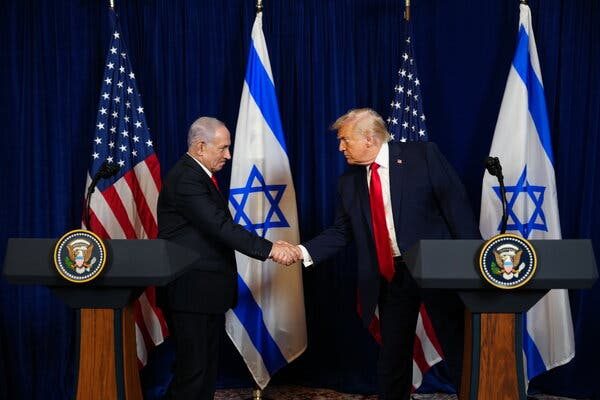
U.S. President Donald Trump has publicly expressed his support for Israeli Prime Minister Benjamin Netanyahu ahead of Israel’s upcoming national election. In a message posted on Truth Social on October 18, Trump praised Netanyahu’s leadership and declared his full support for him in the election. Israel is scheduled to hold its parliamentary election on October 27. Trump’s announcement, coming just days before the vote, has renewed discussion about Israel’s political future and its close relationship with the United States.
According to Reuters, Trump described Netanyahu as a strong and courageous leader. He also highlighted Israel’s cooperation with the United States in confronting Iran. Trump’s message portrayed Netanyahu as a leader who had maintained his position despite difficult circumstances and opposition. By publicly backing Netanyahu’s re-election, the U.S. president made his political preference clear. Trump had previously avoided directly stating his position on supporting Netanyahu’s re-election for several months.
Netanyahu responded by thanking Trump for his support. In a message on social media, he praised the U.S. president’s backing and their joint efforts. Although the two leaders have maintained a close relationship for years, differences have emerged at various times over Iran, Gaza and the situation in Lebanon. Trump’s latest endorsement has therefore brought renewed attention to the political significance of their relationship.
The upcoming election is crucial for Netanyahu’s political future. He is one of Israel’s longest-serving prime ministers, and his Likud party has governed through a coalition with right-wing and religious parties. However, his government has faced criticism over national security, its policy decisions and the failure to prevent the Hamas-led attack on October 7, 2023. Opposition leaders have called for political change and new leadership.
Israel’s electoral system differs from the direct presidential election system used in the United States. Israeli voters elect members of the Knesset, the country’s parliament. A government is then formed by securing the support of a parliamentary majority. Since a single party rarely wins enough seats to govern alone, coalition negotiations and agreements between political parties play a crucial role in determining who forms the next government.
As a result, Netanyahu’s political future will depend not only on the number of seats won by Likud but also on whether his allies can secure enough parliamentary support. Even if his party performs well, the composition of the next Knesset and the outcome of coalition negotiations will be important in determining whether he remains in office.
Various opinion polls and media reports have highlighted uncertainty over whether Netanyahu’s governing bloc can retain its parliamentary majority. Opposition parties are also facing the challenge of assembling enough support to form an alternative government. Against this backdrop, the impact of Trump’s endorsement remains uncertain. Some observers may view the support of the U.S. president as a potential boost to Netanyahu’s standing among certain voters, while others may believe its influence will be limited.
Relations between the United States and Israel are built on a longstanding strategic partnership. Military cooperation, regional security and conflicts across the Middle East remain central to the relationship. Cooperation between the two countries has received particular international attention during periods of escalating tensions involving Iran. Nevertheless, the two governments have not always agreed on military action, strategic objectives or developments in Gaza and Lebanon.
Trump’s latest endorsement does not establish that all differences between Washington and the Israeli government have been resolved. Instead, it demonstrates his current political support for Netanyahu as Israel approaches its election.
The relationship also carries significance for domestic politics in the United States. The U.S. midterm elections are scheduled for November 3, when voters will determine control of Congress and assess the policies of the Trump administration. Iran-related tensions, energy prices and U.S. policy toward Israel are among the issues that can feature in American political debate. Consequently, Trump’s public involvement in Israel’s election may also attract attention within the United States.
Trump’s endorsement of Netanyahu is a significant political development ahead of Israel’s election. However, support from a foreign leader alone cannot determine the outcome. Israeli voters will also consider their own experiences, national security, the government’s record, economic pressures and the prospects for political coalitions. The October 27 election and the subsequent government-formation process will ultimately determine whether Netanyahu can remain in power.
Related News

Latino Voters Who Helped Trump Win Are Growing Frustrated Ahead of Midterms
Trump Targets Democrats Over Trade Deals as Midterm Election Battle Heats Up
Trump’s Approval Hits 33% as Democrats Gain Ground Ahead of High-Stakes Midterm Elections