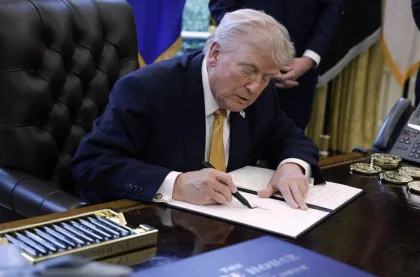

Trump Demands Death Penalty for Those Who Kill Firefighters, Sparking Nationwide Debate
President Donald Trump wants prosecutors to seek capital punishment for people who murder firefighters, raising questions about federal law, deterrence, and justice.

CSB News USA
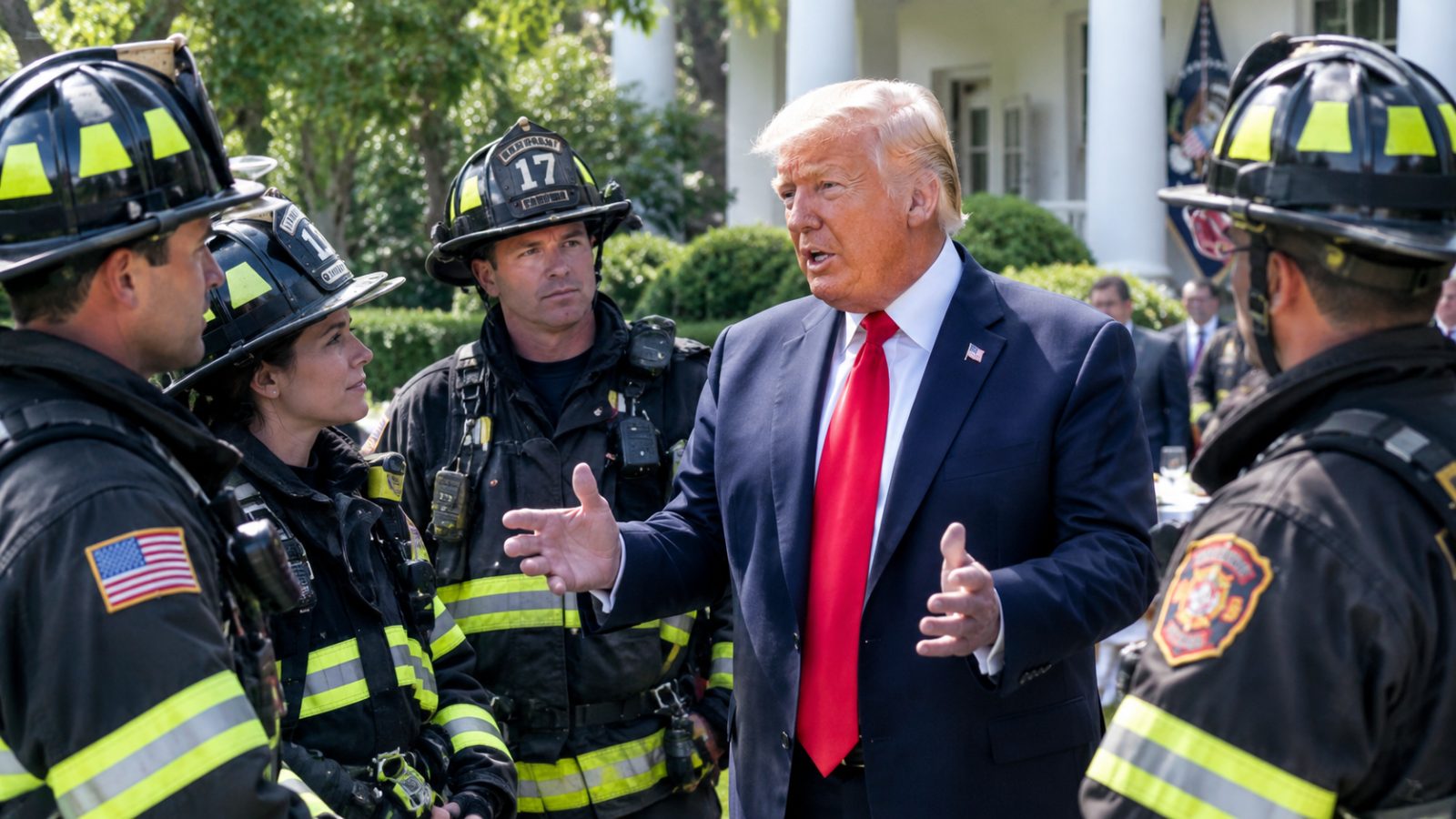
President Donald Trump has called for the death penalty for people who murder firefighters, extending his administration’s hard-line approach to violent crime. Speaking at a White House event honoring firefighters and other emergency personnel on October 15, 2026, Trump said he wanted the Justice Department to pursue capital punishment in cases involving the killing of firefighters, particularly those shot while climbing ladders to extinguish fires.
Trump’s remarks focused on the dangers firefighters face while responding to emergencies. These professionals routinely enter hazardous environments to rescue trapped residents, control fires and prevent damage from spreading. In some situations, they work amid extreme heat, heavy smoke, unstable structures and dangerous materials. The possibility of being deliberately targeted by gunfire adds another serious threat to an already hazardous occupation.
During the event, Trump addressed Acting Attorney General Todd Blanche and raised the possibility of seeking the death penalty for people who murder firefighters. He referred specifically to a scenario in which a firefighter climbing a ladder is shot. His comments reflected his desire for prosecutors to pursue the harshest available punishment in such cases.
The president also connected his proposal to his broader position on violent crimes against emergency personnel. He has repeatedly advocated severe penalties for people convicted of murdering police officers. By extending similar rhetoric to firefighters, Trump emphasized that people who risk their lives to protect communities should receive strong legal protections.
However, there is an important distinction between a presidential statement and a change in criminal law. A president can establish enforcement priorities and direct the executive branch to pursue cases within the law. But such a statement does not automatically make every murder of a firefighter punishable by death.
In the United States, capital punishment depends on the applicable federal or state law, the circumstances of the crime and the jurisdiction handling the case. Federal prosecutors must establish a lawful basis for pursuing a capital case. The accused also retains the right to challenge the charges and evidence in court.
The jurisdiction in which a killing occurs can be particularly important. Some murders are prosecuted under state law, while others may fall under federal jurisdiction because of specific statutory provisions or other legally relevant circumstances. Consequently, a presidential announcement alone cannot make every firefighter murder a federal capital offense.
A death sentence also requires compliance with constitutional protections and established judicial procedures. Defendants have the right to legal representation, a fair trial and the opportunity to challenge the prosecution’s evidence. Where capital punishment is legally available, additional rules govern whether prosecutors may seek it and whether a court or jury may impose it.
Trump argued that severe punishment could discourage attacks on firefighters. His position is that people who deliberately kill emergency personnel should face the strongest possible consequences. However, his prediction that such attacks would stop quickly under a death-penalty policy should be understood as a political assertion rather than an established scientific finding.
The effectiveness of capital punishment as a deterrent has been debated for decades. Supporters argue that the possibility of execution may discourage serious crimes and reflects the gravity of taking another person’s life. Opponents question whether the death penalty deters violence more effectively than lengthy imprisonment. They also raise concerns about wrongful convictions, unequal application of punishment and the irreversible consequences of judicial error.
Firefighters face substantial occupational risks even when they are not targeted by criminals. Smoke inhalation, extreme temperatures, collapsing buildings, explosions and hazardous chemicals can turn rescue operations into life-threatening emergencies. Crews may have to climb ladders, enter unstable buildings or work in areas where visibility is severely restricted.
Intentional gunfire can make these operations even more dangerous. An attack may force firefighters to withdraw, interrupt rescue efforts and delay assistance to people trapped inside buildings. It can also endanger police officers, paramedics, residents and other emergency workers. Protecting firefighters therefore requires more than criminal penalties. Effective emergency planning, coordination with law enforcement, appropriate scene security and rapid medical assistance are also essential.
Trump’s announcement forms part of his wider emphasis on law enforcement and tougher criminal penalties. Public safety has remained a prominent theme in his political messaging, particularly when discussing violent crime and attacks on public servants. His latest comments seek to reinforce the argument that emergency personnel deserve strong protection and that those who deliberately kill them should face severe consequences.
Nevertheless, the practical implications of his remarks will depend on the Justice Department’s actions, existing statutes and decisions made in individual cases. The announcement should not be interpreted as proof that a new law has been enacted or that the death penalty is now mandatory in every case involving the murder of a firefighter.
Fact-checking supports the central claim that Trump publicly advocated seeking the death penalty for people who murder firefighters. His remarks were reported by Reuters following the October 15, 2026, White House event. However, the precise legal consequences of his position depend on the applicable law and the procedures followed by prosecutors and courts.
The announcement has renewed attention to the dangers faced by firefighters and the broader debate over how the justice system should respond to attacks on emergency personnel. While supporters may welcome the prospect of harsher punishment, questions remain about deterrence, constitutional protections and the limits of presidential authority.
For now, Trump’s statement represents a call for tougher prosecution rather than proof of a universal new death-penalty rule. Any implementation must remain subject to applicable law, judicial review and the rights guaranteed to defendants under the United States Constitution.
Reporter
CSB News USA
Related News
Trump Halts Russia Sanctions, Sparking Global Economic Concerns as 60-Day Review Begins

Trump Hits Pause on Russia Sanctions, Sparking New Firestorm Over Ukraine War Policy

Midterm Showdown Intensifies as Trump’s Republicans Fight to Hold Congress