

Part of: US Midterm Election 2026
Pope Leo XIV Makes History by Voting in America’s 2026 Midterm Elections
Pope Leo XIV makes history by casting a mail-in ballot in Illinois, becoming the first pope known to vote in America.

Reporter · CSB News USA
9,657 views 7 min read
Listen to this article7 min
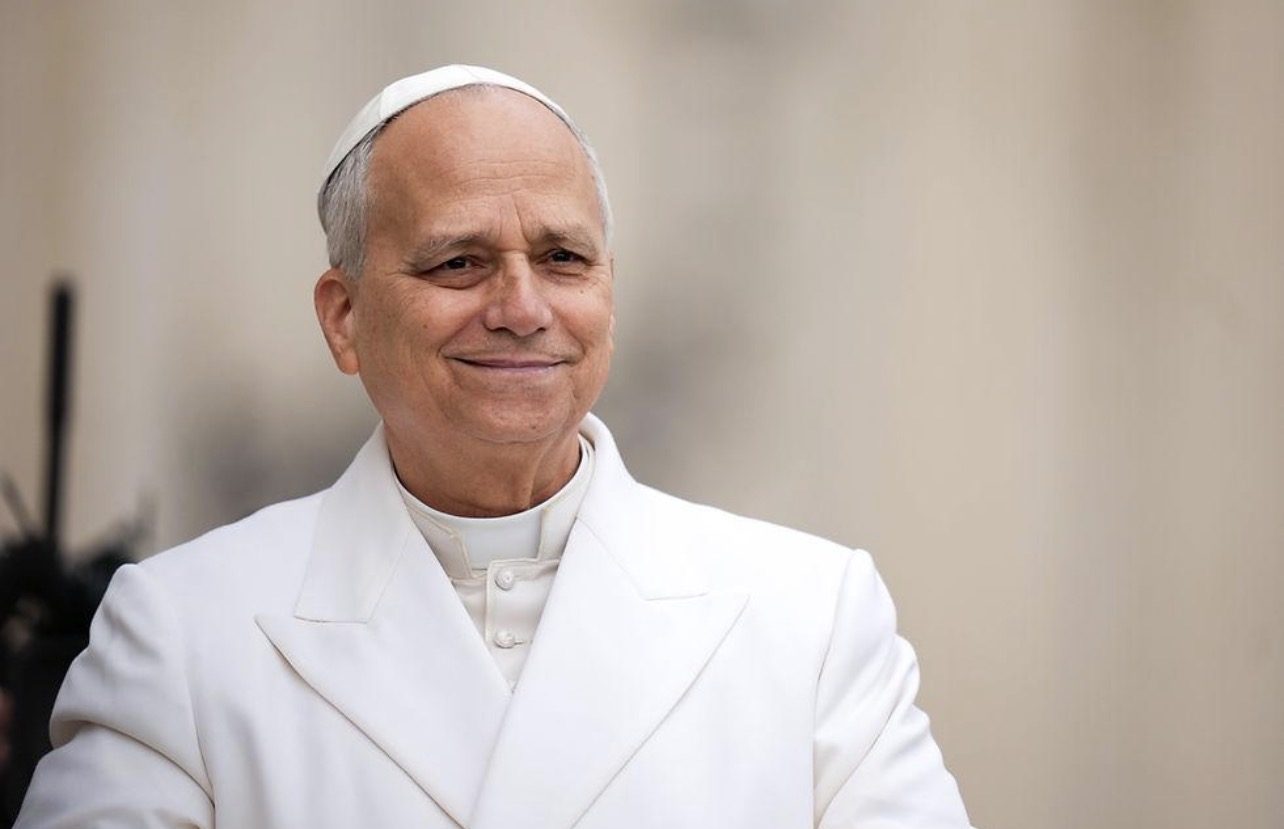
Pope Leo XIV has made history by becoming the first known pope to cast a vote in a United States general election. The Vatican confirmed on Friday, October 30, that the American-born leader of the Roman Catholic Church had submitted a mail-in ballot in Illinois ahead of the November 3, 2026, midterm elections.
The announcement has attracted international attention because it marks an unusual moment in the history of the papacy. Although popes have traditionally remained outside the electoral politics of individual countries, Leo XIV has exercised his constitutional rights as an American citizen while continuing to lead the world's Catholic community.
The Holy See Press Office confirmed the development in an official statement, explaining that Pope Leo XIV had exercised his right to vote as a United States citizen whenever he was eligible. The Vatican also confirmed that he had submitted his mail-in ballot in Chicago.
The statement emphasized that the pope believes participating in democratic processes is both a right and a responsibility of citizens.
"The Holy Father expresses his belief in the right and the duty of citizens to participate in democratic processes," the Vatican said.
The confirmation followed an earlier report by the Chicago Sun-Times, which revealed that the pope remained registered as a voter in Illinois and had requested a mail-in ballot through the Will County Clerk's Office on October 3.
According to Kim Fladhammer, chief of staff at the Will County Clerk's Office, Robert Francis Prevost was listed among the individuals who had requested a mail-in ballot for the upcoming election.
Pope Leo XIV was born Robert Francis Prevost on September 14, 1955, in Chicago, Illinois. He grew up in the Chicago metropolitan area and spent much of his religious career working outside the United States, particularly in Peru, where he served as a missionary priest and later as a bishop.
He was elected pope in May 2025 following the death of Pope Francis. His election marked a historic moment because he became the first pope born in the United States in the more than 2,000-year history of the Catholic Church.
Despite becoming the leader of the Vatican and the worldwide Catholic Church, Leo XIV has retained his American citizenship. He also holds Peruvian citizenship because of his long-standing connection with the South American country.
His position as pope does not automatically remove his rights as an American citizen. U.S. citizens living abroad can generally participate in federal elections through absentee or mail voting, provided they meet the applicable registration and voting requirements.
The pope's participation is particularly notable because he is now the head of state of Vatican City, an independent sovereign territory. Vatican City operates under a different political system from the United States and does not hold elections in the same way as a democratic republic.
The pope's ballot is connected to his registered voting residence in Illinois rather than the Vatican.
According to reporting by the Chicago Sun-Times, Prevost is registered at an address in New Lenox, a community in Will County, Illinois. The address is associated with his family, including his older brother, John Prevost.
Illinois election officials have explained that registered voters in the state can request mail-in ballots without having to provide a special reason. American citizens living overseas also have voting protections under federal law, including the Uniformed and Overseas Citizens Absentee Voting Act.
The upcoming election will allow Illinois voters to make decisions about several important political positions. Among the most closely watched contests are the race for governor and the election for an open seat in the United States Senate.
Democratic Governor JB Pritzker is seeking another term, facing Republican candidate Darren Bailey and independent candidate Collin Corbett. The Senate election will determine who replaces longtime Democratic Senator Dick Durbin, who is retiring.
The ballot also includes local government, judicial and county-level contests in Will County.
Although the pope's participation has attracted significant political attention, neither the Vatican nor election officials have disclosed which candidates he supports. His ballot remains private, just like those of other American voters.
There is also no indication that the pope has publicly endorsed a candidate in the Illinois races.
Records from the Illinois State Board of Elections provide additional insight into his voting history before becoming pope.
According to the Associated Press, records show that Prevost participated in several primary elections over the years. He requested Democratic primary ballots in 2008 and 2010 and Republican primary ballots in 2012, 2014 and 2016.
He also participated in several general elections, including those held in 2012, 2014, 2018 and 2024. The records do not reveal which candidates he supported in those elections.
Illinois has a primary voting system that allows voters to choose which party's primary ballot they want to receive. Voters do not permanently register with one political party, although they must select a party ballot when participating in a primary election.
The pope's voting history therefore does not establish his current political affiliation or indicate support for any particular political party.
The Vatican also confirmed that Leo XIV participated in eligible elections during his years living in Peru. His decision to vote from abroad reflects a consistent approach to civic participation rather than an isolated action connected to the American political environment.
The development has also drawn a response from the United States Conference of Catholic Bishops.
Chieko Noguchi, executive director of public affairs for the conference, welcomed the pope's participation and said his example encourages citizens to fulfill their civic responsibilities.
The bishops have encouraged Catholics to participate in elections while considering the values of human dignity, social responsibility and the common good.
Pope Leo XIV has previously spoken about the importance of democracy and public participation. In an April 2026 message to the Pontifical Academy of Social Sciences, he highlighted the importance of a democratic system that recognizes the dignity of every person and allows citizens to participate responsibly in decisions affecting society.
He has also referred to the importance of peaceful political change and holding elected leaders accountable.
His decision to vote comes at a politically sensitive time in the United States. The November midterm elections will determine the balance of power in Congress and influence the direction of the federal government during the remaining years of President Donald Trump's second term.
All 435 seats in the House of Representatives are being contested, while 35 Senate seats are also on the ballot. Voters in 36 states will additionally elect governors.
President Trump is not personally on the ballot, but the results could have a significant impact on his administration's ability to advance its legislative agenda.
The pope has previously attracted attention for speaking about American political issues, particularly immigration, the treatment of migrants, the death penalty and international conflicts.
He has criticized policies involving mass deportations and called for greater respect for human dignity. He has also expressed concerns about military conflicts and the humanitarian consequences of violence.
His public disagreements with President Trump have generated considerable international attention. Trump previously criticized the pope over his comments on foreign policy and immigration. Leo, however, has maintained that his responsibility is to communicate the teachings of the Gospel rather than engage in political confrontation.
In April 2026, responding to questions about criticism from the Trump administration, the pope said he was not afraid to speak publicly about the Church's message.
His participation in the American election does not mean that the Vatican is endorsing a political party or candidate. Rather, the Holy See has presented the vote as an exercise of an individual citizen's democratic rights.
The timing of the ballot request is also noteworthy because the pope had recently undergone surgery for a cancerous tumor in his right lung.
He underwent surgery on October 13, 2026, at Rome's Gemelli Hospital. The Vatican later confirmed that the tumor was a form of lung cancer known as adenocarcinoma. He was discharged from the hospital on October 17 and has gradually resumed his public responsibilities.
Despite his recent health challenges, the pope has continued to meet visitors, conduct religious activities and address important issues affecting the Catholic Church and the wider world.
The Associated Press reported that it remains unclear exactly how the completed ballot was physically returned to Illinois from Vatican City. However, the Vatican has officially confirmed that he submitted his mail-in vote.
The election has also highlighted the continued connection between the Chicago-born pontiff and his home state. Even after becoming one of the world's most influential religious leaders, he remains connected to the community where he was born and raised.
For American Catholics, his participation carries an additional message about civic responsibility. The Church has repeatedly encouraged citizens to take part in public life while making decisions guided by their moral values.
By casting a ballot in the November 3 midterm elections, Pope Leo XIV has created a historic precedent for the modern papacy. His action demonstrates that holding the highest religious office in the Catholic Church does not necessarily mean abandoning the ordinary civic rights associated with citizenship.
His vote is also a reminder that democratic participation extends beyond political offices, national borders and positions of influence.
The Vatican's confirmation has now established the event as a historic first: Pope Leo XIV is the first known pontiff to cast a ballot in a United States general election.
More in US Midterm Election 2026
Trump Cancels Iowa, Kansas Rallies, Shifts to Nationwide Phone Campaign
Early Voting Surpasses 40 Million As US Midterm Election Battle Intensifies
Kamala Harris Warns Democrats Against Impeaching Trump After Midterm Election Victory
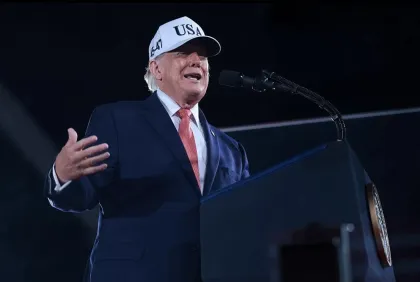
Trump Faces Midterm Pressure as 32% Approval Rating Raises Questions About Republican Prospects

Comments 0
Log in or create a free account to join the conversation. You can comment anonymously.
No comments yet. Be the first.