

Part of: US Midterm Election 2026
Trump Cancels Iowa, Kansas Rallies, Shifts to Nationwide Phone Campaign
With Election Day approaching, Trump is replacing two weekend campaign stops with phone rallies aimed at mobilizing Republican voters nationwide.

International Broadcast Journalist · CSB News USA
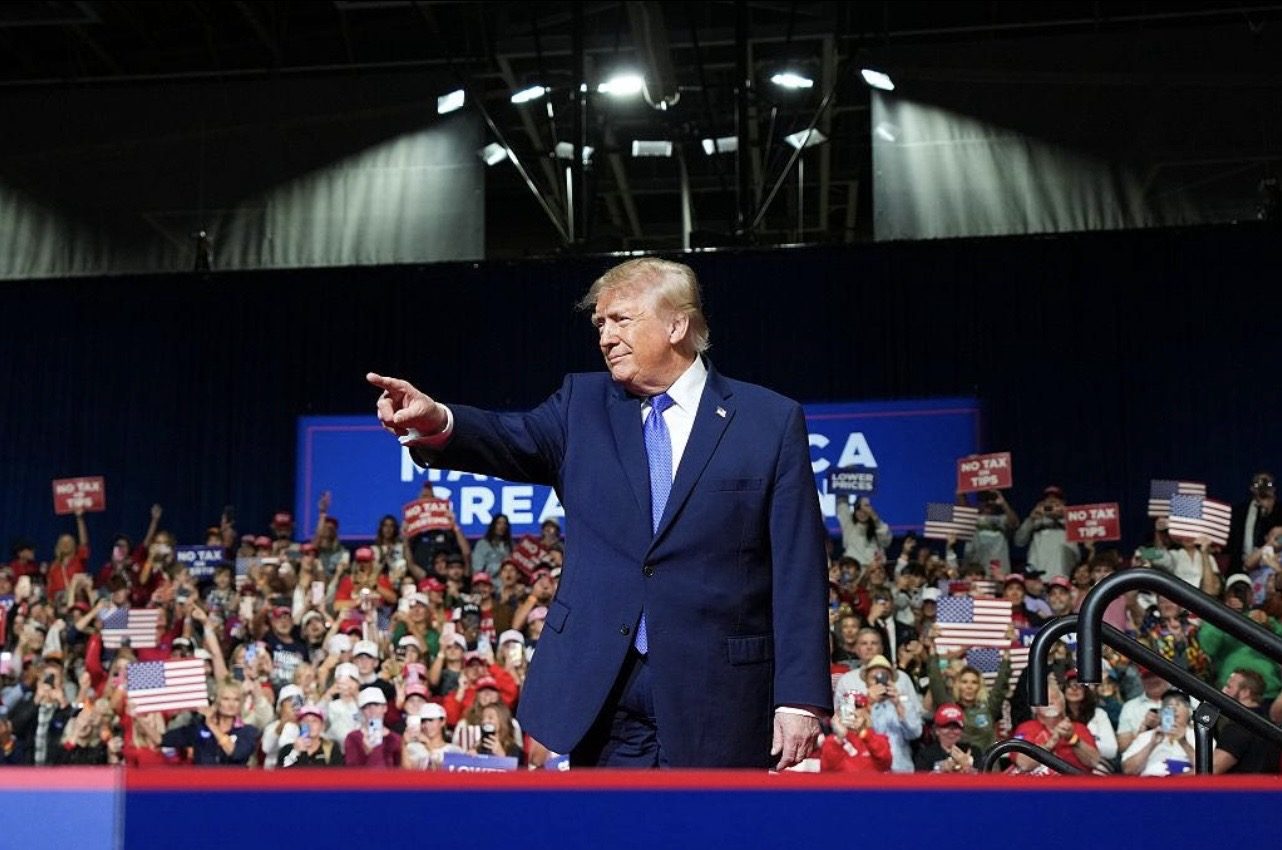
President Donald Trump has canceled two planned campaign rallies in Iowa and Kansas scheduled for the final weekend before the November 3 midterm elections, replacing the in-person appearances with a series of telephone-based campaign events designed to reach voters across nearly 20 states.
The announcement, made on Thursday, October 29, marks a significant change in Trump’s final campaign strategy as Republicans face increasingly competitive races that could determine control of Congress. The Republican National Committee (RNC) said the president would participate in a series of so-called tele-rallies during a 72-hour campaign push, allowing him to communicate with supporters in multiple states without traveling to each location.
According to Reuters and The Associated Press, Trump had been scheduled to appear in Salina, Kansas, on Saturday and Dubuque, Iowa, on Sunday. Both events were subsequently canceled. The Republican Party said the alternative arrangements would allow the president to reach more voters during the crucial closing days of the election campaign.
Trump defended his decision to skip Kansas, telling reporters that he did not believe his presence was necessary because Republican Senator Roger Marshall was performing well. Marshall is seeking another term and faces Democratic challenger Adam Hamilton in a race that has attracted considerable attention because of its unexpected competitiveness.
“I don’t feel I have to go to Kansas,” Trump told reporters on Thursday. He also expressed confidence that Republicans would perform strongly on Election Day.
The Kansas race is particularly significant because the state has traditionally been a reliable Republican stronghold. However, the contest has become more closely watched as Democrats attempt to capitalize on voter concerns about economic conditions, household expenses and the administration’s policies.
Iowa presents another important challenge for Republicans. Several congressional contests in the state are competitive, making it an important destination for national political figures seeking to strengthen their party’s position. Trump’s canceled appearance in Dubuque had been expected to provide additional visibility for Republican candidates and encourage supporters to participate in the election.
The Republican National Committee’s chairman, Joe Gruters, defended the revised strategy, arguing that the telephone events would provide an effective way to connect with voters across the country.
In a statement, Gruters described the final campaign period as a 72-hour sprint and said voters wanted to hear directly from the president before Election Day. The party indicated that the telephone events would cover nearly 20 states, including Iowa, Kansas, Michigan, Alaska and Texas. Additional appearances could also be announced.
The campaign organization MAGA Inc., which is aligned with Trump, is also involved in organizing the telephone-based events. The approach is intended to reduce the time required for travel while allowing the president to participate in several campaign activities across different states.
The change comes after an unusually active month of campaigning. Since October 1, Trump has held 25 rallies across 19 states, according to Reuters. Many of these appearances were organized to support Republican candidates in rural communities and states where the party is facing growing electoral competition.
Trump’s recent campaign schedule has included frequent appearances and lengthy speeches. However, his demanding travel schedule has also raised questions about the physical strain associated with campaigning almost every day.
During an appearance in Mississippi on Monday, October 26, Trump spoke about the difficulty of delivering extended speeches on consecutive days. His voice sounded noticeably hoarse during the event, and he remarked that human vocal cords were not designed for holding a rally every day.
The issue became a subject of discussion again on Thursday after a reporter asked whether the president had canceled his Kansas appearance because he was tired of traveling or experiencing health problems.
Trump rejected the suggestion and insisted that he felt perfectly well. He also criticized the Reuters journalist, making personal remarks about the reporter’s physical appearance. The exchange attracted additional media attention and shifted some discussion away from the campaign’s revised schedule.
There has been no official confirmation that health concerns were responsible for the cancellations. Trump has denied experiencing any problem, while the Republican Party has presented the decision as a strategic adjustment intended to maximize voter outreach.
The president’s decision to replace two major campaign appearances with telephone events also comes at a politically sensitive moment for Republicans. The November 3 midterm elections will determine the balance of power in the United States Congress.
All 435 seats in the House of Representatives will be contested, alongside approximately one-third of the Senate’s seats. Republicans currently hold narrow majorities in both chambers, leaving the party vulnerable to relatively small electoral shifts.
If Democrats gain control of either chamber, Trump’s ability to advance legislation, secure congressional support for his budget priorities and implement parts of his domestic agenda could become significantly more difficult.
Economic concerns are playing a central role in the campaign. Voters are paying close attention to grocery prices, household expenses, fuel costs and the broader economic outlook. The continuing conflict involving Iran has also contributed to uncertainty surrounding energy markets and international policy.
Republicans are defending competitive Senate contests in several states, including Kansas, Iowa, Texas and Alaska. South Carolina has also emerged as an important political battleground.
On Thursday, Trump traveled to Rock Hill, South Carolina, to campaign for Republican Senate candidate Darline Graham, who faces a strong challenge from Democratic candidate Annie Andrews. The visit represented another effort by the president to strengthen Republican support in a state where Democrats are seeking an unexpected breakthrough.
The president is also scheduled to appear in Daytona Beach, Florida, on Friday, October 30. That event is expected to proceed despite the cancellations in Iowa and Kansas, demonstrating that Trump has not abandoned all in-person campaign appearances.
Democratic candidates have criticized the Republican campaign’s approach and argued that the party is struggling to maintain momentum in competitive races. They have sought to make economic dissatisfaction and concerns about the administration’s policies central themes of their closing campaign messages.
For Republicans, however, Trump’s involvement remains an important tool for motivating the party’s conservative voter base. His ability to attract large crowds and generate national attention has made him a central figure in the party’s campaign strategy.
The telephone rallies could provide a practical alternative during the final days, particularly in states where Republican candidates need additional support. However, it remains uncertain whether remote appearances can generate the same enthusiasm and voter mobilization as traditional rallies.
The coming election will provide an important test of Trump’s political influence and the strength of his administration’s relationship with Republican voters. The outcome will also determine whether Republicans can maintain control of Congress or face a divided government during the remaining years of his presidency.
With Election Day approaching, both parties are intensifying their final efforts to persuade undecided voters and encourage supporters to cast their ballots. Trump’s decision to cancel the Iowa and Kansas rallies highlights the changing priorities of the Republican campaign as it attempts to protect its congressional majorities.
Whether the president’s nationwide telephone campaign can deliver the expected electoral advantage will become clearer when voters go to the polls on November 3.
Early Voting Surpasses 40 Million As US Midterm Election Battle Intensifies
Kamala Harris Warns Democrats Against Impeaching Trump After Midterm Election Victory
Trump Faces Midterm Pressure as 32% Approval Rating Raises Questions About Republican Prospects
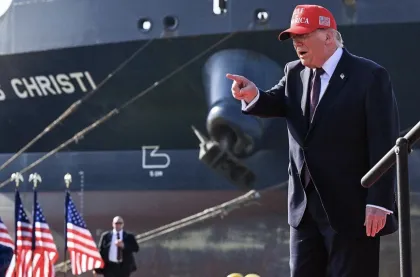
Trump’s Texas Campaign Faces Iran War, Rising Fuel Costs Ahead of Midterms
Related News
Early Voting Surpasses 40 Million As US Midterm Election Battle Intensifies
Kamala Harris Warns Democrats Against Impeaching Trump After Midterm Election Victory
Trump Faces Midterm Pressure as 32% Approval Rating Raises Questions About Republican Prospects
Comments 0
Log in or create a free account to join the conversation. You can comment anonymously.
No comments yet. Be the first.