

Bangladesh Struggles to Attract International Tourists Despite Vast Tourism Potential
Foreign visitor arrivals in Bangladesh have declined, raising questions about tourism infrastructure, safety, international promotion and the country’s ability to convert its natural and cultural attractions into a competitive global destination.

Asia Correspondent, Tourism Analyst & Journalist · CSB News USA
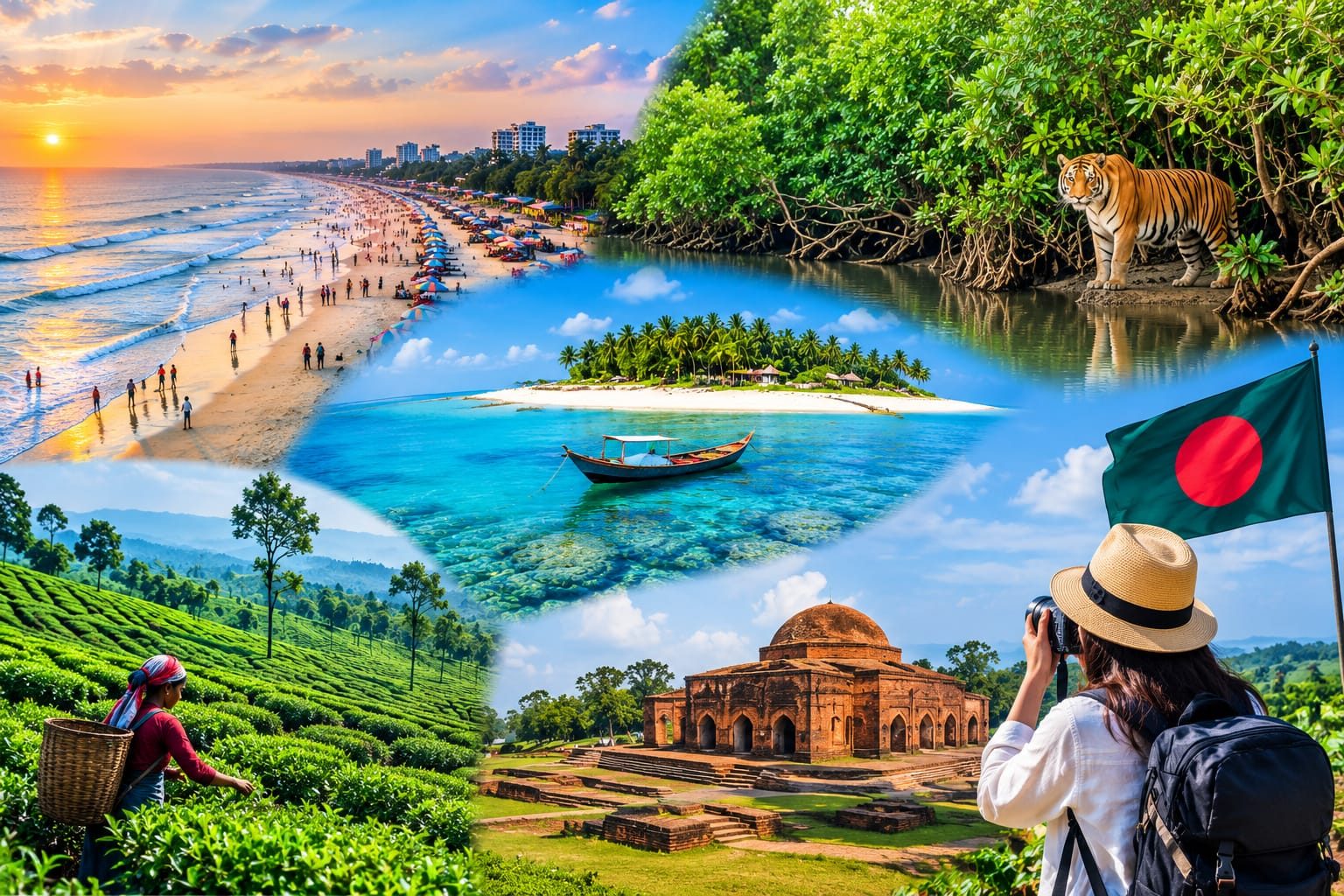
Bangladesh has many of the natural and cultural attractions needed to compete in the international tourism market. From the long sandy coastline of Cox’s Bazar and the mangrove forests of the Sundarbans to the coral-rich island of Saint Martin, the tea gardens of Sylhet and the country’s historic archaeological sites, Bangladesh offers a diverse range of travel experiences.
Yet turning these attractions into sustained international tourism growth remains a significant challenge. Recent visitor-arrival figures indicate a decline, raising questions about the country’s tourism infrastructure, global visibility, travel convenience and ability to attract visitors for leisure and extended stays.
According to figures attributed to the Bangladesh Tourism Board and reported by local media, Bangladesh received 655,451 foreign visitors in 2023. The number declined to 633,094 in 2024 and fell further to 585,145 in 2025. The 2025 total represented a decrease of approximately 7.6 percent from the previous year.
The downward trend reportedly continued during the first half of 2026. Available reports citing compiled statistics from the Bangladesh Bureau of Statistics put foreign visitor arrivals at 239,400 between January and June, approximately 20 percent lower than during the corresponding period of 2025.
These figures require an important qualification: foreign visitor arrivals should not automatically be interpreted as the number of international leisure tourists. Depending on the statistical definition, the totals may include business travelers, foreign passport holders of Bangladeshi origin and people entering the country for other purposes. A clearer assessment of Bangladesh’s tourism performance requires separate data on leisure travel, average length of stay, visitor spending and tourism-related foreign exchange earnings.
Natural Attractions Are Not Enough
Bangladesh’s tourism potential extends well beyond its best-known destinations. Cox’s Bazar offers opportunities for coastal holidays, seafood experiences and marine recreation. The Sundarbans attracts visitors interested in wildlife, biodiversity and mangrove ecosystems. Sylhet offers tea gardens, wetlands and rural landscapes, while historical sites and traditional communities provide opportunities for cultural tourism.
However, natural attractions alone do not guarantee international demand. Travelers also consider transportation, accommodation standards, safety, visa procedures, online booking facilities, cleanliness and access to reliable information.
Bangladesh has an opportunity to develop tourism products that combine its natural landscapes with local food, cultural heritage, river journeys, traditional crafts and community-based experiences. Such products could appeal to travelers seeking destinations beyond conventional regional tourism routes.
The challenge is to turn these attractions into well-organized, accessible and consistently delivered travel experiences.
Safety, Travel Convenience and International Perception
Safety and political stability can influence international travel decisions. Reports of unrest, transportation disruptions or security concerns may affect travel planning, insurance decisions and the willingness of overseas tour operators to promote a destination.
Improving visitor confidence requires more than security patrols. Travelers need dependable transportation, clear emergency procedures, trained tourism personnel, transparent pricing and accessible complaint mechanisms. Tourist police, multilingual assistance and reliable information at airports and major destinations can also improve the visitor experience.
Visa procedures and international connectivity are equally important. Clear application requirements, predictable processing times, efficient airport services and convenient flight connections can reduce the barriers facing potential visitors.
Bangladesh could also strengthen its digital tourism services by improving online reservations, electronic payments, official destination information and access to verified travel providers.
Regional Competition Is Intensifying
Bangladesh competes with established destinations across South and Southeast Asia, including India, Nepal, Sri Lanka, Thailand and Malaysia. These countries offer a range of travel products supported by international marketing, established tour operators, booking networks and recognizable destination brands.
The World Economic Forum’s 2024 Travel and Tourism Development Index ranked Bangladesh 109th among 119 economies. The index assesses the conditions that support travel and tourism development; it is not a direct ranking of international tourist arrivals.
For the 2026 edition, Bangladesh was reported in 98th place among 110 economies. Comparisons between editions should be made cautiously because the number of participating economies and the assessment framework may differ.
Bangladesh’s competitive advantage need not depend solely on low travel costs. Its coastal landscapes, biodiversity, cultural diversity and river-based geography could support distinctive tourism experiences. Achieving that potential, however, requires investment in service quality, destination management and international visibility.
Cox’s Bazar and Saint Martin: Opportunities With Environmental Limits
Cox’s Bazar could play a central role in strengthening Bangladesh’s international tourism profile. A coordinated approach to beach management, accommodation, seafood tourism, local transportation, visitor information and recreational activities could make the destination more accessible to overseas travelers.
But expanding tourism should not mean increasing hotel capacity without addressing environmental and infrastructure pressures. Waste management, beach cleanliness, safe swimming areas, drainage, traffic management and emergency services are essential to maintaining a destination’s long-term appeal.
Saint Martin presents a different challenge. Its fragile marine ecosystem and coral environment require careful protection. Tourism development should be guided by environmental safeguards, visitor-management rules and scientific monitoring rather than by visitor numbers alone.
A sustainable approach could also provide opportunities for local residents through responsible accommodation, guided tours, food services, transport and handicrafts.
Local Communities Must Benefit
Tourism can generate employment across hotels, restaurants, transport services, tour operations, agriculture and small businesses. However, the benefits are more likely to reach local communities when residents have access to training, finance and tourism supply chains.
Training in hospitality, foreign languages, digital reservations, guiding and visitor safety could help young people enter the industry. Women entrepreneurs, local food producers and craft businesses could also benefit from stronger links with hotels and tour operators.
Local participation is especially important in destinations where tourism growth can put pressure on land, water, waste systems and traditional livelihoods.
What Bangladesh Needs to Do Next
A more effective tourism strategy would begin with reliable data. Authorities should distinguish leisure tourists from other international visitors and publish information on visitors’ countries of origin, travel purposes, length of stay, expenditure and repeat visits.
Bangladesh should also develop targeted marketing strategies for markets such as the United States, the United Kingdom, Canada, Australia, Europe and East Asia. Different markets have different travel preferences, spending patterns and holiday schedules, so a single
promotional message may not be sufficient.
Partnerships with international travel media, professional tour operators, travel exhibitions and reputable digital creators could help introduce lesser-known destinations to global audiences. Promotional campaigns should provide practical information about transportation, accommodation, costs, safety and environmental requirements—not just attractive photographs.
Improving visa convenience, airport services, flight connectivity and online booking systems would help convert international interest into actual trips. Public agencies, airlines, hotels, local governments and private investors would need to coordinate these efforts.
Tourism performance should ultimately be measured through more than arrival totals. Average visitor spending, length of stay, visitor satisfaction, repeat travel and environmental impact are also important indicators of whether the sector is developing sustainably.
Bangladesh possesses considerable natural and cultural tourism assets, but recent visitor-arrival figures suggest that the country has yet to translate these advantages into consistent growth in international travel.
Reversing the decline will require a coordinated effort to improve visitor confidence, simplify travel procedures, strengthen infrastructure, expand international promotion and protect sensitive ecosystems.
For Bangladesh, the central question is not simply how many foreign visitors enter the country. It is why they choose Bangladesh, how long they stay, how much they contribute to the local economy and whether their experiences encourage others to visit.
Turning tourism potential into measurable economic and community benefits will depend on reliable data, sustained investment and a visitor experience that meets international expectations.
Related News

Record 274 climbers summit Everest from Nepalese side in single day

Migration crisis dominates Macron-Starmer talks during UK state visit

Netanyahu Heads to Washington for Talks on Gaza Ceasefire and Prisoner Swap Deal

Comments 0
Log in or create a free account to join the conversation. You can comment anonymously.
No comments yet. Be the first.