
Part of: US Midterm Election 2026
Trump Rallies North Carolina Republicans as Crucial Midterm Elections Approach
Donald Trump rallied in Greenville, North Carolina, urging voters to support Republican candidates before the November 3 congressional midterm elections.

CSB News USA
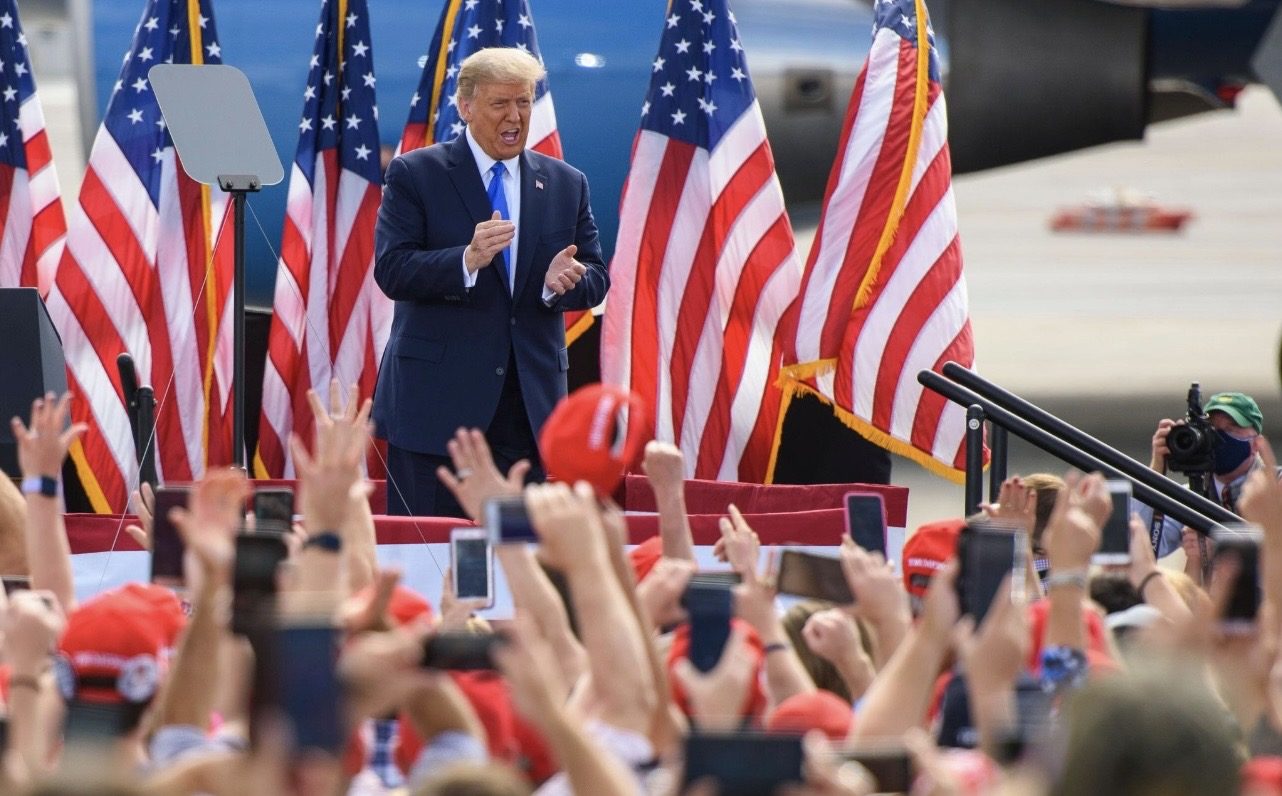
President Donald Trump campaigned in Greenville, North Carolina, on October 20, urging voters to support Republican candidates as the United States approaches its November 3 midterm elections. The rally at Pitt-Greenville Airport formed part of a broader campaign effort to help Republicans retain control of Congress, with several closely contested races drawing national attention.
Trump appeared alongside Republican candidates, including Michael Whatley, the party’s nominee for the United States Senate in North Carolina. Whatley, a former chairman of the Republican National Committee, is challenging Democrat Roy Cooper, a former two-term governor. The contest is attracting considerable attention because its outcome could influence the balance of power in the Senate.
According to Reuters, Trump expressed confidence that Whatley could overcome the doubts surrounding his campaign. Addressing supporters, the president argued that polling had underestimated his political movement in the past and predicted strong results for Republican candidates. His appearance was intended to energize supporters and encourage them to vote before Election Day.
The Senate race is taking place in a politically competitive state where both major parties see opportunities to strengthen their positions. The seat is currently held by Republican Senator Thom Tillis, who is not seeking reelection. Tillis previously clashed with Trump over major legislation and administration policies, adding another dimension to the contest.
Cooper has led Whatley in several published polls. A WRAL/WSOC survey conducted October 7–11 found Cooper ahead by 54% to 40% among likely voters. The poll surveyed 643 people who had voted by mail or indicated they were likely to vote, and its reported credibility interval was five percentage points. These figures represent a snapshot of voter preferences, not a prediction or final election result.
The campaign has also faced financial challenges. Reuters reported that the Senate Leadership Fund, a major Republican political spending group, withdrew planned spending in North Carolina earlier in October as Cooper maintained a substantial polling lead. That decision highlighted concerns among some Republican strategists about the competitiveness of the race.
Trump also urged support for Republican congressional candidates Laurie Buckhout and Jennifer Balkcom, whose campaigns face challenging contests. Buckhout is running against Democratic Representative Don Davis, while Balkcom is challenging Democrat Jamie Ager in a western North Carolina district. The results in these districts could affect the composition of the House of Representatives.
The president’s visit came amid an increasingly active early-voting period. Reuters reported that Democratic voters had cast ballots at roughly twice the rate of Republicans in North Carolina at the time of its report. Early-voting comparisons can change as more ballots are submitted, however, and turnout figures alone do not establish which party will win.
Economic concerns are also influencing the political debate. Higher fuel prices and dissatisfaction with the cost of living have become important issues for voters. Reuters reported that 68% of Americans in a recent Reuters/Ipsos survey disapproved of Trump’s handling of the economy. That finding reflects the views of survey respondents during the polling period and should not be interpreted as the opinion of every American.
During the Greenville rally, Trump highlighted potential economic investments in North Carolina. Commerce Secretary Howard Lutnick announced that industrial minerals company Sibelco was expanding its operations in the state, although specific details were not provided at the event. Trump also said the Defense Department would invest $1.5 billion in semiconductor production in North Carolina. The precise location, implementation schedule and spending details were not specified in the reported remarks, so the announcement should not be treated as evidence that the money has already been spent.
Trump also repeated a promise to provide $5,000 to every American adult if Republicans maintained control of Congress. The statement was a campaign promise; the rally coverage did not establish that an approved, funded government payment programme was in place. Voters should distinguish political pledges from enacted legislation and confirmed benefits.
The event was not without interruption. The Associated Press reported that several protesters disrupted the rally, with one drawing attention to high gasoline prices. The interruptions illustrated how economic concerns have become part of the wider political debate, even during an event intended to rally Republican supporters.
North Carolina is particularly important because its Senate contest and several House races could influence congressional control. Republicans currently hold narrow majorities in both chambers, making the results of competitive races consequential for the administration’s ability to advance legislation. If Democrats gain control of either chamber, they would have greater authority over committee investigations, legislative priorities and congressional oversight.
Trump’s visit was part of a wider effort to campaign for Republican candidates in states across the country before November 3. His strategy places the president at the centre of the campaign, seeking to mobilise his supporters while drawing attention to his administration’s policies. At the same time, his involvement means that voters may assess Republican candidates partly through their views of his presidency.
The final outcome remains uncertain. Polls, early-voting statistics, campaign spending and rally attendance can help describe the political environment, but none determines the result in advance. The official vote count will establish who wins North Carolina’s Senate contest and its closely contested House races. Until then, both parties are continuing their efforts to persuade voters to participate.
Obama Backs Jon Ossoff in High-Stakes Georgia Senate Race: “The Whole Country Is Watching”
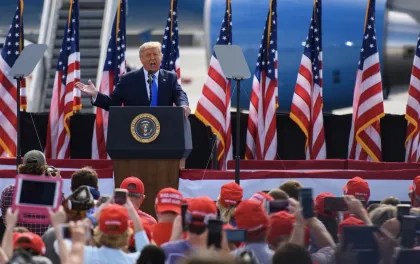
Trump Takes Greenville Stage as North Carolina Midterm Election Battle Intensifies Nationwide
Trump Announces $8 Billion Aid Package for U.S. Farmers Facing Rising Fuel Costs
Trump Heads to Waco October 27 to Rally Support for Republican Senate Candidate Ken Paxton
Reporter
CSB News USA
Related News
Obama Backs Jon Ossoff in High-Stakes Georgia Senate Race: “The Whole Country Is Watching”
Trump Heads to Waco October 27 to Rally Support for Republican Senate Candidate Ken Paxton

Iran Says Strait of Hormuz Could Reopen Within Six Days if US Meets Conditions