US Court Blocks Trump’s $1.8 Million Fines on Immigrants
A federal judge has blocked a Trump administration policy that could impose massive financial penalties on immigrants who remain in the US after final removal orders.

US Court Blocks Trump’s $1.8 Million Fines on Immigrants
The legal battle between the Trump administration and federal courts over immigration policy has intensified after a federal judge in Massachusetts blocked a government policy that sought to impose hefty fines on immigrants who remained in the United States despite having final removal orders.
US District Judge George O’Toole Jr. issued the order in Boston on Monday, temporarily blocking the administration’s effort to collect the fines. The case was brought as a class-action lawsuit involving two immigrants, with support from the Immigrant Legal Resource Center. The judge found that the administration had failed to follow the required legal and administrative procedures when implementing the policy.
Under the policy, immigrants with final removal orders could face fines of up to $998 per day for remaining in the United States. In some cases, the penalties could be calculated retroactively for several years, potentially resulting in fines of as much as $1.8 million per person.
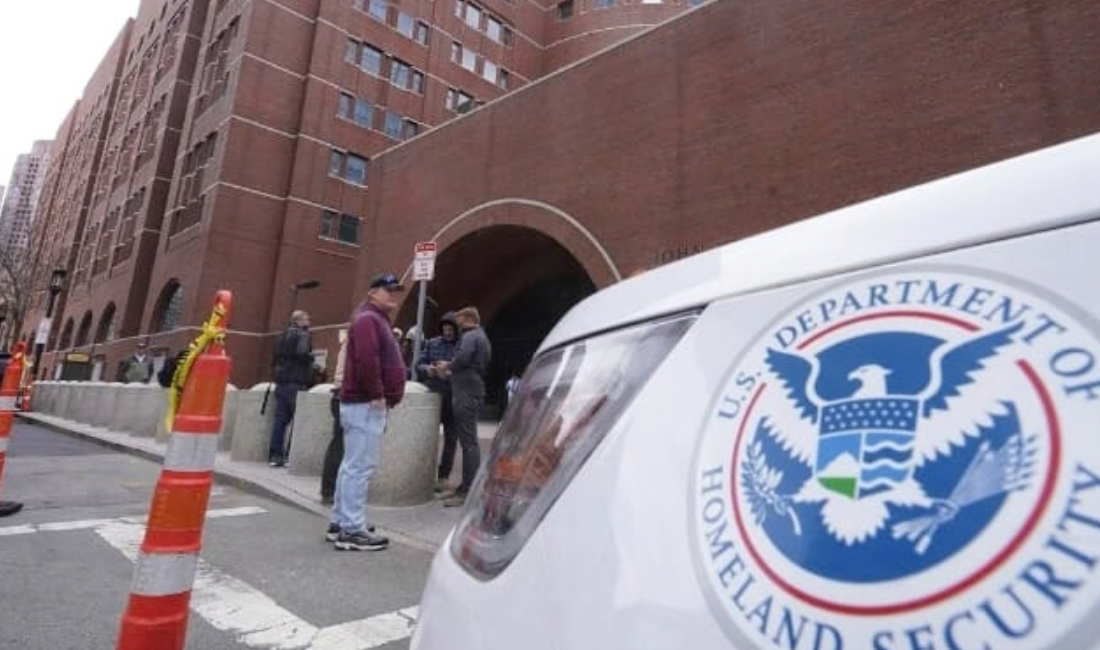
According to Reuters, the policy became a major part of the Trump administration’s broader immigration enforcement efforts during its second term. Government data indicated that, by July, the Department of Homeland Security had issued more than 103,000 fine notices. The combined value of those penalties was reported to be approximately $84 billion.
The lawsuit challenged the way the government imposed the financial penalties on immigrants. The plaintiffs argued that immigration authorities had not adequately considered the individual circumstances of each person before issuing the fines. In particular, they questioned whether the government had provided sufficient information showing why a specific immigrant should be penalized for failing to leave the country.
Judge O’Toole also raised concerns about the information contained in the penalty notices. According to the court, the notices did not provide enough specific details explaining why the penalties applied to individual immigrants. The judge also found that the administration had not followed the necessary administrative process before changing the way the fines were imposed.
The legal authority for such civil penalties dates back to a 1996 US immigration law. However, the Trump administration expanded the use of the penalties during its second term. Under the policy, immigrants who failed to leave the country after receiving final removal orders could be assessed fines of up to $998 for every day they remained in the United States.
The court’s ruling has temporarily halted the government’s effort to collect these large financial penalties. However, the decision does not mean that US immigration enforcement or deportation operations have been completely stopped. The ruling specifically concerns the administration’s fine policy and the procedures used to impose those penalties.
The decision could have significant implications for immigrants and their families across the United States. Some people with final removal orders may remain in the country because of ongoing legal proceedings, family circumstances, humanitarian concerns or other legal complications. Imposing hundreds of thousands or even millions of dollars in fines could create severe financial consequences for them and their families.
The ruling is also part of a broader series of legal challenges involving the Trump administration’s immigration policies. Federal courts have been reviewing various government actions involving immigration enforcement, detention, deportation and the legal rights of immigrants.
The Trump administration has made stricter border control, increased immigration enforcement and deportations major priorities. At the same time, immigration-rights organizations and Democratic officials have argued that enforcement measures must comply with constitutional protections and established legal procedures.
The administration could appeal the ruling to a higher court, meaning the legal battle over the fines is not necessarily over. Future court decisions will determine whether the policy remains blocked, is modified or returns in a different form.
the federal court’s decision represents a significant legal obstacle to the Trump administration’s effort to use large financial penalties as part of immigration enforcement. It also places renewed attention on the balance between the government’s authority to enforce immigration laws and the legal rights of immigrants facing removal.