Riyadh Airport Attack Kills 12, Including Two Bangladeshis, Injures More Than 300
A missile attack at Riyadh’s King Khalid International Airport killed 12 people, including two Bangladeshis, and injured 309, officials said.

By Desk Reporter - CSB News USA
Published on
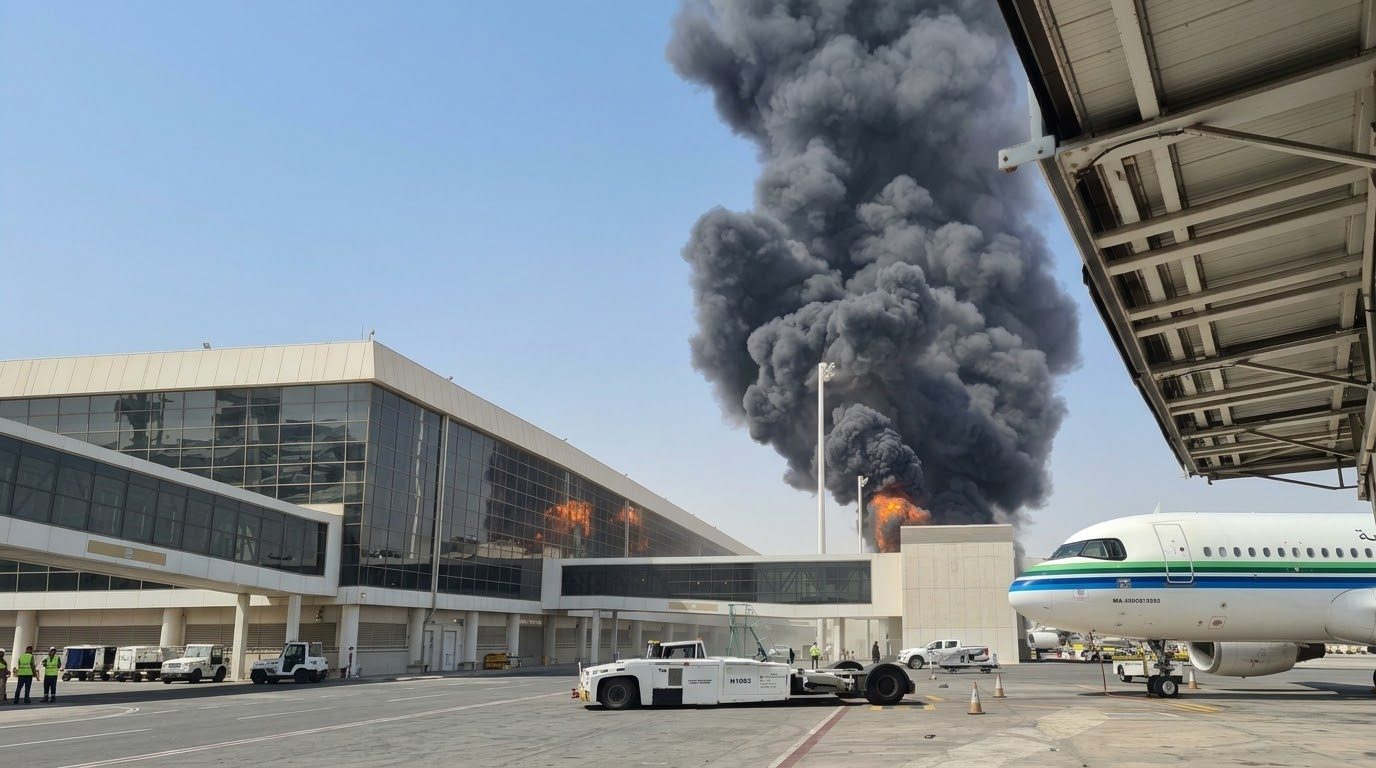
A deadly attack on King Khalid International Airport in Riyadh has killed at least 12 people and injured 309 others, according to Saudi Arabia’s General Authority of Civil Aviation. The victims included four Saudi nationals, two Bangladeshis, one American, one Egyptian, one Jordanian, one Syrian, one Palestinian and one Sudanese national, according to the casualty figures reported by international news organizations. The attack on Saturday, October 10, triggered an emergency response, disrupted air travel and raised fresh concerns about the safety of civilians and international passengers in the region. Reuters, the Associated Press and other international outlets reported the incident and the official casualty figures.
The reported death toll highlights the international impact of the attack. The presence of two Bangladeshi nationals among the dead has caused particular concern for Bangladesh’s expatriate community, many of whom live and work in Saudi Arabia. However, the names, ages, occupations and hometowns of the two Bangladeshi victims should not be published as confirmed information unless they are verified by the relevant authorities or their families.
Saudi aviation officials said 309 people were injured in the attack. Some of the injured were reported to be in critical condition, while hospitals in Riyadh faced a major influx of casualties. Emergency services, including ambulances, responded to the incident as authorities worked to transport the wounded for treatment. The full extent of the physical damage and the circumstances surrounding every casualty require continued official assessment.
Eyewitness accounts cited by Reuters described scenes of confusion inside the airport after the explosion. Some passengers reportedly fled from affected areas, while injured people were seen on the ground. More than a dozen ambulances were reported to have rushed to the airport. These accounts underline the danger that attacks on busy civilian facilities can pose to passengers, airport employees and other people who may have no involvement in the conflict.
Airport operations were suspended following the attack, and flights were cancelled or diverted, according to international reporting. Such disruptions can affect thousands of travellers, including people connecting to other destinations, workers returning home and families travelling for urgent personal reasons. Passengers scheduled to depart from or arrive in Riyadh should check directly with their airlines before travelling to the airport. Flight schedules and airport access arrangements can change quickly during a security emergency.
The attack also comes amid a wider escalation of violence involving Saudi Arabia and Yemen’s Houthi movement. Reuters reported that the strike was the third attack on Riyadh’s international airport during the week. Earlier attacks reportedly killed four people and caused serious damage to a Saudi commercial aircraft. Those earlier casualties are separate from the 12 deaths reported in the October 10 incident and should not be added to the latest toll without clearly explaining the distinction.
Responsibility for the latest attack has been a central issue in reports about the incident. Reuters reported that the Iran-aligned Houthi movement claimed responsibility for the strike. The group has been involved in a prolonged conflict with Yemen’s internationally recognised government, which has received support from Saudi Arabia. The conflict has repeatedly threatened regional security and has involved missile and drone attacks, military operations and retaliatory strikes. Details about the specific weapon used and the full sequence of events should be treated according to the latest verified reporting and official statements.
The incident raises questions about the protection of civilian aviation facilities. International airports are essential to passenger travel, cargo transport, business activity and humanitarian movement. A strike against such a facility can have consequences far beyond the immediate location, especially when flights are diverted, airport services are suspended and foreign governments issue safety warnings.
For Bangladeshis living in Saudi Arabia, the deaths also highlight the importance of reliable emergency information. Saudi Arabia is a major destination for Bangladeshi migrant workers, who support families through employment in construction, transport, hospitality, domestic services and other industries. News of Bangladeshi casualties can create uncertainty among relatives in Bangladesh and among expatriates who may have friends or colleagues working near the affected area.
At this stage, anyone seeking information about the two Bangladeshi victims should rely on official announcements from the Bangladesh Embassy in Riyadh, the relevant consular authorities and verified family statements. Unconfirmed names, photographs or claims about the victims’ occupations should not be circulated as facts. Accurate identification is particularly important when families may still be waiting for formal notification.
The incident also has implications for international travel. Airlines may change schedules, suspend selected routes or offer passengers alternative arrangements when security risks increase. Travellers should monitor official airline notifications, confirm whether their flights are operating and retain their booking details. Those with urgent travel needs should contact their airline before leaving for the airport rather than relying on old online schedules or unverified social media posts.
Foreign nationals in Saudi Arabia should follow local security instructions and any travel advisories issued by their governments. They should avoid restricted areas, remain alert to official announcements and contact their embassies if they need consular assistance. In an emergency, people should follow instructions from local authorities and use verified emergency communication channels.
Beyond the immediate casualties, the attack could deepen concerns about the stability of regional air travel and the security of critical infrastructure. Riyadh is an important centre for government, commerce, international conferences and business travel. Continued disruption could affect passengers, airline operations and commercial activity. The longer-term consequences will depend on the security response, the restoration of normal airport operations and developments in the wider conflict.
The human cost remains the most urgent concern. The families of those killed face the loss of loved ones, while hundreds of injured people require medical care and support. Authorities must continue identifying victims, informing relatives, assisting survivors and investigating the circumstances of the attack.
As of October 11, the reported toll stands at 12 dead and 309 injured, including two Bangladeshi nationals among those killed. The casualty figures and nationalities have been reported by multiple international news organizations citing Saudi aviation authorities. Further information about individual victims, the final damage assessment and any subsequent security measures should be added only when reliable sources confirm the details.
The attack is a stark reminder that violence affecting civilian infrastructure can have consequences for people of many nationalities. For travellers and expatriate communities, the immediate priorities are accurate information, personal safety and access to official assistance. For news publishers, careful verification is essential to ensure that the victims are treated with dignity and that unconfirmed claims do not add to the distress of their families.