

Trump’s Approval Under Pressure as Democrats See an Opening in the 2026 Midterms
President Donald Trump faces growing political pressure as Democrats highlight economic concerns ahead of November’s midterm elections, according to recent polling.

Reporter · CSB News USA
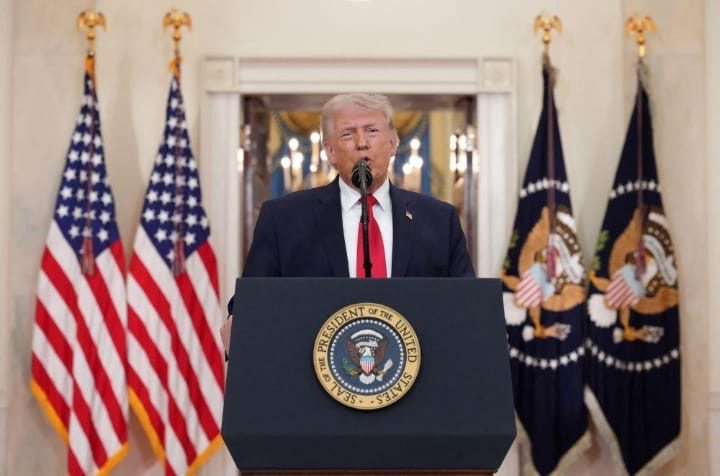
President Donald Trump is becoming a central focus of the 2026 U.S. midterm election campaign, as Democrats seek to turn voter concerns about the economy, living costs and the administration’s policies into electoral gains.
The November 3 elections will determine control of the U.S. House of Representatives and the Senate. The results could significantly affect Trump’s ability to advance his legislative agenda during the remainder of his presidency.
A Pew Research Center survey published October 8 found that Trump’s approval rating had fallen to 30%, its lowest level of his second term at the time of the survey. The research was based on interviews conducted September 28 through October 4 with 5,062 U.S. adults, including 3,917 registered voters.
The same survey found that Democratic candidates held an eight-percentage-point advantage over Republicans in national preferences for the House of Representatives. It also showed that 44% of registered voters viewed their congressional vote primarily as a vote against Trump, compared with 19% who viewed it as a vote in support of him.
The findings suggest that dissatisfaction with the administration could influence voter behavior. However, national polling does not determine the outcome of individual congressional races, and the survey results do not guarantee a Democratic victory.
Economic concerns remain central to the campaign. Voters are closely watching inflation, gasoline prices, healthcare expenses and the broader cost of living. Democrats have argued that the administration’s policies have increased financial pressure on households, while Republicans are seeking to defend their economic record and persuade voters that their policies will deliver better results.
According to an Associated Press report published October 16, Democratic candidates and allied groups spent more than $163 million on television advertisements mentioning Trump between September 1 and mid-October. The advertisements aired nearly 180,000 times, illustrating how prominently the president features in Democratic campaign messaging.
Republicans, meanwhile, have adopted a different approach in many races. Some candidates have emphasized issues such as taxes, crime and economic policy rather than making Trump the central focus of their advertisements. The strategy reflects the challenge of maintaining support among Trump’s political base while appealing to voters who remain concerned about the administration.
The election campaign is also intensifying in competitive states, where relatively small changes in voter turnout could determine the outcome. Georgia is among the states attracting national attention, with Trump campaigning for Republican candidates despite divisions within the state party. Control of the Senate could depend on a limited number of closely contested races across the country.
For immigrant communities, including Bangladeshi Americans, the election could have important implications. Congressional decisions can influence immigration legislation, employment policies, healthcare funding, taxes and federal spending. However, the precise effects will depend on the election results, subsequent legislation and the administration’s policy decisions.
The midterm elections take place halfway through a president’s four-year term. Historically, the president’s party often faces losses in these elections, although the outcome varies by political circumstances, candidates and voter turnout.
Republicans currently face a challenging campaign environment, but Democrats must still translate their polling advantage into victories in individual districts and states. Candidate quality, local issues, fundraising and participation among eligible voters will all play important roles.
With Election Day approaching, the central question is whether dissatisfaction with Trump will be strong enough to change the balance of power in Congress. Recent surveys indicate an advantage for Democrats in national House preferences, but the final outcome remains uncertain.
Related News

Trump’s New Press Secretary Faces Possible Exit Just One Week Into the Job

Trump Heads to Georgia as Midterm Campaign Intensifies
Rising Fuel Prices and Iran Conflict Put Trump’s Republican Party Under Pressure Ahead of Midterm Elections