
Trump Turns on His Own Advisers as Republicans Face Mounting Midterm Election Pressure
Trump faces growing tensions within his political team as Republicans prepare for the November 3 midterm elections, raising questions about campaign strategy, party unity, and control of Congress.

Reporter · CSB News USA
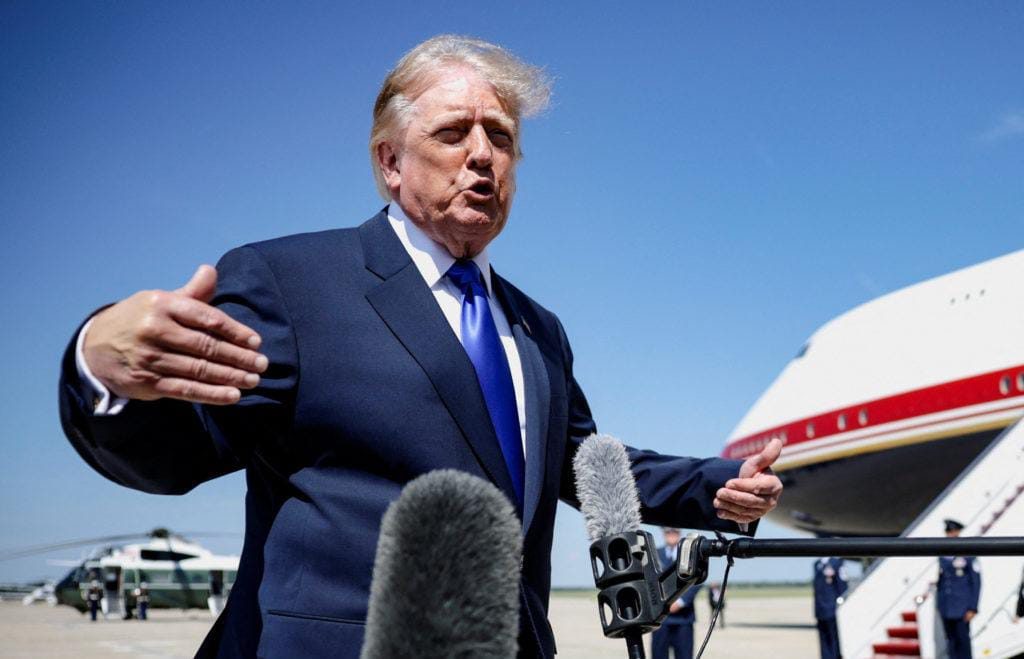
U.S. President Donald Trump is facing growing tensions within his political circle as Republicans prepare for the November 3, 2026, midterm elections. Disagreements over campaign spending, candidate selection, and strategies to win key congressional seats have raised questions about the party’s readiness for the crucial vote. With Republicans seeking to maintain their influence in Congress, the internal disputes are adding pressure to an already challenging election campaign, according to a Reuters report.
One major source of concern is the amount of money being spent on political advertising and campaign activities. According to the figures cited in the report, MAGA Inc., a political super PAC supporting Trump, has spent approximately $200 million on election-related efforts. Despite the substantial spending, concerns remain about whether the investment is translating into stronger polling numbers for Republican candidates in competitive races.
The debate over campaign spending has raised questions about how effectively the money is being used and whether the party’s current strategy is reaching the voters it needs to win. Political spending can help candidates increase their visibility, communicate their positions, and challenge their opponents. However, heavy spending does not guarantee electoral success, particularly when voters are concerned about the economy, living costs, and the performance of the government.
Trump has also expressed concerns about candidate selection and the party’s broader electoral strategy. Choosing candidates who can appeal to voters in closely contested districts is particularly important in midterm elections, when the president’s party often faces a difficult political environment. Candidates who strongly appeal to the party’s core supporters may not always attract enough independent or undecided voters to win competitive races.
Another important issue is congressional redistricting, which involves changing the boundaries of electoral districts. Republicans have pursued redistricting strategies in several states in an effort to improve their chances of winning additional seats or protecting existing ones. However, the political benefits of these changes are not always certain. Legal challenges, voter reactions, and changes in local political preferences can affect whether redistricting ultimately helps a party.
The election carries significant consequences for Trump’s administration. If Democrats win control of the House of Representatives, they would gain greater authority to conduct congressional investigations, hold hearings, and challenge the administration’s policies. A change in control could also make it more difficult for Trump to advance his legislative priorities through Congress.
Maintaining Republican control, on the other hand, would give the administration a stronger position in negotiations over legislation, federal spending, and other national policy issues. The outcome could influence debates over immigration, taxes, government spending, and other priorities that have become central to the political divide in Washington.
The political environment also presents challenges related to the cost of living and economic concerns. Voters frequently judge the party in power by the state of the economy, household expenses, employment opportunities, and the affordability of housing and other essential needs. If voters believe that economic conditions have worsened, their dissatisfaction could affect Republican candidates even in districts that have traditionally supported the party.
At the same time, Democrats must overcome their own challenges to secure victories in competitive districts. Their success will depend on voter turnout, the strength of individual candidates, campaign organization, and their ability to persuade undecided voters. Although polling can provide an indication of public opinion, surveys are not final election results, and the political situation can change as Election Day approaches.
Trump’s influence remains a central factor in the Republican campaign. His endorsements, public appearances, and political messaging can help mobilize supporters, but his administration’s performance can also shape how voters evaluate Republican candidates. Consequently, the midterm results could become an important measure of his political standing and the public’s response to his policies.
Despite the growing concerns, it would be premature to conclude that Republicans are certain to lose control of Congress. Election outcomes depend on numerous factors, including local issues, candidate quality, turnout, campaign effectiveness, and the distribution of votes across individual districts and states.
As November 3 approaches, the disagreements over campaign spending, candidate selection, and election strategy are likely to remain important issues for Republican leaders. Whether the party can resolve its internal tensions and maintain control of Congress will become clearer when voters cast their ballots and the official results are counted.