

India's Electronic Warfare Capability Against China and Pakistan
India holds a significant advantage over Pakistan in electronic warfare (EW), but China’s rapidly advancing AI-driven capabilities present a far more complex strategic challenge. As Beijing strengthens its electromagnetic warfare architecture and deepens defence cooperation with Islamabad, India faces an increasingly interconnected threat on its western and northern fronts. Closing the gap in cognitive EW, space-enabled coordination, and resilient military communications will be critical to India’s future battlefield preparedness.

Defence & Strategic Affairs Analyst · CSB News USA
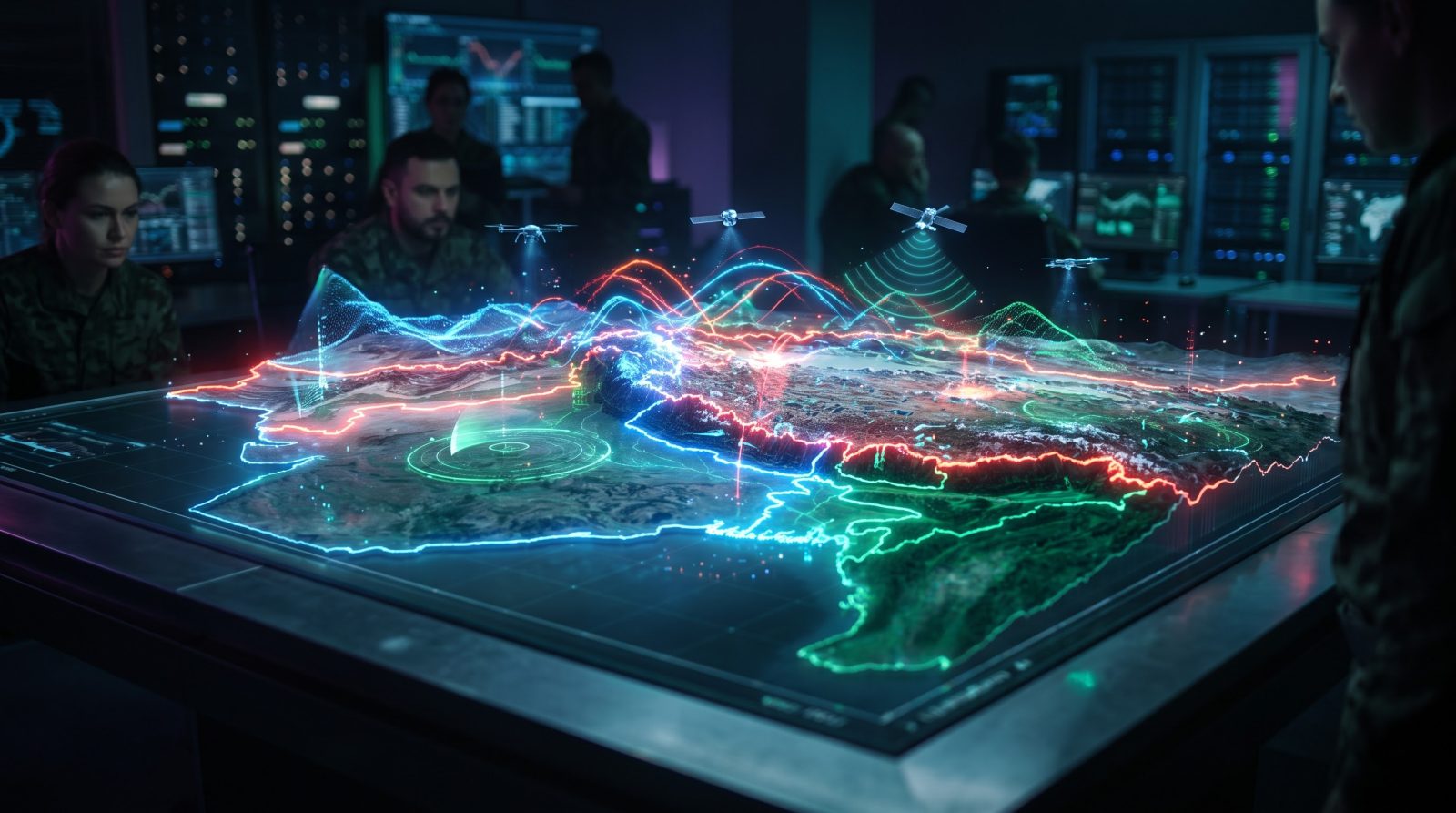
When India's indigenous EW systems jammed Pakistan's Chinese-supplied air defence networks during Operation Sindoor in May 2025, the twenty-three-minute strike that followed was as much an electromagnetic operation as it was a kinetic one. What that operation confirmed, and what has largely been missing from the subsequent analysis, is a question that Indian defence planners must answer with precision: how does India's EW capability compare, not just to what Pakistan deploys on its own, but to the Chinese EW architecture that increasingly underpins Pakistani defence systems? And where the comparison reveals gaps, what must India build to close them?
The answers are more differentiated than either the optimistic or the pessimistic reading of India's EW trajectory suggests. India holds genuine advantages over Pakistan in the depth and indigenisation of its EW architecture. Against China's PLA, the comparison is less comfortable and demands an honest assessment rather than institutional reassurance.
China's Electromagnetic Kill Chain: The Peer-Level Threat
China's People's Liberation Army has built what analysts describe as an integrated electronic kill chain, an architecture that synchronises electronic, cyber, and space elements to neutralise adversary sensors and decision systems in a matter of minutes. This is not an aspiration. It is a deployed capability, demonstrated across the South China Sea where China has quietly expanded EW and surveillance infrastructure across its artificial island bases, with satellite imagery confirming new antenna arrays, mobile EW vehicles, and overlapping ISR coverage deployed between 2023 and 2025. By synchronising these elements, China has built an architecture capable of neutralising adversary sensors and decision systems within minutes, backed by artificial intelligence for cognitive EW that enables automated systems to classify signals, identify hostile emissions, and deploy countermeasures without human intervention.
The cognitive dimension is the most strategically significant. China has revealed 6G-enabled EW systems capable of generating thousands of radar decoys, targeting stealth aircraft, and disrupting satellite communications. Chinese scientists have publicly confirmed development of the world's first system achieving simultaneous same-frequency full-duplex communication and jamming capabilities, a photon-driven architecture that fuses communication, radar, and EW functions into a single compact system. The PLA's EW employment doctrine focuses on high-value targets rather than indiscriminate wide-area jamming, targeting specific high-value assets while allowing lower-value assets to operate normally, which precludes the adversary from detecting the EW attack before it achieves its effect.
Against this, India's EW architecture faces a genuine peer-level challenge along the northern border. China's space-enabled real-time coordination of jamming and deception operations, its cognitive EW capability that operates faster than human decision cycles, and its demonstrated ability to build integrated electromagnetic kill zones represent a qualitatively different threat from any adversary India has historically faced. India's Samyukta and Samudrika suites are capable against legacy communications and radar architectures. Against AI-driven cognitive EW operating at machine speed, they are necessary but not sufficient.
Pakistan's EW: A Proxy for China's Architecture
Pakistan's EW posture presents a different analytical challenge. Pakistan has historically been reluctant to adopt EW at large scale, but is now building a significant domestic capability in communications intelligence systems through its National Radio and Telecommunication Corporation, with COMINT and SIGINT systems forming the core of its offerings. The more strategically significant dimension of Pakistan's EW capability, however, is its Chinese-supplied infrastructure. Operation Sindoor demonstrated that Pakistani air defence relied heavily on Chinese-origin systems including the HQ-9/P and LY-80. Pakistan's C-UAS strategy leverages EW for initial denial coverage, especially at scale against salvos, with anti-air guns as the mainstay hard-kill layer.
Post-Sindoor acquisitions reflect the lessons Pakistan drew from the conflict: the Type 625E short-range counter-drone system has been inducted, specifically targeting drone swarms and low-altitude threats. Pakistan is in formal negotiations with Beijing for the KJ-500 AEW&C aircraft, featuring a fixed dorsal radome housing three advanced AESA radar arrays delivering 360-degree coverage, with reported detection ranges up to 470 kilometres against fighter-sized targets. The interconnectedness that this creates is the strategic insight that India's planners must treat as a first-order problem. Pakistan's EW capability is not independent of China's. When Chinese-supplied systems are networked into Pakistan's order of battle, and when Chinese engineers and advisers support their operation, the technical baseline of Pakistani EW reflects not just Pakistani industrial capacity but the full depth of Chinese EW development. India does not face a Pakistan EW problem and a China EW problem separately. It faces a China-Pakistan EW axis problem, and the two theatres are not as discrete as peacetime geography suggests.
India's Position: Where It Leads and Where It Does Not
Against Pakistan's independent EW capability, India holds clear advantages. Samyukta's operational range, Samudrika's naval EW depth, Dharashakti's demonstrated drone neutralisation at 150 kilometres, and the private sector counter-drone architecture from DRDO JAU, IG T-Shul, and Zen Technologies together constitute a more indigenised, more deeply layered, and more operationally tested EW posture than Pakistan can currently match without Chinese support. Operation Sindoor confirmed this comparison in combat conditions. India's EW successfully penetrated and disrupted Pakistani air defences built on Chinese systems. That is a meaningful operational data point.
Against China's PLA EW capability along the northern border, the comparison requires more nuance. India's traditional EW systems, capable against legacy communications and radar architectures, face an adversary that has moved into cognitive EW territory where machine learning identifies and responds to jamming faster than human operators can adapt. China's real-time, space-enabled capability allows the PLA to coordinate jamming and deception operations with extraordinary precision. India's PRAGYASHAKTI initiative, with its machine learning modules for waveform decoding and adaptive jamming management, is the right doctrinal response to this challenge. Its operationalisation timeline relative to China's deployment pace is the variable that determines whether the gap widens or closes. The geographical dimension compounds the technological one. Along the LAC, China operates from the Tibetan plateau with logistical access and infrastructure investment that India's forward deployment cannot match. Geography is an EW variable, not merely a kinetic one.
The Gaps India Must Close
From first principles, closing India's EW gap against China requires action at three distinct levels. The first is cognitive EW capability. India must accelerate the development and deployment of AI-driven EW systems capable of operating at machine speed. DRDO's identification of cognitive EW as a research priority is correct. The conversion of that research priority into deployed systems must happen at a pace determined by China's deployment timeline, not by India's conventional procurement cycle. The iDEX framework, which has already demonstrated the ability to compress the timeline from problem statement to fielded capability in the drone warfare domain, should be applied explicitly to cognitive EW with dedicated challenge tracks and accelerated procurement pathways for AI-driven signal classification and adaptive jamming systems.
The second is space-enabled EW coordination. China's ability to coordinate jamming and deception operations with space-based real-time precision gives it a synchronisation advantage that ground-based EW architectures cannot replicate. India's space programme, through ISRO and the Defence Space Agency, must be integrated into India's EW architecture in the same way that China has integrated the Strategic Support Force's space capabilities into PLA EW operations. This is not a hardware problem. It is an institutional integration problem, and PRAGYASHAKTI's framework provides the logical structure within which space-enabled EW coordination can be built.
The third is hardened communications for India's own systems operating in EW-contested environments. The October 2025 trial failure, where every Indian drone failed under simulated jamming, is not merely a drone problem. It is a symptom of a broader communications hardening deficit that affects every platform India operates in the electromagnetic battlespace. The IIT Kanpur hub's work on jam-resistant, frequency-hopping, encrypted data links must be extended beyond UAVs to the full spectrum of India's combat communications, with explicit standards for EW resilience mandated across every new procurement. Against Pakistan's EW posture, India's most important investment is in ensuring that its operational understanding of Pakistani EW systems, including those of Chinese origin, remains current and granular, with sustained technical intelligence collection against Chinese-origin systems deployed in Pakistan forming the foundation of effective counter-EW planning.
The Verdict
The electromagnetic comparison between India, China, and Pakistan is not a simple ranking. It is a map of differentiated advantages and specific gaps that vary by theatre, domain, and the specific capability dimension being assessed. India leads Pakistan in the indigenisation, depth, and operational validation of its EW architecture. Operation Sindoor confirmed this. India faces a genuine peer-level challenge from China's cognitive EW capability along the northern border, a challenge that PRAGYASHAKTI, the EW brigades, and the IIT Kanpur hub are collectively designed to address but have not yet fully closed.
The strategic context that makes this comparison urgent is the China-Pakistan axis, where Pakistan's access to Chinese EW technology means that India's northern and western challenges are not independent. The EW systems that India may face from Pakistan in a future western theatre conflict are likely to incorporate Chinese architecture, Chinese components, and potentially Chinese technical support. India's EW planning must account for this integration rather than treating the two theatres as separate analytical domains. The electromagnetic spectrum, like the adversaries who contest it, does not respect the boundary between the LAC and the LoC.
Related News

Bangladesh, Netherlands Discuss Trade, Investment and Rohingya Repatriation

Dominican Man Shot by Immigration Agents During Arrest in New York City

U.S. Jobless Claims Fall, but Slower Hiring Raises Concerns Over Long-Term Unemployment