

Jeffries Faces Progressive Pressure as Pressley Petition Fuels Speaker Race Debate
Jeffries seeks progressive support before Wednesday’s leadership vote as a petition urges Ayanna Pressley to become the next House speaker.

CSB News USA
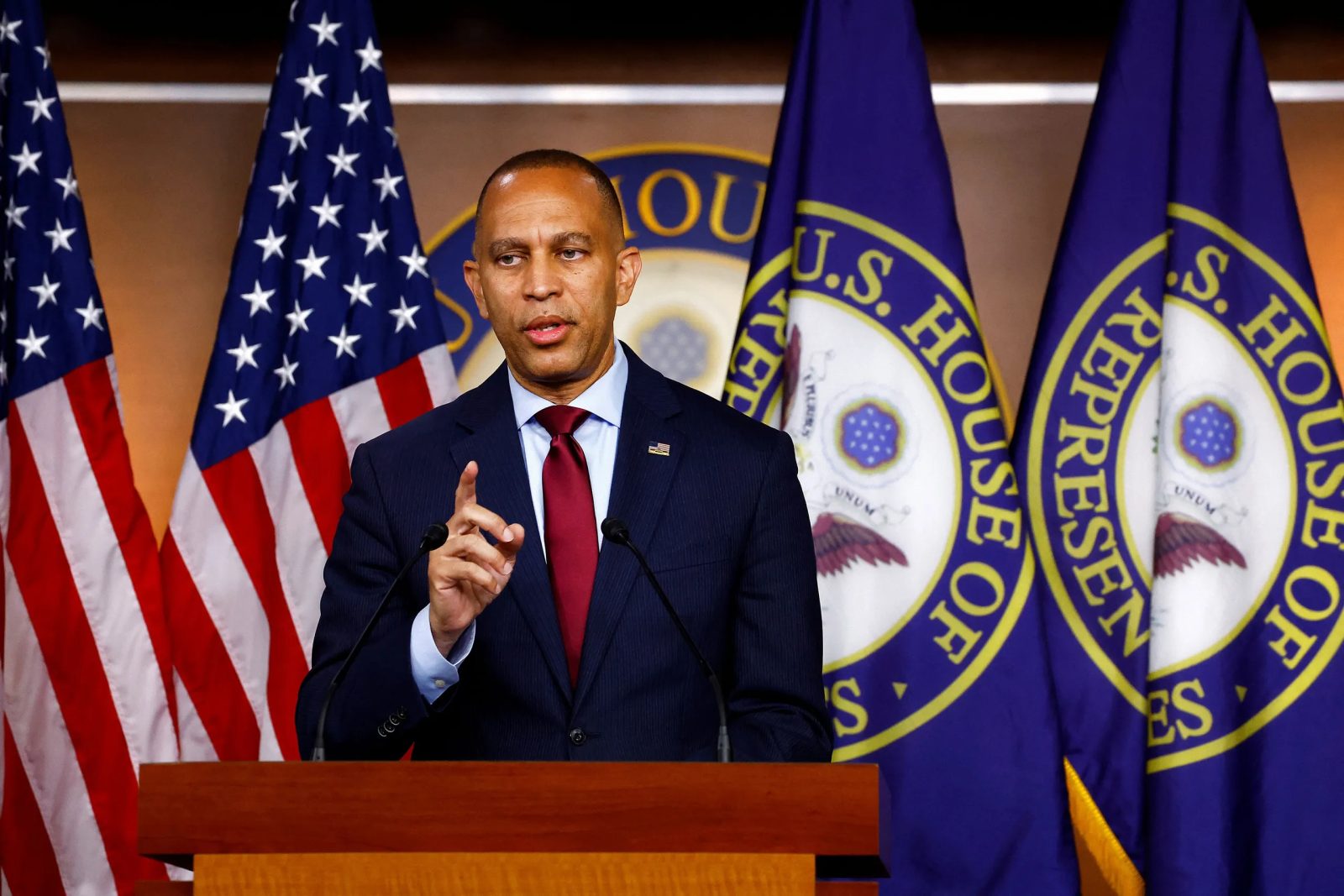
House Democratic Leader Hakeem Jeffries is working to strengthen support among progressive Democrats ahead of the party’s leadership elections on Wednesday, November 18, as growing grassroots pressure and an online petition have brought Massachusetts Representative Ayanna Pressley into the conversation over who should lead Democrats in the House of Representatives.
The emerging debate highlights differences within the Democratic Party over leadership, political strategy and how aggressively lawmakers should challenge President Donald Trump’s administration. While Jeffries remains the leading candidate for the speakership, progressive activists and some Democratic supporters are calling for a more outspoken leader who they believe would better represent the party’s progressive voters.
An online petition calling for Pressley to become the next House speaker has attracted significant attention. According to a November 16 report by GBH, the petition on Change.org had collected nearly 150,000 signatures. The campaign reflects growing interest among progressive activists in seeing Pressley take a more prominent leadership role in Congress.
However, the petition does not represent an official congressional nomination, and its signature count should not be confused with support from elected lawmakers. No formal announcement has been made that Pressley intends to challenge Jeffries for the position.
The petition comes as Jeffries prepares for the Democratic leadership elections scheduled to begin on November 18. House Democrats will vote internally to select their party’s nominee for speaker. The eventual speaker will be elected separately by the full House of Representatives when the new Congress convenes in January.
Jeffries, a New York Democrat who has led the House Democratic caucus since 2022, is widely regarded as the strongest candidate for the position. He has maintained considerable support among Democratic lawmakers, although some progressive members and grassroots activists have questioned whether his political approach is sufficiently aggressive.
According to an Axios report published November 13, Jeffries has begun meeting with lawmakers who have expressed reservations about his leadership. He has also been reaching out to current members and incoming Democratic representatives to discuss how the party can work together and deliver on its political priorities.
The discussions are particularly important following the Democrats’ victories in the November 3 midterm elections. The party is preparing to take control of Congress in the next legislative session, creating expectations that its leaders will pursue an ambitious political and legislative agenda.
Jeffries has emphasized that Democrats must focus on reducing the cost of living, improving economic conditions and holding the administration accountable. In a November 12 press conference, he said House Democrats intended to work toward making life more affordable for Americans and addressing concerns affecting working families.
Nevertheless, progressive activists argue that economic messaging alone will not be enough. They want Democratic leaders to take stronger positions on healthcare, housing affordability, immigration enforcement, corporate influence and American foreign policy.
Pressley has become a prominent figure in this debate because of her established record as a progressive lawmaker. Representing Massachusetts’ 7th Congressional District since 2019, she has advocated for economic equality, racial justice, affordable healthcare, housing protections and expanded civil rights.
Her supporters believe she could bring a different leadership style to the House Democratic caucus. They describe her as a politician willing to challenge established party positions and speak directly about issues affecting lower-income communities and working families.
The movement supporting Pressley has also received attention from progressive political figures outside Congress. Activists have argued that the party should use its newly gained political strength to pursue more ambitious reforms rather than return to a cautious, establishment-oriented approach.
Despite the growing public campaign, Pressley has not announced a bid for speaker. Her spokesperson, Ricardo Sanchez, told Axios that she is actively discussing with Jeffries how Democrats can use their anticipated majority, respond to the current political moment and deliver results for the American people.
The spokesperson also acknowledged that Pressley appreciates the support coming from constituents and people across the country who have expressed confidence in her leadership. The statement did not explicitly confirm that she intends to challenge Jeffries.
Axios also reported that Pressley had privately told colleagues she did not want the speakership. This distinction is important because the public petition and her actual political intentions are not necessarily the same.
Another lawmaker whose name has appeared in discussions is Maryland Representative Jamie Raskin. However, Raskin has ruled out running for speaker and expressed support for Jeffries. He has indicated that chairing the House Judiciary Committee is his preferred role.
California Representative Ro Khanna has also expressed support for Jeffries rather than positioning himself as a challenger. These developments have made it difficult for the progressive movement to identify a congressional candidate willing to organize a formal challenge.
The debate also reflects broader dissatisfaction among parts of the Democratic grassroots base. Some activists believe party leaders have not consistently demonstrated enough resistance to the Trump administration. Others argue that the party needs to prioritize practical economic policies and maintain a coalition broad enough to represent moderate and progressive voters.
The differences became visible at a Democratic gathering in Denver, where Jeffries faced criticism from protesters who questioned his political positions and demanded stronger action on healthcare, foreign policy and other progressive priorities. A November 13 Reuters report described the confrontation as evidence of continuing divisions within the party.
For Jeffries, the immediate challenge is to maintain party unity while responding to demands for a more ambitious agenda. His supporters argue that his experience, relationships within the caucus and ability to communicate the party’s priorities make him the strongest choice to lead the House.
For Pressley, the growing petition and public attention could increase her influence even without a formal leadership campaign. Political observers cited by GBH suggest that being viewed as a potential alternative could strengthen her negotiating position on committee assignments, legislative priorities and oversight initiatives.
One possible outcome is that progressive lawmakers could use their support or opposition during the leadership process to seek stronger commitments from Jeffries. These could include investigations into federal immigration enforcement, greater congressional oversight and more aggressive efforts to challenge administration policies.
The distinction between the two upcoming votes remains essential. The November 18 Democratic leadership election will determine the party’s nominee for speaker, not the speaker of the entire House. The full chamber is expected to conduct the official speaker election when the 120th Congress convenes on January 3, 2027.
If Jeffries secures the Democratic nomination, he will enter that election as the party’s leading candidate. Although a challenge could still emerge before the full House vote, no declared Democratic challenger has been identified in the latest reporting.
The coming days will therefore be an important test of how Democrats balance internal disagreements with their responsibility to govern. Jeffries is seeking to consolidate support, while Pressley’s growing public backing has placed progressive demands at the center of the leadership discussion.
For now, the petition represents a significant grassroots political campaign rather than evidence of an organized congressional challenge. Whether that pressure produces concrete policy commitments or changes the leadership contest remains to be seen.
Reporter



Comments 0
Log in or create a free account to join the conversation. You can comment anonymously.
No comments yet. Be the first.