

UN Climate Chief Urges Compromise as COP31 Enters Decisive Second Week in Turkey
UN climate chief Simon Stiell has urged nearly 200 countries to accelerate negotiations and compromise as COP31 enters its decisive second week in Turkey. Discussions remain focused on electrification, fossil fuel phase-outs and financial support for climate-vulnerable nations.

CSB News USA
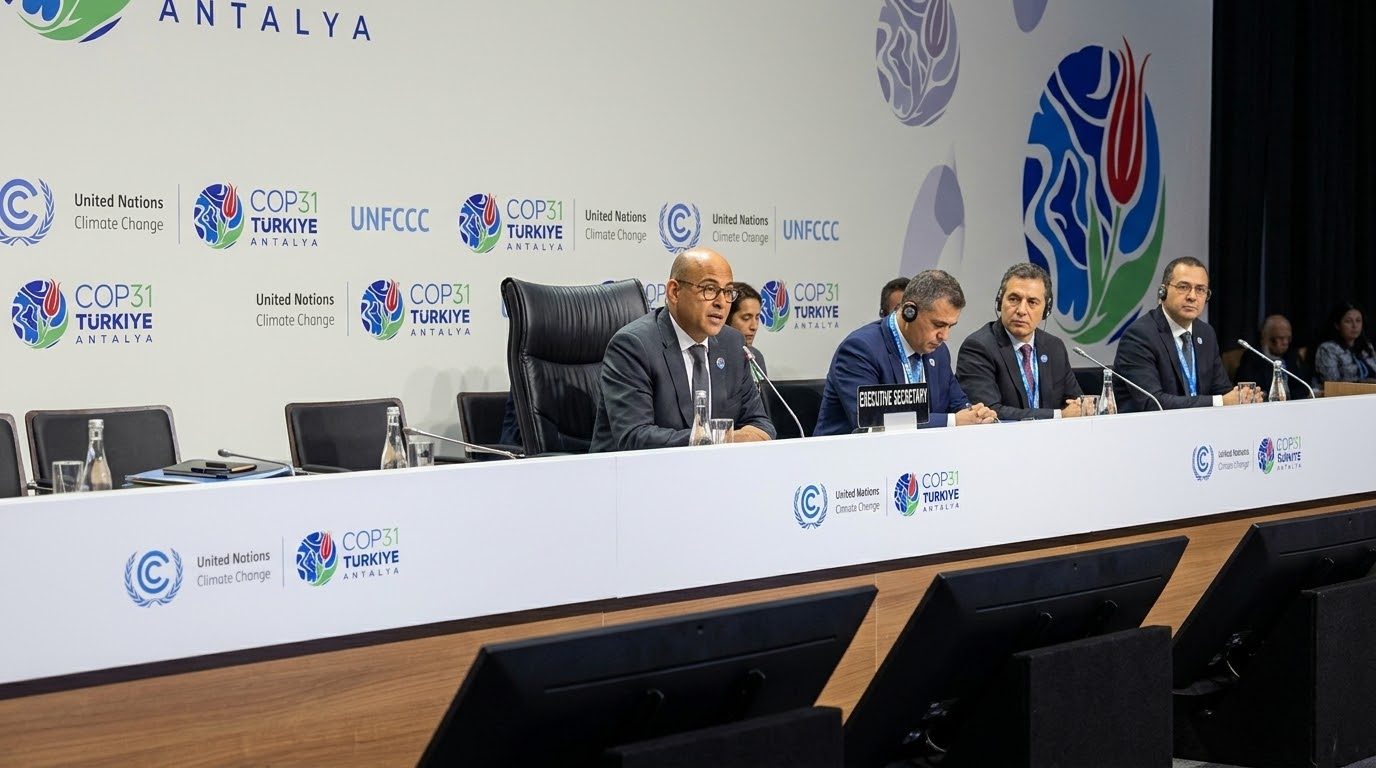
Speaking on Saturday, Stiell called on negotiators to address the most difficult issues without delay and avoid tactical setbacks as countries work towards stronger climate commitments.
"At the start of the second week, I urge parties to move swiftly to the hardest issues and avoid tactical delays," Stiell said.
The conference is focusing on accelerating electrification across all regions and improving access to climate finance for countries most vulnerable to climate change. Stiell acknowledged that negotiations covering 165 agenda items remain complex, stressing that international cooperation and compromise are essential to reaching an agreement.
"Each country has a view. Every country has a voice. Getting agreement on every word, every sentence is tough but vital work. There is no collective success without compromise from every party," he said.
Meanwhile, Greenpeace Germany chief Martin Kaiser described the preliminary assessment of European engagement at the conference as disappointing.
Kaiser said German Environment Minister Carsten Schneider, who is scheduled to arrive on Monday, should push for three key commitments during the second and final week of negotiations. These include a target for green electrification, concrete plans to phase out oil, gas and coal, and an end to deforestation.
On electrification, Australia, which is co-presiding over the conference, is seeking agreement on increasing electricity's share of global final energy consumption from the current 23 percent to 35 percent by 2035.
The target covers electricity used across different sectors, including transport, heating, cooling and household appliances.
Greater electrification in transport, buildings and industry could significantly improve energy efficiency. According to calculations by the International Energy Agency (IEA), emissions from these sectors could be reduced by up to 40 percent by 2035 under an ambitious scenario.
The climate benefits would be greater if the additional electricity came from renewable sources such as solar, wind and hydropower.
Funding Disputes Intensify at Climate Talks
Financial support for vulnerable countries emerged as one of the most contentious issues during the first week of negotiations.
African countries, in particular, called on donor nations to provide clear commitments on how much funding they would contribute towards climate adaptation, when the money would be delivered and how its use would be monitored transparently.
The disagreement is partly linked to a decision adopted at COP30 in Brazil. Under that agreement, wealthy nations committed to tripling adaptation finance by 2035. However, the decision did not establish a clear baseline year, intermediate targets or a specific final funding amount.
Sabine Minninger of the German development organisation Brot für die Welt (Bread for the World) expressed understanding of the frustration among African nations.
"The fact that people in Africa are plagued by severe droughts, crop failures and floods due to global warming is simply ignored by industrialized nations at the negotiating table when they refuse to talk about money," she told German news agency dpa.
As COP31 moves into its second week, negotiators face growing pressure to bridge differences over climate finance, fossil fuel phase-outs and electrification. The outcome will depend on whether participating countries can reach compromises and translate climate commitments into concrete action.
Reporter


Comments 0
Log in or create a free account to join the conversation. You can comment anonymously.
No comments yet. Be the first.