

10 Legal Ways to Get a U.S. Green Card: Employment, Investment, Family and More
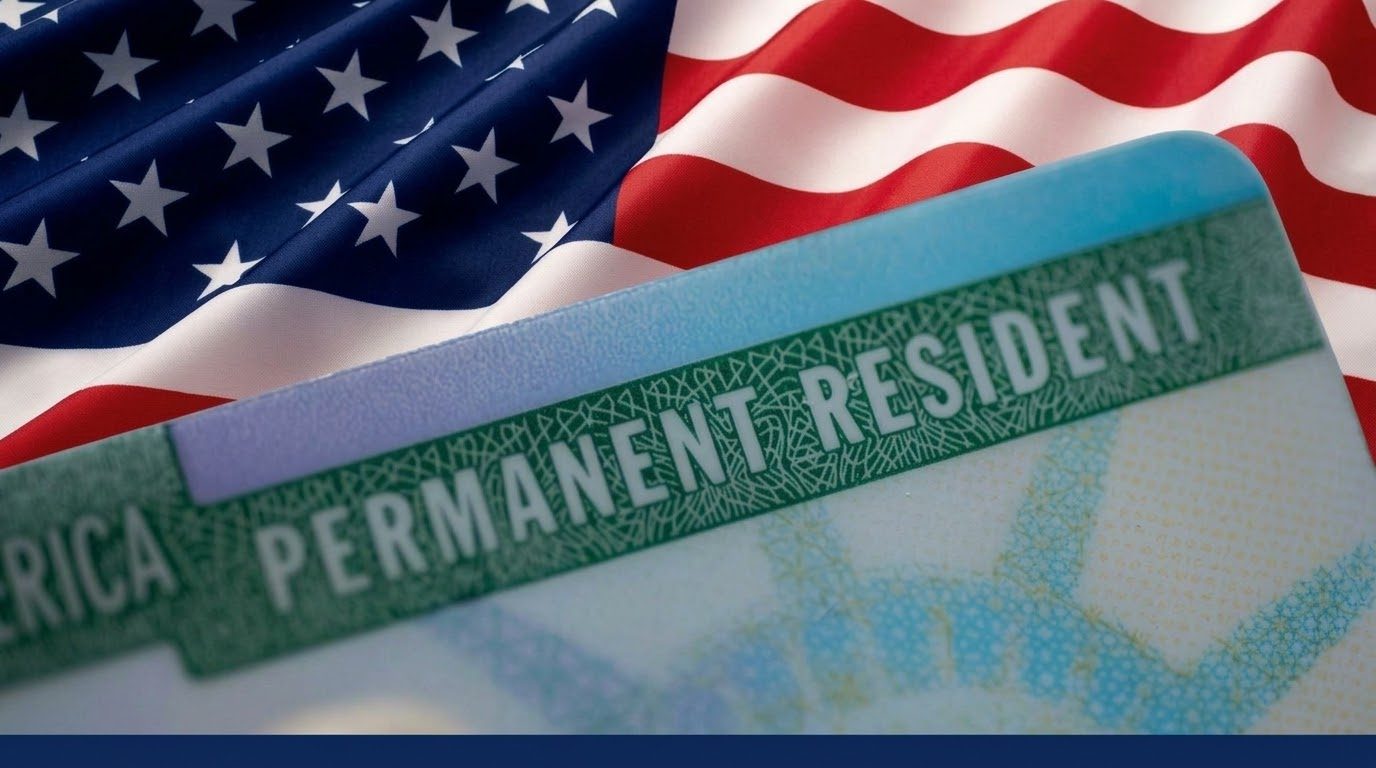
A U.S. Green Card offers foreign nationals the opportunity to live and work permanently in the United States. While family sponsorship and marriage are among the most familiar routes, they are not the only options. Eligible applicants can also pursue permanent residency through employment, higher education and professional achievements, investment, humanitarian protection and special immigration programmes. However, each pathway has different eligibility requirements, application procedures and waiting periods.

CSB News USA
1. Family-Based Green Card
Foreign nationals may obtain a Green Card through sponsorship by eligible family members who are U.S. citizens or lawful permanent residents.
U.S. citizens can petition for their spouses, children, parents and, under certain conditions, siblings. Green Card holders can generally sponsor their spouses and unmarried children.
However, waiting periods vary depending on the family relationship and visa category. Immediate relatives of U.S. citizens are not subject to the same annual numerical limits as other family-based applicants.
2. Marriage-Based Green Card
Marrying a U.S. citizen or lawful permanent resident is another route to permanent residency.
Applicants must demonstrate that their marriage is genuine and based on a real marital relationship. Marriages entered into solely to obtain immigration benefits are considered fraudulent and can result in serious legal consequences.
If the marriage is less than two years old when permanent residency is granted, the applicant generally receives a two-year conditional Green Card. They must subsequently apply to remove the conditions to obtain permanent residency without conditions.
3. H-1B Visa and Employer Sponsorship
Foreign professionals working in the United States under an H-1B visa may pursue permanent residency through employer sponsorship.
In most cases, the employer must first complete the PERM labor certification process through the U.S. Department of Labor before filing Form I-140, Immigrant Petition for Alien Workers, with U.S. Citizenship and Immigration Services (USCIS).
Once an immigrant visa becomes available, eligible applicants can apply for adjustment of status through Form I-485 if they are in the United States, or complete consular processing abroad.
However, holding an H-1B visa does not automatically guarantee a Green Card. The applicant and employer must meet the relevant immigration requirements.
4. Extraordinary Ability and International Recognition (EB-1)
Individuals with extraordinary abilities in science, education, business, arts and athletics may qualify for permanent residency under the EB-1 category.
This category also includes outstanding professors and researchers with international recognition, as well as qualifying multinational managers and executives.
Applicants with extraordinary ability may be able to petition for themselves without employer sponsorship if they meet the strict eligibility requirements.
Evidence of national or international recognition, professional achievements, awards, publications and significant contributions can help establish eligibility.
5. Higher Education and National Interest Waiver (EB-2)
Individuals with advanced degrees or exceptional ability in science, arts or business may qualify for a Green Card through the EB-2 category.
One important option is the National Interest Waiver (NIW), which allows eligible applicants to request an exemption from the usual job-offer and labor-certification requirements.
To qualify, applicants must demonstrate that their proposed work has substantial merit and national importance, that they are well positioned to advance the proposed work, and that granting the waiver would benefit the United States.
Researchers, technology professionals, medical specialists and entrepreneurs may consider this pathway if they meet the requirements.
6. Skilled and Professional Workers (EB-3)
The EB-3 category provides another employment-based route for foreign workers seeking permanent residency.
It covers three main groups:
Skilled workers: Individuals whose jobs require at least two years of training or work experience.
Professionals: Applicants whose positions require at least a bachelor's degree or its foreign equivalent.
Other workers: Individuals applying for qualifying permanent positions requiring less than two years of training or experience.
In most cases, a U.S. employer must obtain labor certification from the Department of Labor and file Form I-140 with USCIS.
The availability of immigrant visas and the applicant's priority date can affect how long the process takes.
7. Investment Through the EB-5 Investor Program
Foreign nationals with substantial financial resources may qualify for permanent residency through the EB-5 Immigrant Investor Program.
The programme requires applicants to invest a specified amount in an eligible U.S. commercial enterprise and create at least 10 qualifying full-time jobs.
As of November 15, 2026, the minimum investment thresholds stated for the programme are:
$1,050,000: For standard qualifying projects.
$800,000: For qualifying projects in targeted employment areas or certain infrastructure projects.
Applicants must also demonstrate that their investment funds came from lawful sources.
However, simply investing money does not guarantee a Green Card. Applicants must satisfy all applicable investment, job-creation and immigration requirements.
8. Refugee and Asylum-Based Green Card
People granted refugee status or asylum in the United States may also qualify for permanent residency.
Refugees are generally required to apply for a Green Card after being physically present in the United States for at least one year following admission as a refugee.
Similarly, individuals granted asylum may apply for permanent residency after meeting the one-year physical-presence requirement following the grant of asylum.
Applicants must also satisfy applicable legal and eligibility requirements.
9. Special Immigrant and Humanitarian Protection Programmes
Several special immigration programmes provide pathways to permanent residency for individuals facing particular circumstances.
Under the EB-4 category, certain religious workers, special immigrant juveniles and other qualifying groups may apply for permanent residency.
Other options include:
VAWA: Certain victims of abuse by U.S. citizen or permanent resident family members may petition independently for immigration benefits.
U Visa: Available to qualifying victims of certain crimes who have suffered substantial physical or mental abuse and assist law enforcement authorities.
T Visa: Designed for eligible victims of human trafficking who meet specific legal requirements.
Individuals granted these immigration statuses may become eligible to apply for a Green Card after meeting the relevant conditions.
10. Diversity Visa Lottery (DV Lottery)
The Diversity Immigrant Visa Programme, commonly known as the DV Lottery or Green Card Lottery, offers another opportunity for people from countries with historically low immigration rates to the United States.
The programme provides up to 55,000 immigrant visas annually under the statutory framework, although the number available in a particular year may be affected by applicable legal provisions.
Applicants generally must be natives of eligible countries and meet specific educational or work-experience requirements.
However, being selected in the lottery does not guarantee a Green Card. Applicants must complete background checks, interviews and other immigration requirements before receiving a visa.
Important for Bangladeshis: Bangladesh-born applicants were ineligible for the DV-2026 programme. Eligibility can change from one programme year to another, so applicants should check the latest official country list before applying.
Citizenship Opportunities After Receiving a Green Card
Receiving a Green Card does not automatically make someone a U.S. citizen. However, lawful permanent residents may become eligible to apply for citizenship through naturalisation after meeting specific requirements.
Under the general rule, most Green Card holders can apply after five years of permanent residency.
Certain individuals married to and living in marital union with U.S. citizens may qualify to apply after three years, provided they meet the relevant conditions.
Applicants must also satisfy requirements involving continuous residence, physical presence, good moral character, English language proficiency and the U.S. civics test.
Not Every Immigration Pathway Is Suitable for Everyone
Although there are multiple legal routes to obtaining a U.S. Green Card, not every option is available to every applicant.
Family sponsorship may be suitable for some individuals, while employment, advanced education, professional achievements or investment may offer better opportunities for others.
Eligibility depends on several factors, including family relationships, educational qualifications, professional experience, immigration status and financial resources.
Each pathway also involves different application forms, government fees, supporting documents and processing times. Some employment-based and family-based categories have annual visa limits, which can create significant waiting periods even after a petition has been approved.
Prospective applicants should therefore review the latest USCIS guidance and the U.S. Department of State's Visa Bulletin before beginning the process. Seeking advice from a qualified U.S. immigration attorney can also help applicants identify the most appropriate legal pathway.
Reporter
CSB News USA
Related News
COP31 Enters Decisive Final Week as Countries Face Major Divisions Over Climate Finance
UN Climate Chief Urges Compromise as COP31 Enters Decisive Second Week in Turkey

Finland Approves Tesla’s Assisted Driving Technology for Use on Public Roads

Comments 0
Log in or create a free account to join the conversation. You can comment anonymously.
No comments yet. Be the first.