

Vance Draws Red Line Against Trump’s Iran War Becoming Endless
Vice President JD Vance insists President Donald Trump will not allow the Iran conflict to become a prolonged war, as Washington faces mounting military, diplomatic and political pressure over its Middle East strategy.

INTERNATIONAL BROADCAST JOURNALIST · CSB News USA
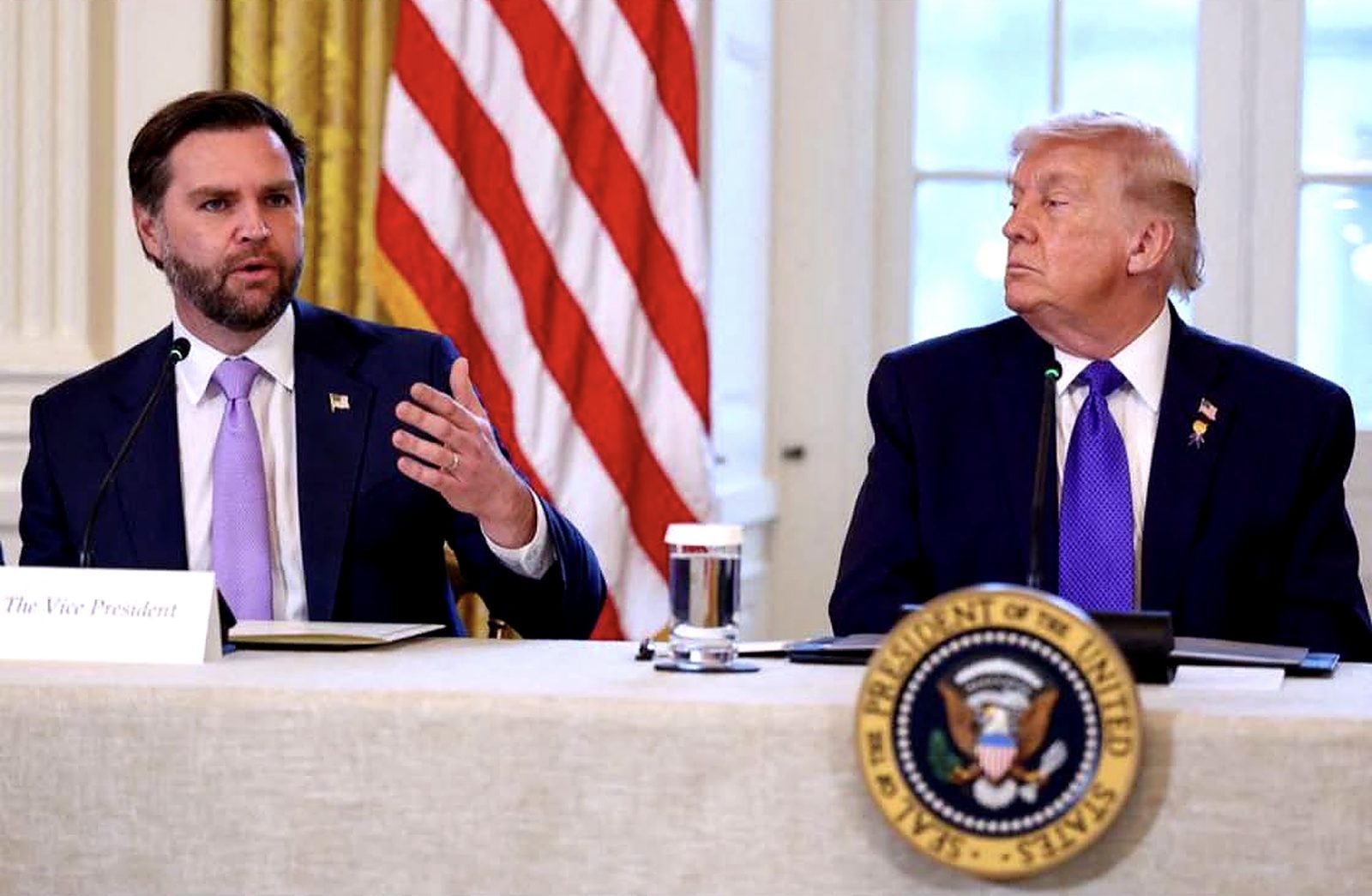
U.S. Vice President JD Vance has insisted that President Donald Trump will not allow the ongoing conflict with Iran to develop into another prolonged American military engagement, describing a long-term war as contrary to the administration’s commitments to the American people.
Speaking to Fox News host Laura Ingraham on November 16, Vance expressed confidence that Trump would eventually bring the conflict to an end without allowing the United States to remain militarily involved for years. His remarks came as tensions across the Middle East continued and Washington expanded its military presence in the region.
Vance made the comments during an appearance on Fox News’ The Ingraham Angle. He rejected suggestions that the administration might become trapped in an open-ended conflict similar to previous American military engagements in the Middle East.
According to Vance, there are people who want the United States to continue military operations against Iran indefinitely. However, he argued that Trump has several options for ending the conflict and will ultimately make a decision that serves American interests.
Vance said the president could decide that the military operation had achieved its objectives and bring it to a close. Alternatively, Trump could increase military and diplomatic pressure on Tehran in an effort to secure a more favorable outcome.
The vice president emphasized that neither option would mean accepting a permanent American military commitment.
He specifically rejected the possibility of a 10-year or 15-year commitment, adding that even a two-year commitment was not something the administration intended to pursue.
Vance reiterated that Trump would not allow the conflict to become another forever war, emphasizing the administration’s commitment to avoiding prolonged foreign military engagements.
He also defended Trump’s decision to launch military operations against Iran, arguing that the country’s nuclear program represented a serious threat to American security. Vance claimed that the operations had significantly damaged Iran’s nuclear capabilities and conventional military strength. These assessments were presented as the administration’s position rather than independently established conclusions.
The vice president also addressed criticism directed at him over his role in the administration’s Iran policy. Some political opponents and commentators have questioned his position, particularly because of his previous opposition to extended American military interventions overseas.
Vance dismissed suggestions that he and Trump were divided over the direction of the conflict. He described himself as willing to defend the president against criticism and said there was no fundamental disagreement between them regarding the eventual conclusion of the war.
His comments are particularly significant because Vance has previously expressed reservations about American involvement in foreign conflicts. Before becoming vice president, he frequently criticized the prolonged military engagements in Iraq and Afghanistan, arguing that they had imposed enormous financial and human costs on the United States.
The latest remarks also come at a politically sensitive moment for the Trump administration. Republicans suffered significant losses in the November 3 midterm elections, with Democrats gaining control of both chambers of Congress, according to reporting by The Associated Press.
The conflict with Iran has become one of the issues contributing to public dissatisfaction with the administration. Rising living costs, concerns about energy prices and disagreement over American military involvement have placed additional pressure on Republican leaders.
Vance previously acknowledged the political consequences of the war. Following the election results, he questioned whether the military campaign had been worth the political cost, particularly if it contributed to Republicans losing control of the Senate for the next six years.
An Associated Press report published November 5 described the conflict as an increasingly difficult political challenge for Trump. The president has faced growing questions about how to end the fighting while maintaining the military and strategic objectives his administration has publicly defended.
However, the administration’s military movements suggest that Washington is not abandoning its options for further action.
On November 16, the USS Theodore Roosevelt aircraft carrier arrived in the Middle East, bringing the number of American aircraft carrier strike groups operating in the region to three, according to reports. The deployment represents a significant concentration of American naval power at a time when diplomatic efforts to establish a lasting settlement remain uncertain.
The additional military deployment has raised questions about whether the United States is preparing for another phase of military operations or seeking to strengthen its position during negotiations.
Trump has also sent mixed signals about the future of the conflict. In recent statements, he has indicated that the military phase of the campaign was effectively over while maintaining economic pressure on Tehran.
At the same time, he has warned that further military action remains possible if diplomatic efforts fail.
The administration has continued to maintain pressure on Iran through economic restrictions and measures affecting maritime trade. The Strait of Hormuz remains a particularly important point of concern because it is one of the world’s most strategically significant routes for international oil shipments.
Disruptions to shipping through the narrow waterway have affected energy markets and raised concerns among governments and businesses that depend on stable supplies.
Diplomatic efforts have continued despite these developments. Qatar has played an important mediating role in communications between the two sides. Iranian officials have indicated that any comprehensive agreement would need to address economic sanctions, maritime restrictions, frozen Iranian assets and the cessation of hostilities across the region.
However, Washington and Tehran have yet to establish a mutually acceptable framework for permanently ending the conflict.
For Vance, the central challenge is ensuring that the United States does not become trapped in another prolonged overseas conflict while still defending the administration’s decision to confront Iran.
His latest comments appear intended to reassure Americans who are concerned about another extended military commitment. They also underline the political importance of demonstrating that the administration has a clear strategy for ending the conflict.
Nevertheless, there is an important distinction between promising to avoid a forever war and announcing an immediate end to military operations. Vance did not provide a specific timetable for withdrawing American forces or declare that the conflict had officially ended.
The arrival of another aircraft carrier, continuing regional tensions and the absence of a comprehensive diplomatic agreement demonstrate that significant uncertainties remain.
Ultimately, Trump’s next decisions will determine whether the conflict moves toward a negotiated settlement or another period of military escalation. For now, Vance is delivering a clear political message: the administration does not intend to keep American forces engaged in Iran indefinitely.

Comments 0
Log in or create a free account to join the conversation. You can comment anonymously.
No comments yet. Be the first.