

Trump Urges Congress to Approve Billions for Modern Air Traffic Control System
President Donald Trump is urging Congress to approve billions in additional funding to modernize America’s aging air traffic control system after a nationwide shutdown disrupted flights on November 13. The FAA says a telecommunications network failure triggered the emergency halt, while investigators continue examining equipment linked to the incident.

Reporter · CSB News USA
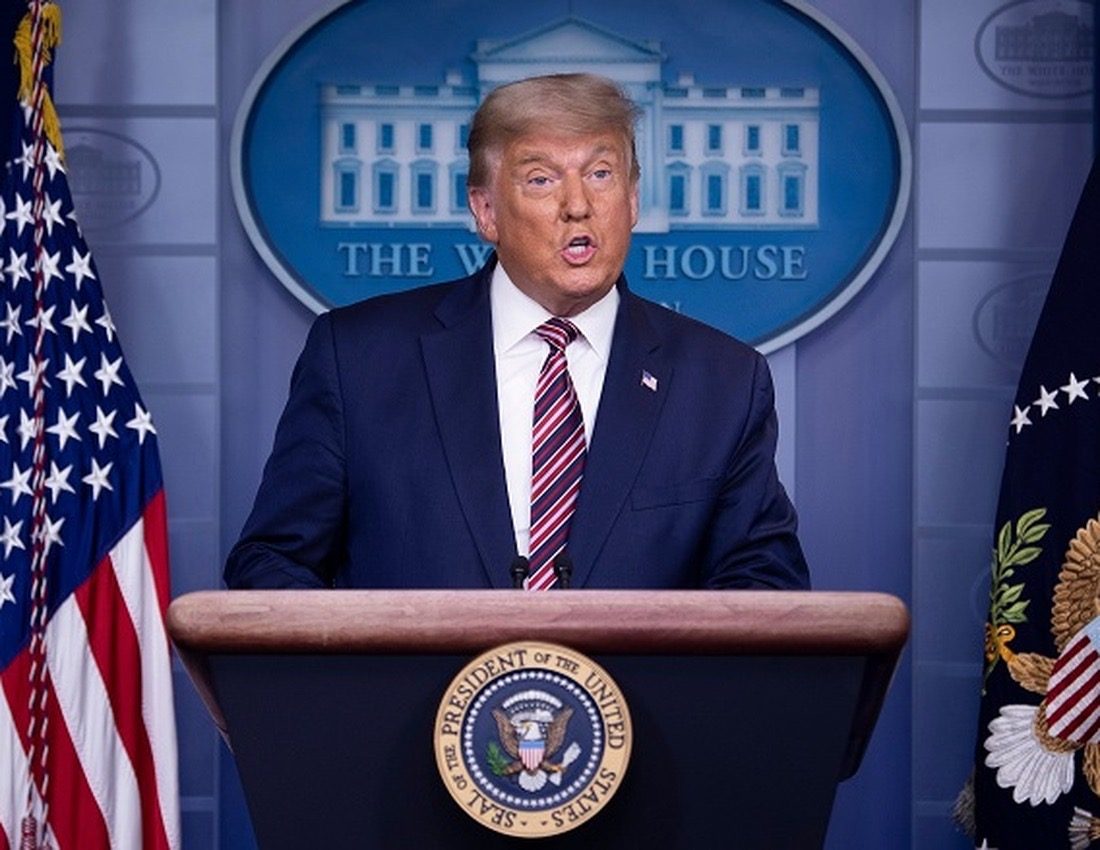
President Donald Trump is calling on Congress to approve billions of dollars in additional funding to rebuild and modernize the United States air traffic control system after a major telecommunications failure forced the Federal Aviation Administration (FAA) to temporarily halt flights nationwide.
Trump addressed the issue publicly on Sunday, November 15, two days after an unusual aviation emergency disrupted air travel across the country, leaving thousands of passengers stranded and creating widespread delays and cancellations at major airports.
The president argued that the United States can no longer depend on outdated technology to manage one of the world’s busiest aviation networks. He urged lawmakers to provide the money needed to replace aging equipment and build a modern air traffic control system.
In a post on his Truth Social platform, Trump said, “If Congress approves the desperately needed money for Air Traffic Control, we can get it built quickly and efficiently.”
He also criticized former President Joe Biden’s administration, accusing it of failing to address the country’s aging aviation infrastructure and spending federal money on other priorities instead of making necessary improvements.
Trump’s comments have renewed a major political debate in Washington over the condition of America’s aviation infrastructure, government spending and responsibility for maintaining the nation’s air travel network.
The controversy began on Friday afternoon, November 13, when the FAA issued an extraordinary nationwide ground stop following technical problems affecting telecommunications equipment used by air traffic controllers.
According to the FAA, the disruption began at approximately 3:30 p.m. Eastern Time. The agency ordered a nationwide halt to departing flights because instability in its telecommunications network was affecting systems that support air traffic control communications and radar information.
The ground stop remained in effect until approximately 8:15 p.m. Eastern Time, meaning the nationwide disruption lasted about four hours and 45 minutes.
The FAA described the decision as a precautionary measure designed to protect passengers and aircraft. Flights already in the air were generally allowed to continue to their destinations, while essential emergency, military and other critical operations continued under established procedures.
Although the immediate shutdown ended Friday evening, its effects continued throughout the weekend as airlines struggled to reorganize aircraft, crews and passenger schedules.
The FAA reported that approximately 12,462 flights were canceled on Friday, including cancellations by major airlines. However, the agency clarified that not every cancellation was directly caused by the nationwide ground stop. Some were connected to the wider operational disruption that followed.
Thousands of additional flights experienced delays. Major airports, including Hartsfield-Jackson Atlanta International Airport, Chicago O’Hare International Airport, Dallas-Fort Worth International Airport and other busy transportation hubs, faced significant operational difficulties.
The technical failure appears to have involved problems within the FAA’s aging telecommunications network.
Transportation Secretary Sean Duffy explained that the disruption occurred during routine maintenance work involving L3Harris Technologies, the contractor responsible for providing important telecommunications services to the FAA.
The work involved replacing older copper telecommunications connections with newer fiber-optic technology. The modernization project was intended to improve the reliability and performance of the network.
However, problems emerged after new equipment was activated at a communications facility in El Dorado, Arkansas.
According to the FAA’s preliminary investigation, excessive data traffic began entering the network at an unusually high rate. The agency reported approximately 1,000 connection attempts every four to five seconds.
This unusual activity created instability in the legacy network and disrupted communications and radar information used by air traffic control facilities.
Investigators identified two potential locations associated with the problem: a radar facility in Amarillo, Texas, and a radio communications facility in El Dorado, Arkansas.
Officials have not yet established the precise technical sequence that caused the failure. They are examining whether the problem involved defective equipment, installation mistakes, software configuration or another technical issue.
Duffy said the routers connected to the incident were being examined by engineers, including specialists working with L3Harris. The FAA also disabled a particular broadcasting function on approximately 60 similar routers as a precautionary measure.
Federal officials have emphasized that the investigation remains ongoing and that the final cause has not been conclusively established.
The FAA also addressed concerns that the nationwide disruption might have resulted from a cyberattack.
In its November 15 explanation, the agency said investigators had found no indication that an outside malicious actor was responsible. Officials also said the incident was not a complete loss of radar and radio communications.
Some communication frequencies and radar feeds remained operational during the disruption. These remaining capabilities, together with established safety procedures, allowed controllers and pilots to manage aircraft already in the air.
The FAA said every aircraft landed safely and passengers arrived safely. Officials have not reported any deaths or injuries connected to the ground stop.
Nevertheless, the incident exposed the risks associated with depending on aging technology to manage increasingly complex air traffic.
America’s air traffic control system supports thousands of daily flights involving commercial airlines, cargo operators, private aircraft and government aviation operations. Controllers depend on reliable communication networks, radar information, computer systems and other technical infrastructure to coordinate aircraft movements safely.
A disruption affecting one part of the network can create consequences across multiple states because aircraft and flight schedules are interconnected.
That is why aviation experts and government officials have repeatedly called for a comprehensive modernization program.
The Trump administration says Congress has already approved $12.5 billion for air traffic control modernization through legislation supporting the administration’s infrastructure plans. However, Transportation Secretary Duffy argues that the money is only an initial investment and will not be enough to complete the entire project.
Duffy has called for more than $50 billion in additional funding to modernize the broader aviation system.
The administration’s funding discussions have also included a separate figure of approximately $30 billion for additional modernization needs. These figures reflect different funding proposals and scopes of work, rather than one finalized congressional spending package.
The proposed modernization program is expected to involve replacing outdated communications equipment, upgrading radar and computer systems, improving telecommunications networks and installing more reliable technology at air traffic control facilities.
Officials also want to improve the infrastructure inside control towers and other facilities responsible for managing aircraft movements.
The administration argues that completing the modernization work more quickly would reduce the risk of similar disruptions in the future.
However, the funding proposal is likely to generate debate in Congress.
Democratic lawmakers have raised concerns about the reliability of the aviation network and the government’s responsibility to maintain critical transportation infrastructure. Some lawmakers have also questioned whether the administration is properly managing money that Congress has already approved.
The central issue is not simply how much additional money should be spent, but also how existing funds are being used, which improvements should receive priority and how the government will ensure that contractors complete their work safely.
The incident has also raised questions about the timing of maintenance operations.
Officials explained that major maintenance work at busy air traffic control facilities is generally scheduled during nighttime hours when traffic is lighter. However, the work connected to the Arkansas facility was performed at a remote location as part of a routine maintenance process.
Following Friday’s disruption, Duffy indicated that the department would reconsider how and when similar maintenance operations are conducted.
The investigation will be important in determining whether additional safeguards are necessary before new equipment is activated across the national network.
For airline passengers, the immediate concern has been getting travel schedules back to normal.
Transportation officials said the network had stabilized after the problematic equipment was isolated. Flights resumed Friday evening, but airlines needed additional time to reposition aircraft, bring crews back into place and accommodate passengers whose original flights had been canceled.
On Sunday, officials expressed confidence that operations would recover substantially by the end of the weekend and that airlines could approach normal capacity by Monday.
Passengers were nevertheless advised to check directly with their airlines because individual flights could continue experiencing delays or cancellations during the recovery process.
The disruption was particularly concerning for international travelers and passengers connecting through major American airports. A delayed domestic flight can cause passengers to miss international connections, while cancellations can create additional hotel, transportation and accommodation expenses.
The incident also matters to international travelers flying to or from the United States, including passengers traveling between America and countries in South Asia, Europe and the Middle East.
For many passengers, the experience demonstrated how a technical problem at a relatively small facility can affect travel across an entire country.
Trump’s demand for additional funding has therefore placed air traffic control modernization back at the center of the national political discussion.
While the immediate emergency has ended, the technical investigation is continuing. Federal officials still need to determine exactly why the network became unstable, whether contractor procedures contributed to the failure and what changes are necessary to prevent a repeat incident.
Congress will also have to consider the administration’s request for additional funding and decide how much taxpayers should invest in replacing the country’s aging aviation infrastructure.
For now, the FAA says the network is stable and flights are returning to normal. But Friday’s nationwide ground stop has made one issue increasingly difficult for Washington to ignore: America’s aviation system needs reliable modern technology to keep millions of travelers moving safely.
Related News

New York Police Fatally Shoot Van Driver After Suspected Kidnapping Report on Brooklyn Highway

Urgent Warning in the US, More Than 720,000 BMW Vehicles Recalled Over Fire Risk
SpaceX Makes History! Starship Successfully Returns to Texas After 22-Hour Space Mission
Comments 0
Log in or create a free account to join the conversation. You can comment anonymously.
No comments yet. Be the first.