

Trump Admits Deportation Policies Went Too Far, Signals Possible Immigration Deal With Democrats
President Trump says deportation policies may have gone too far while offering Democrats talks even as Stephen Miller takes charge.

International Broadcast Journalist · CSB News USA
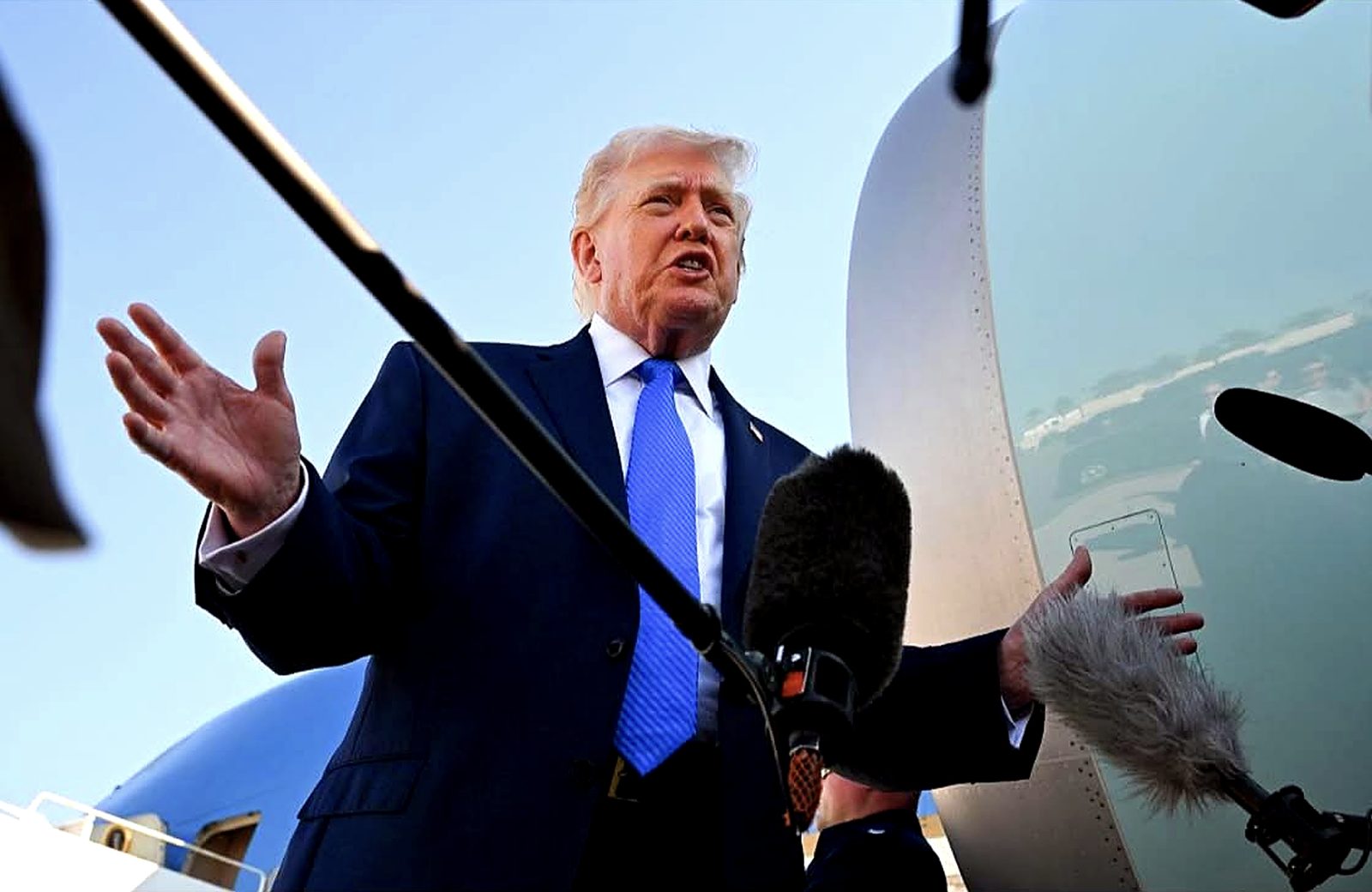
President Donald Trump has acknowledged that his administration’s aggressive immigration enforcement policies may have gone too far, raising the possibility of a shift in his approach following major Republican losses in the 2026 midterm elections. In a televised interview, Trump also expressed willingness to negotiate an immigration agreement with congressional Democrats, who are preparing to take control of both chambers of Congress. However, his decision to appoint longtime immigration hard-liner Stephen Miller as White House chief of staff has raised questions about whether the administration is genuinely preparing to moderate its policies.
In an interview with CBS News’ 60 Minutes that aired Sunday, November 8, Trump reflected on the political consequences of his administration’s immigration crackdown. The interview was conducted three days after Republicans suffered significant defeats in the November 3 midterm elections.
Trump acknowledged that his immigration policies had both helped and hurt his political standing. He defended his administration’s efforts to secure the southern border and remove people involved in serious criminal activities but admitted that the enforcement campaign had also affected immigrants who had established jobs and worked in American communities.
“I think it was too tough,” Trump said when discussing the administration’s deportation policies.
He explained that some immigrants had been working in the United States for years, including in landscaping businesses, hotels and other industries. Although they had violated immigration laws by entering or remaining in the country without authorization, Trump suggested that some hardworking individuals could potentially be allowed to stay through an agreement.
His comments represent an important political development because large-scale deportations were among the central promises of his presidential campaign. Since returning to the White House, Trump has pursued an aggressive immigration enforcement strategy, expanding arrests and deportation operations across the country.
The administration has repeatedly defended these measures, arguing that removing dangerous criminals and strengthening border security are essential to protecting American communities. Trump has particularly emphasized deporting people involved in violent crimes, murder and drug trafficking.
However, the enforcement campaign has generated controversy over the treatment of immigrants who have lived in the country for extended periods, maintained employment and raised families. Critics argue that immigration operations have created fear in immigrant communities and disrupted businesses that depend heavily on immigrant workers.
The political consequences became increasingly visible during the November midterm elections. Democrats secured control of both the House of Representatives and the Senate, delivering a significant setback to Trump’s administration and the Republican Party.
The election results have increased pressure on the president to reconsider policies that may have alienated independent voters and some Hispanic communities. Immigration enforcement became an important campaign issue, particularly in areas where voters had previously supported Republican candidates.
According to exit polling cited by CBS News, 58 percent of voters believed the Trump administration’s immigration enforcement actions had gone too far. Nevertheless, Republicans maintained a slight advantage when voters were asked which political party they trusted more to handle immigration, receiving 43 percent compared with 41 percent for Democrats.
During the interview, Trump also expressed interest in reaching an agreement with the incoming Democratic congressional majority.
He said he would welcome an opportunity to work with Democrats on immigration legislation. He suggested that people involved in serious criminal activities should be removed while some long-term residents who work and contribute to the economy could potentially receive an opportunity to remain.
However, the president did not provide a detailed proposal. He did not explain what eligibility requirements might apply, whether applicants would need to meet specific employment or tax-payment conditions, or whether any potential agreement would create a legal pathway to permanent residency.
The absence of concrete details means his comments should not yet be interpreted as an official change in immigration policy.
Another major development has complicated expectations of a possible policy shift. On November 6, Trump announced that Stephen Miller, one of the principal architects of his hard-line immigration agenda, would replace Susie Wiles as White House chief of staff beginning November 9.
Miller has played a central role in developing and implementing Trump’s immigration policies. He previously served as deputy chief of staff for policy and homeland security adviser, helping shape the administration’s approach to border security, deportations and immigration enforcement.
His promotion has raised questions about the direction of the administration. While Trump publicly suggested that his deportation strategy may have been excessively strict, appointing one of its strongest supporters to the White House’s top administrative position appears to signal continued commitment to a tough immigration agenda.
Senate Democratic Leader Chuck Schumer criticized the appointment after Trump’s interview became public. Schumer argued that promoting the person responsible for developing the administration’s immigration crackdown was inconsistent with the president’s suggestion that the policy needed correction.
The controversy comes as Democrats prepare to use their congressional majority to increase oversight of federal immigration agencies, particularly Immigration and Customs Enforcement and the Department of Homeland Security.
Democratic lawmakers are expected to examine enforcement practices, detention conditions, deportation procedures and the use of federal resources. The issue has become especially sensitive following the deaths of two American citizens, Renee Good and Alex Pretti, during confrontations involving federal officers amid protests against immigration enforcement operations.
The incidents have intensified public scrutiny of federal immigration tactics and raised broader questions about accountability and the use of force.
For millions of immigrants living in the United States, Trump’s latest comments have created both hope and uncertainty. Long-term residents, workers, mixed-status families and immigrant-owned businesses are closely watching whether the administration will introduce any meaningful changes.
For undocumented Bangladeshi immigrants and other South Asian communities, the potential debate could also be significant. Many families depend on stable employment, established community ties and the ability to remain together in the United States. However, Trump’s comments do not provide any immediate protection from deportation or guarantee eligibility for future immigration relief.
The incoming Democratic Congress could create opportunities for negotiations, but reaching an agreement will require cooperation between lawmakers with sharply different priorities. Republicans continue to emphasize border security and immigration enforcement, while Democrats are likely to demand stronger protections for long-term residents and greater accountability for federal agencies.
For now, Trump’s remarks indicate an openness to discussing immigration policy rather than a confirmed decision to reverse his administration’s enforcement strategy.
The appointment of Stephen Miller adds another layer of uncertainty. Whether the president ultimately chooses compromise or continues his hard-line approach will become clearer as the new Congress begins its work in January 2027.
The coming months could therefore prove crucial for the future of US immigration policy and for millions of immigrant families waiting to see whether Washington can reach a political agreement.
Related News
Trump Offers UFC President Dana White a Surprising Role as White House Press Secretary
Trump Appoints Immigration Hardliner Stephen Miller as White House Chief of Staff After Midterm Defeat
Trump Says Iran Talks Have Made Progress as Qatar Pushes for Deal

Comments 0
Log in or create a free account to join the conversation. You can comment anonymously.
No comments yet. Be the first.