

Israel President Herzog Picks Eisenkot Over Netanyahu To Form New Government
Gadi Eisenkot is chosen by Israel’s president to form a government, placing Netanyahu’s future under political pressure after election deadlock.

CSB News USA
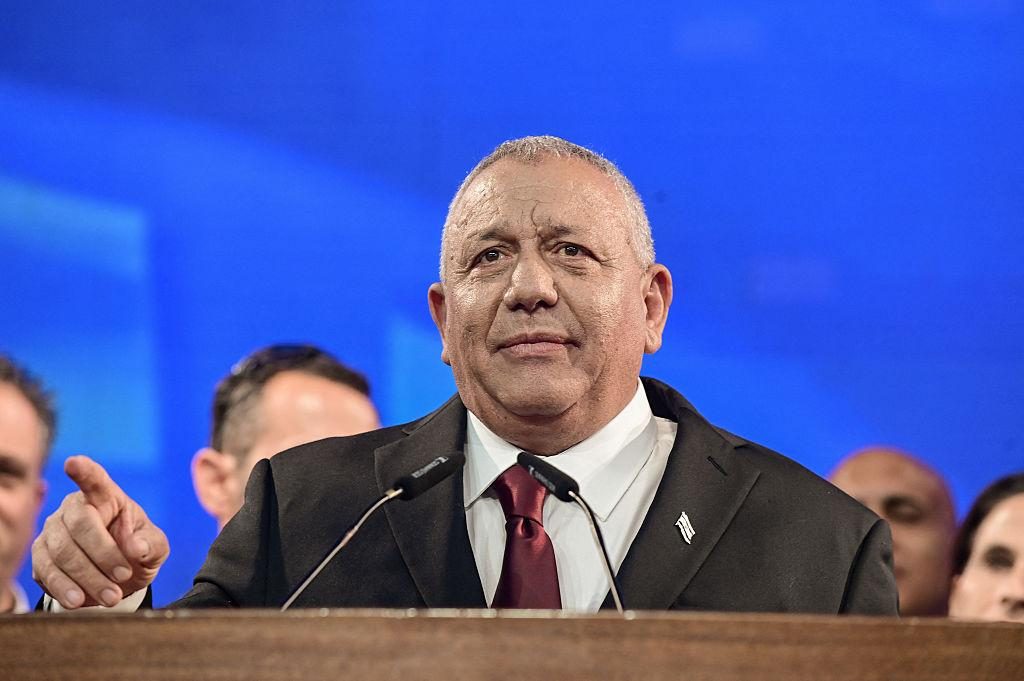
Israel has entered a new and uncertain political chapter after President Isaac Herzog selected opposition leader Gadi Eisenkot to try to form the country's next government, challenging the political position of longtime Prime Minister Benjamin Netanyahu.
The announcement, made on Saturday, November 7, 2026, followed a closely watched election and several days of consultations between the president and representatives of political parties. The decision represents a major development in Israeli politics because Netanyahu's governing coalition lost its parliamentary majority, while opposition parties have gained an opportunity to challenge his continued leadership.
However, Eisenkot's selection does not mean that he has already become prime minister. He must first negotiate with political parties and secure enough support in the 120-member Israeli parliament, known as the Knesset, to establish a functioning government. The formal presentation of the government-formation mandate is scheduled for Sunday, November 8, at the President's Residence in Jerusalem.
The political situation developed after Israel held a national election on October 27, 2026. The election failed to produce a clear parliamentary majority for either Netanyahu's political alliance or the opposition grouping led by Eisenkot.
Netanyahu's Likud party won 27 seats, making it the largest individual political party in the new parliament. However, the broader religious-nationalist coalition supporting Netanyahu secured only 53 seats. That number falls eight seats short of the 61 required for a parliamentary majority.
Eisenkot's political alliance, which includes four parties with positions ranging from the center-left to the right, secured 48 seats. Although his alliance did not independently reach the required majority, the election results created an opportunity for opposition parties and other parliamentary groups to influence the formation of the next government.
Two parties representing Israel's Arab minority achieved a historic result by winning a combined 19 seats. Their parliamentary strength has become particularly important because neither of the two main political camps has enough seats to govern independently.
During consultations with political representatives, Eisenkot received recommendations from 67 lawmakers, compared with 46 recommendations for Netanyahu. The seven lawmakers representing the United Torah Judaism party did not recommend either candidate.
These recommendations played an important role in Herzog's decision. Although the Israeli president has the authority to select a candidate to attempt to form a government, the selection is not simply determined by which politician receives the most recommendations. The president must also consider which candidate has a realistic possibility of building a coalition that can command parliamentary support.
Herzog held further discussions with both political leaders before informing Eisenkot of his decision. His office confirmed that Eisenkot would be formally assigned the task at an official ceremony the following day.
For Netanyahu, the development represents one of the most significant political challenges of his long career. He has served as Israel's prime minister for multiple periods and is the country's longest-serving leader. His political influence has been built through a strong conservative political base, security-focused policies and alliances with religious and nationalist parties.
However, the latest election has exposed serious difficulties in maintaining his governing coalition. His alliance remains the largest political bloc in the Knesset, but its 53 seats are insufficient to control parliament.
One of the major reasons behind the political uncertainty involves disagreements over military service requirements for ultra-Orthodox Jewish men. The United Torah Judaism party, which has traditionally supported Netanyahu, declined to recommend a candidate during the presidential consultations.
Reporter



Comments 0
Log in or create a free account to join the conversation. You can comment anonymously.
No comments yet. Be the first.