

Bangladeshi Scientist Samreen Mehak Inspires Girls to Dream Big and Pursue Science
From Bangladesh to Washington, Samreen Mehak is building a career in genetics while inspiring young women to pursue science and research.

CSB News USA
9,756 views 7 min read
Listen to this article7 min
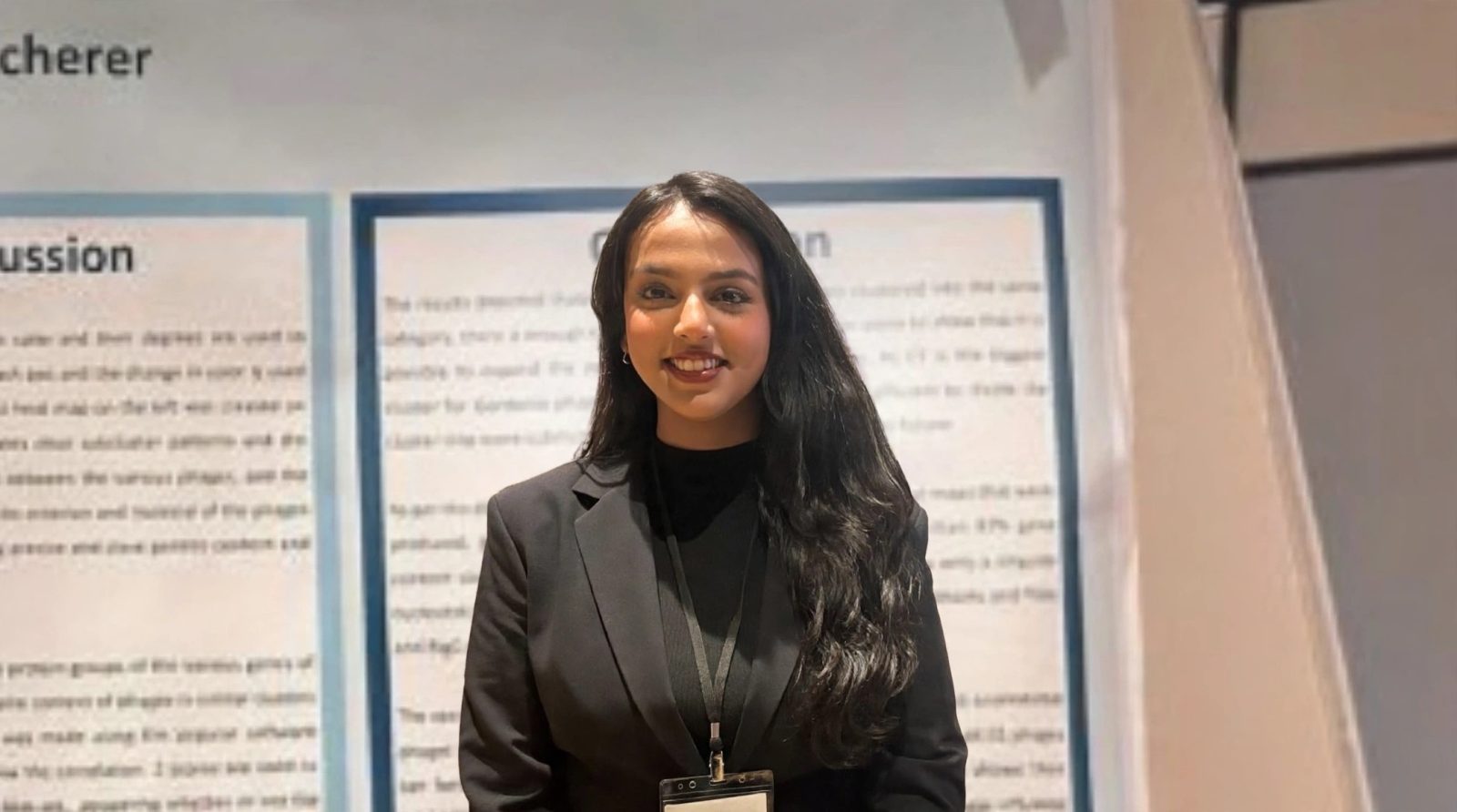
A young Bangladeshi researcher is making her mark in the field of genetics in the United States, combining scientific knowledge, professional experience and a strong commitment to encouraging more women to pursue careers in science. Samreen Mehak, who is based in Washington, DC, has developed a career in genomics after completing her undergraduate studies in biology at George Mason University in Virginia.
Her journey from Bangladesh to the American scientific community is drawing attention not only because of her academic achievements but also because of her interest in helping young Bangladeshi women explore opportunities in science, research and higher education.
Mehak's educational journey began in Bangladesh, where she completed her O Levels at Scholastica, a well-known educational institution. She later continued her studies at United World College Costa Rica, earning an International Baccalaureate qualification in 2020. Financial assistance and scholarships helped her pursue higher education and move toward her goal of building a career in scientific research.
She subsequently enrolled at George Mason University in Virginia, where she studied biology. She graduated with a Bachelor of Science degree in Biology in May 2024.
Her university experience involved more than attending lectures and completing academic assignments. She actively participated in research-related activities, gaining experience as a research assistant and teaching assistant. These opportunities helped her develop scientific knowledge, laboratory skills and the ability to communicate complex information.
She also participated in the Smithsonian Institution's Explainers Program. Through this program, she contributed to educational activities designed to help museum visitors understand scientific subjects and research. The experience provided an opportunity to connect scientific knowledge with public education.
During her academic journey, Mehak developed interests in several areas of biological research. Her research contributions have included work involving fruit fly chromosome evolution, aquaculture in Bangladesh and dementia care. These subjects reflect a broad interest in understanding biological systems and exploring how scientific research can contribute to human well-being.
One of the significant challenges she faced was finding financial support for further education. Studying in the United States can be expensive, particularly for international students who must manage tuition fees, accommodation and other living expenses. Research funding and graduate fellowships can also be highly competitive.
According to published reports about her academic journey, Mehak secured an $18,000 merit fellowship to support her graduate studies in biology. The fellowship represents an important achievement in her educational journey and illustrates the importance of academic performance, persistence and financial support in pursuing advanced education.
Her professional career has also moved forward through practical experience in the biotechnology industry.
In April 2025, Mehak joined GeneDx, a genetic testing company based in the United States, as a laboratory technician working in next-generation sequencing. The company's work involves genetic testing and the analysis of genetic information that can help healthcare professionals better understand certain inherited and other genetic conditions.
During her work in the laboratory, she gained experience with DNA and RNA extraction, sample preparation and sequencing technologies. These processes are important parts of modern genetic testing.
DNA contains the biological instructions that influence how living organisms develop and function. Changes in DNA can sometimes be associated with inherited diseases and other health conditions. Modern sequencing technology allows scientists to examine genetic information in much greater detail than was possible with many traditional laboratory methods.
RNA also plays an important role in biological processes, including the way genetic instructions are used by cells. Extracting and preparing DNA and RNA samples correctly is therefore an essential part of many genomic testing procedures.
After gaining laboratory experience, Mehak moved into a more advanced professional position. According to her reported career history, she became an Associate Genomic Analyst at GeneDx in February 2026.
In this position, her work involves analyzing genomic information and helping translate complex genetic findings into information that can be useful in clinical settings. Such analysis can support physicians as they assess genetic test results and consider appropriate medical decisions.
Genomics is becoming an increasingly important area of modern healthcare. It involves studying the complete genetic material of an organism and understanding how genes interact with one another and with environmental factors.
Researchers and healthcare professionals use genomic information to investigate inherited conditions, understand disease risks and explore more personalized approaches to treatment. However, genetic test results must always be interpreted in the context of a patient's medical history and other clinical information. A genetic finding does not automatically establish a diagnosis or determine a treatment.
Mehak has expressed particular interest in human genetics, precision medicine and neurodegenerative diseases, especially Alzheimer's disease.
Alzheimer's disease is a progressive condition that affects memory, thinking and other cognitive abilities. It is one of the major causes of dementia worldwide and presents significant challenges for patients, families and healthcare systems.
Research into genetics and neurodegenerative diseases can help scientists understand why some individuals develop particular conditions and how biological factors may influence disease progression. Although there is still much to learn, advances in genomic research are creating new opportunities for studying these conditions.
Her previous research contributions have also included work related to dementia care and personalized music interventions for nursing home residents. One of the studies involving personalized music interventions and nursing home residents living with dementia was published in the Journal for Applied Gerontology in June 2024. George Mason University identified Samreen Mehak among the contributors to the research.
This connection between scientific research and everyday human needs reflects an important aspect of her academic interests. Scientific discoveries are not only about laboratory experiments or technical achievements. They can also help improve the understanding of diseases and the quality of care provided to vulnerable people.
Beyond her own career, Mehak wants to encourage more young women in Bangladesh to consider science and research as realistic career options.
For many students, especially those who do not have access to experienced mentors, choosing a scientific career can be difficult. They may have an interest in biology, chemistry, medicine or technology but lack information about university programs, scholarships, research opportunities and international academic pathways.
Mehak's own experience of navigating education, research opportunities and professional development has given her an understanding of these challenges. She hopes that young women in Bangladesh will have better access to reliable information, academic guidance and professional networks.
The need for greater participation by women in science is also reflected in international research and development discussions.
According to the World Bank's Bangladesh Country Gender Assessment 2021, women accounted for approximately 14 percent of STEM professionals in Bangladesh in 2019. STEM refers to science, technology, engineering and mathematics.
The figure highlights a significant representation gap in technical and scientific professions. It is important to note that this is a historical figure from 2019, not a measurement of the current percentage in 2026.
The World Bank has also highlighted the importance of improving opportunities for girls and women in science, technology and engineering. Access to education, mentorship, professional networks and workplace opportunities can play an important role in helping women build successful careers in these fields.
Bangladesh has made progress in expanding educational opportunities for girls, but completing school or university is only one part of the journey. Students also need opportunities to gain practical experience, participate in research and connect with professionals who can guide them.
For young women interested in studying abroad, understanding scholarship requirements, preparing strong academic applications and contacting universities and research institutions can make a significant difference.
Mehak's journey demonstrates how academic preparation, research experience and professional development can work together to create opportunities in a competitive scientific environment.
Her story also offers an important message for families and educators. Girls should be encouraged to explore scientific subjects according to their interests and abilities. Their ambitions should not be limited by traditional assumptions about which professions are suitable for women.
A career in science requires curiosity, patience, continuous learning and a willingness to work through difficult problems. It also requires access to educational resources and opportunities that allow talented students to develop their abilities.
For Bangladesh, encouraging more women to enter research and scientific professions could bring long-term benefits. More female scientists can contribute to universities, healthcare institutions, biotechnology companies and international research collaborations. They can also become mentors and role models for future generations.
Mehak's professional journey is still developing, but her experience already offers an encouraging example for young people who dream of working in scientific research.
From her early education at Scholastica to her biology degree in Virginia and her professional work in genomic analysis, she has built a path that connects education, research and healthcare.
Her ambition to help more Bangladeshi girls enter science adds another dimension to that achievement. Her story is a reminder that opportunities in scientific research are not limited by nationality or gender. With education, guidance, determination and access to opportunities, young women from Bangladesh can also contribute to the advancement of science around the world.
Reporter




Comments 0
Log in or create a free account to join the conversation. You can comment anonymously.
No comments yet. Be the first.