

Part of: US Midterm Election 2026
Texas Voters Await Governor Results as Abbott Seeks Fourth Term Against Hinojosa
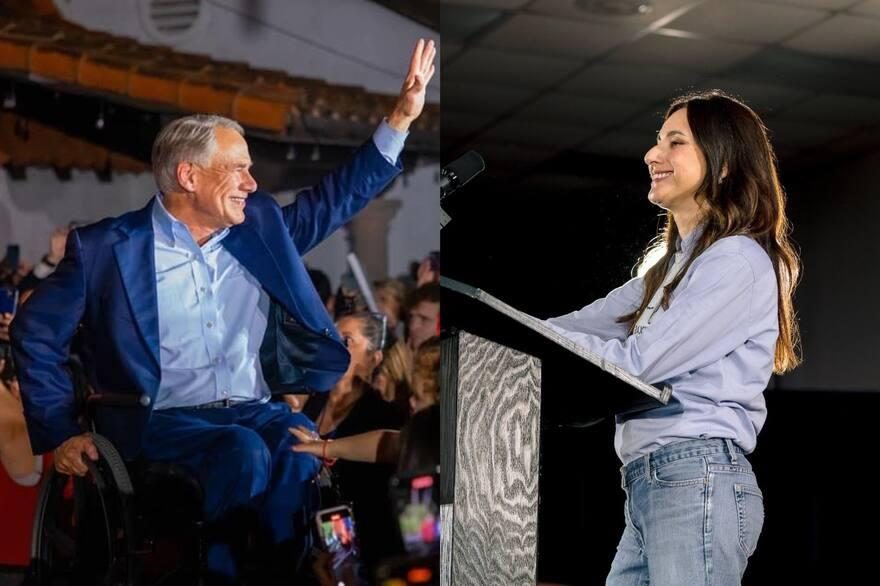
Texas faces a historic governor's race as Republican Greg Abbott seeks another term while Democrat Gina Hinojosa hopes to change the state's political direction.

Reporter · CSB News USA
9,658 views 6 min read
Listen to this article6 min
The political future of Texas is facing a major test following the November 3, 2026, midterm elections. Republican Governor Greg Abbott is seeking another four years in office, while Democratic challenger Gina Hinojosa is hoping to make history by becoming the state's first Democratic governor in more than three decades.
The contest has attracted national attention because Texas has remained one of the strongest Republican states in the United States for many years. However, the 2026 election has brought a more competitive challenge than Abbott faced in his previous campaigns.
The central question is whether Abbott can maintain Republican control of the governor's office or whether Hinojosa can deliver a major political victory for Democrats.
Abbott has served as Texas governor since January 2015. He won the governorship in 2014 and secured reelection in 2018 and 2022. His three previous election victories established him as one of the most powerful Republican politicians in the state.
If Abbott wins the 2026 election, he will secure a fourth consecutive term. That would be a historic achievement in modern Texas politics. He would also move closer to the record for the longest-serving governor in the state's history. Former Republican Governor Rick Perry served for 14 years, from 2000 to 2015.
Abbott has built a strong political organization over the years. His experience, statewide recognition, fundraising network and connections with Republican voters have helped him maintain a powerful position in Texas politics.
His political career also includes serving as Texas attorney general from 2002 to 2015 and as a Texas Supreme Court justice before that.
During his time as governor, Abbott has focused heavily on border security, immigration enforcement, business development, tax policy, education and conservative social policies.
Immigration has been one of the defining issues of his administration. Abbott has supported stronger border enforcement, additional state resources for border operations and cooperation with federal authorities on immigration-related matters.
His administration also introduced policies designed to increase security along the Texas-Mexico border. These policies have made him popular among many conservative voters, particularly those who consider border security a major priority.
However, his approach has also faced criticism from Democrats, immigration advocates and civil rights organizations.
Hinojosa is presenting herself as an alternative to Abbott's political leadership. She is a Democratic state representative from the Austin area and has served in the Texas House since 2017.
Her professional background is different from that of many traditional political candidates. She worked as a civil rights and labor attorney before entering elected office. She also served on the Austin Independent School District board and became its president.
Her experience in public education has become an important part of her political identity.
Hinojosa has repeatedly emphasized the importance of strengthening public schools, supporting teachers, improving educational opportunities and making government more accountable.
She has also criticized the state's property tax burden and argued that ordinary homeowners should not carry an unfair share of the financial responsibility for public services.
One of her major proposals involves changing how Texas provides financial incentives to large corporations. She has argued that corporate subsidies should be reviewed and that the state should reconsider policies that place greater financial pressure on ordinary residents.
The candidates also have different approaches to economic development.
Abbott has generally supported business-friendly policies, investment and the expansion of Texas's technology and energy industries. His supporters argue that these policies have helped Texas attract businesses, create employment opportunities and maintain economic growth.
Hinojosa has questioned whether the benefits of economic development are reaching ordinary families. She has raised concerns about rising housing costs, property taxes, corporate incentives and the effects of large data center projects on local communities.
The growing number of data centers has become another important issue in the campaign. These facilities require substantial electricity and water resources. Some communities have raised concerns about their impact on local infrastructure and household utility costs.
Hinojosa has proposed stronger oversight of data center development, including a temporary halt to new projects until lawmakers establish a comprehensive regulatory framework.
Abbott has historically supported the expansion of the technology industry, although he has also faced growing pressure to address concerns surrounding large data center developments.
The financial strength of both campaigns has also attracted attention.
Abbott entered the election with a substantial fundraising advantage. According to reporting by The Washington Post, his campaign had spent approximately $281 million, compared with around $36 million spent by Hinojosa's campaign at the time of its report.
That financial difference demonstrates the advantages of incumbency and the strength of Abbott's political organization.
Nevertheless, money alone does not determine election results. Voter turnout, local concerns, independent voters and the political environment surrounding the national midterm elections can all influence the final outcome.
Polling before Election Day suggested that the race could be considerably closer than many previous Texas gubernatorial contests.
A New York Times and Siena poll conducted from October 27 through November 1 showed Hinojosa receiving 48 percent support, compared with 47 percent for Abbott.
Another YouGov poll conducted from October 26 through October 29 placed Abbott at 50 percent and Hinojosa at 49 percent.
The University of Texas Politics Project also tracked several public surveys showing a close contest. Its polling information demonstrated that Abbott maintained a small advantage in some surveys, while Hinojosa led in others.
These results indicated that neither candidate could safely assume victory before voters went to the polls. However, polling figures are estimates of voter preferences, not official election results.
For Democrats, the significance of this election goes beyond simply winning the governor's office.
Texas has not elected a Democratic governor since Ann Richards left office in January 1995. Richards served from January 15, 1991, to January 17, 1995.
She remains an important figure in Texas political history and was the last Democrat to lead the state.
If Hinojosa wins, she will become the first Democratic governor of Texas since Richards. Such a victory would represent a major political development and could change the balance of power in one of America's most influential states.
It would also give Democrats an opportunity to demonstrate that their political support is growing beyond traditionally Democratic cities and communities.
Texas has a large and diverse population. Major metropolitan areas such as Houston, Dallas, Austin and San Antonio have different political characteristics from many rural communities.
Democrats have increasingly focused on suburban voters, younger voters, Latino communities and people concerned about the rising cost of living.
Hinojosa's campaign has attempted to connect these concerns with broader questions about education, economic fairness, healthcare and government accountability.
Republicans, meanwhile, have emphasized public safety, border security, conservative values, economic growth and opposition to what they describe as excessive government spending.
Abbott's campaign has also criticized Hinojosa's legislative record and presented her proposed policies as a threat to Texas's business environment and conservative political identity.
Hinojosa has rejected those criticisms and argued that Texans deserve a government that prioritizes working families rather than powerful political and corporate interests.
The 2026 election is also taking place during an important national political period. President Donald Trump's administration and the Republican Party are facing broader questions about the economy, immigration, federal spending and the direction of the country.
National political developments could influence how Texas voters evaluate their state leadership.
The governor's office is particularly important because the governor has significant authority over state agencies, appointments, legislation and emergency responses. The governor can sign bills passed by the Texas Legislature or veto legislation.
The outcome will therefore affect more than the political careers of Abbott and Hinojosa. It will influence state policies involving schools, taxes, businesses, public safety, immigration and government spending.
As of November 4, 2026, the available live election reports reviewed for this article do not establish a verified final winner of the Texas governor's race. The official vote count and certification process must determine the result.
For now, the two major possibilities remain politically significant. An Abbott victory would extend Republican leadership in Texas and give him a fourth consecutive term. A Hinojosa victory would bring a Democrat back to the governor's office for the first time since the early 1990s.
The election has demonstrated that even a traditionally Republican state can experience a highly competitive political contest.
Ultimately, Texas voters have made their decision at the ballot box. The confirmed election results will determine whether Abbott continues his political leadership or whether Hinojosa makes history by changing the state's political direction.
More in US Midterm Election 2026
Supreme Court Blocks Trump Administration’s Bid to Set Aside 20,000 California Ballots
Court Bars Trump Administration From Sending Lists of Voters With Questioned Citizenship
Federal Judge Allows DOJ Election Monitors at Polling Places With Strict Restrictions
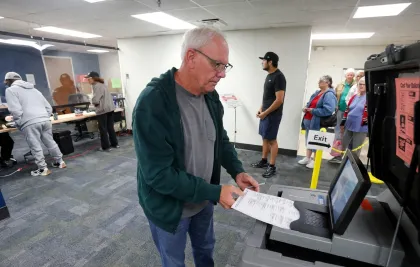
Americans Vote in 2026 Midterm Elections as Control of Congress Hangs in Balance
Related News
Supreme Court Blocks Trump Administration’s Bid to Set Aside 20,000 California Ballots
Court Bars Trump Administration From Sending Lists of Voters With Questioned Citizenship
Federal Judge Allows DOJ Election Monitors at Polling Places With Strict Restrictions
Comments 0
Log in or create a free account to join the conversation. You can comment anonymously.
No comments yet. Be the first.