Iran’s Elite Children and the “Double Standard” Debate Fuel Public Anger
A growing controversy in Iran over the lifestyles of senior officials’ children is intensifying public frustration, as many accuse the ruling establishment of practicing a stark “double standard” between its rhetoric and reality.

Iran’s Elite Children and the “Double Standard” Debate Fuel Public Anger
A growing controversy in Iran over the lifestyles of senior officials’ children is intensifying public frustration, as many accuse the ruling establishment of practicing a stark “double standard” between its rhetoric and reality.
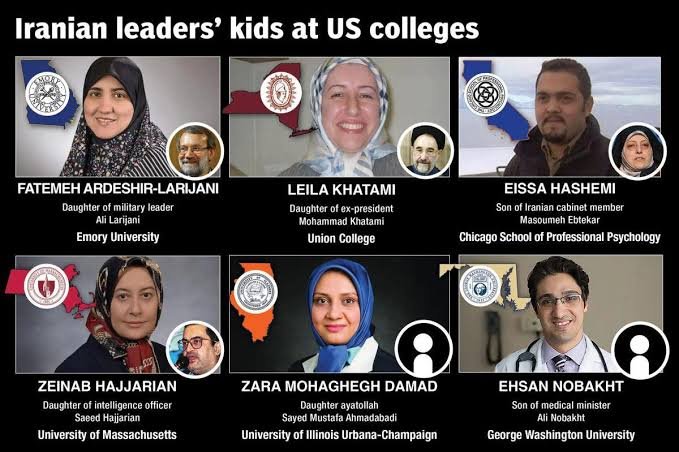
For decades, Iran’s leadership has promoted an ideology rooted in anti-Western sentiment, modest living, and strict adherence to Islamic values. However, recent reports and social media revelations suggest that the children of high-ranking political, military, and religious figures are living, studying, and working in Western countries—often enjoying affluent and liberal lifestyles far removed from the restrictions imposed at home.
This phenomenon is widely referred to Iran as the “Aghazadeh” culture, a term used to describe the privileged offspring of powerful elites. Critics argue that these individuals benefit from connections, wealth, and influence that are inaccessible to ordinary citizens. Many of them reportedly reside in countries such as the United States, Canada, and across Europe, attending prestigious universities or pursuing lucrative careers.
The controversy has sparked a critical question among Iranians: why do officials who publicly condemn the West allow—or even encourage—their own children to build lives there?
The issue has gained further traction amid Iran’s ongoing economic difficulties. Years of international sanctions, inflation, and unemployment have placed immense pressure on ordinary citizens. In contrast, images and reports of lavish weddings, luxury lifestyles, and foreign residency among elite families have gone viral, deepening perceptions of inequality and injustice.
Public anger has been particularly visible among Iran’s youth, many of whom feel increasingly disillusioned. Young people have been at the forefront of recent protests, where grievances extend beyond economic hardship to include demands for social freedoms and government accountability. The perceived hypocrisy of the ruling class has become a powerful symbol of broader systemic issues.
Human rights groups and analysts note that while elite families enjoy relative freedom and security abroad, dissent within Iran is often met with strict crackdowns. Protesters, including students and young activists, have faced arrests, intimidation, and, in some cases, violence. This contrast has further fueled resentment, as many see it as evidence of unequal treatment under the system.
Politically, the debate is contributing to an erosion of public trust. The gap between official narratives and lived realities is widening, creating challenges for the government’s credibility. Social media has played a significant role in amplifying these concerns, enabling citizens to share information and highlight inconsistencies more rapidly than ever before.
Experts warn that if these perceptions of inequality and hypocrisy persist, they could lead to deeper social divisions and continued unrest. The “double standard” debate is no longer limited to online discussions; it has become a central issue shaping public discourse in Iran.
As the country navigates economic strain and political tensions, the actions and lifestyles of its ruling elite—and their families—are likely to remain under intense scrutiny, reflecting a broader struggle over fairness, accountability, and the future direction of the nation.