Uruguay's New Leftist President Takes Office, Promises Change Amid Economic Challenges
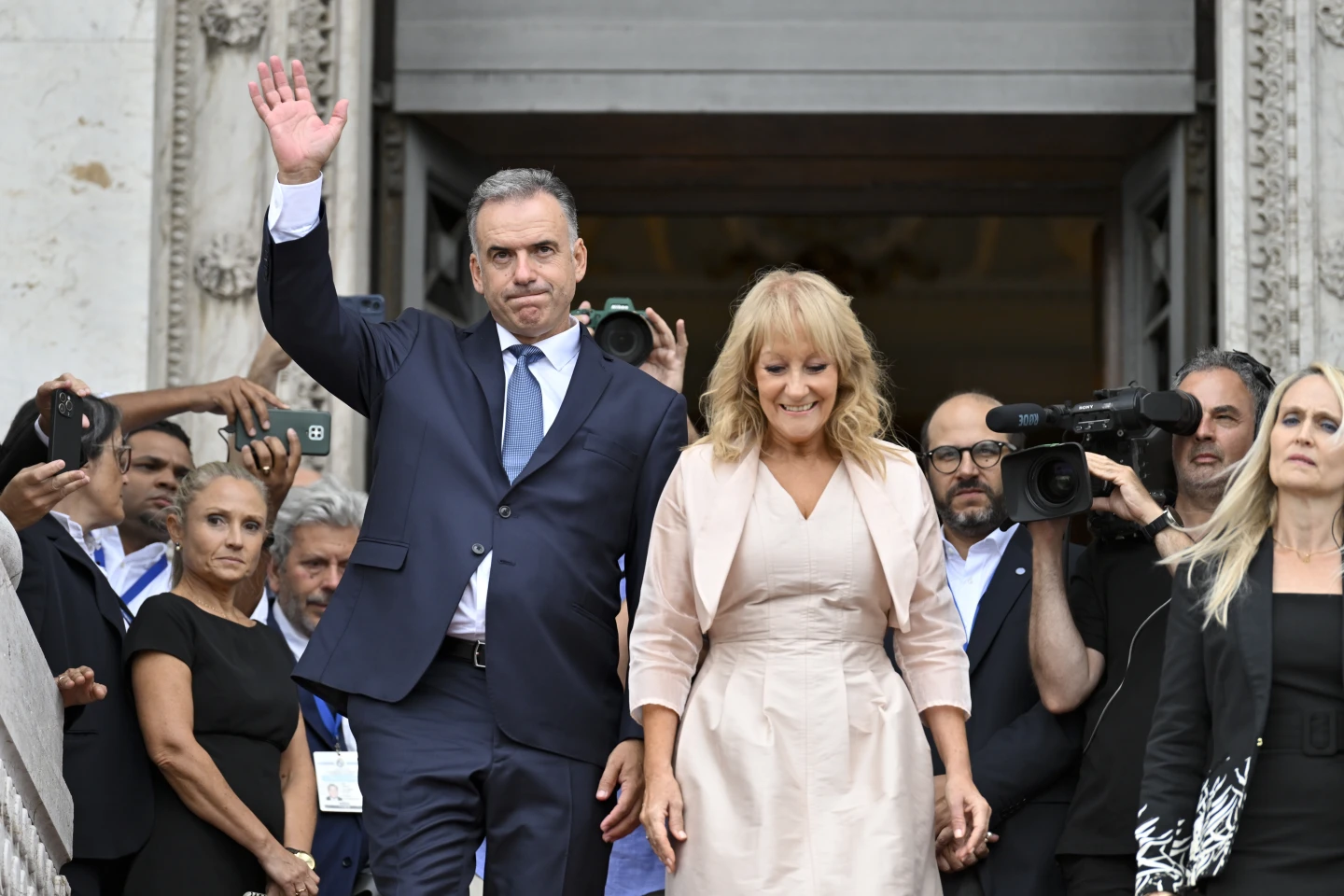
Uruguay's new president, Yamandú Orsi, took office on Saturday. A former mayor and history teacher, Orsi is a popular left-leaning leader who has promised to strengthen the social welfare network while addressing the country’s economic stagnation.

Uruguay's New Leftist President Takes Office, Promises Change Amid Economic Challenges
Uruguay's New Leftist President Takes Office, Promises Change Amid Economic Challenges
Uruguay — Uruguay's new president, Yamandú Orsi, took office on Saturday. A former mayor and history teacher, Orsi is a popular left-leaning leader who has promised to strengthen the social welfare network while addressing the country’s economic stagnation.
Orsi’s swearing-in marks the return of Uruguay's Broad Front government, a center-left coalition comprising moderates, communists, and trade union leaders. This government has come back to power after a five-year rule by the outgoing conservative president, Luis Lacalle Pou. On Saturday, cheers erupted from the audience as Orsi took the oath of office in front of Congress. Outside, thousands of Uruguayans watched the ceremony on giant screens in the main square, showing their support.
In his speech, Orsi said, "We all know that we must protect our democratic institutions in times when exclusionary logic and distrust of traditional politics are growing." He added, "We can always be adversaries but never enemies, and we must stay as far away as possible from cynicism."
The night before the ceremony, Orsi dined in Montevideo with his like-minded regional counterparts, including Brazil’s President Luiz Inácio Lula da Silva, Colombia’s Gustavo Petro, and Chile’s Gabriel Boric. This scene solidified Orsi as the latest left-wing leader in South America, many of whom have struggled in recent years with rising economic instability and increasing inequality.
Many Uruguayans see Orsi as the nostalgia candidate, remembering the Broad Front’s rule between 2005 and 2020 when the country experienced historic economic growth. However, during Lacalle Pou’s administration, new issues like rising crime and increasing inequality helped bring his center-right government to power.
Now, Orsi faces a difficult balancing act. He needs to satisfy his more radical leftist supporters, who oppose some of the previous government’s cost-cutting measures, while also boosting competitiveness to encourage economic development.
Uruguayan economist Arturo C. Porzecanski said, “The business community is waiting to see what steps Orsi will take. If he doesn’t stand firm and reverses the previous government's actions, it will make the economic outlook harder in the coming years.”
Orsi acknowledged the challenges in his speech, saying, “A lot of dialogue, an outstretched hand, and the ability to understand the different sensitivities expressed by our community will be necessary.”
Orsi’s government will soon have to make difficult decisions. There has been significant support for a controversial referendum on raising pensions and reversing the decision to increase the legal retirement age from 60 to 65, putting pressure on the government to maintain economic balance.Uruguay — Uruguay's new president, Yamandú Orsi, took office on Saturday. A former mayor and history teacher, Orsi is a popular left-leaning leader who has promised to strengthen the social welfare network while addressing the country’s economic stagnation.
Orsi’s swearing-in marks the return of Uruguay's Broad Front government, a center-left coalition comprising moderates, communists, and trade union leaders. This government has come back to power after a five-year rule by the outgoing conservative president, Luis Lacalle Pou. On Saturday, cheers erupted from the audience as Orsi took the oath of office in front of Congress. Outside, thousands of Uruguayans watched the ceremony on giant screens in the main square, showing their support.
In his speech, Orsi said, "We all know that we must protect our democratic institutions in times when exclusionary logic and distrust of traditional politics are growing." He added, "We can always be adversaries but never enemies, and we must stay as far away as possible from cynicism."
The night before the ceremony, Orsi dined in Montevideo with his like-minded regional counterparts, including Brazil’s President Luiz Inácio Lula da Silva, Colombia’s Gustavo Petro, and Chile’s Gabriel Boric. This scene solidified Orsi as the latest left-wing leader in South America, many of whom have struggled in recent years with rising economic instability and increasing inequality.
Many Uruguayans see Orsi as the nostalgia candidate, remembering the Broad Front’s rule between 2005 and 2020 when the country experienced historic economic growth. However, during Lacalle Pou’s administration, new issues like rising crime and increasing inequality helped bring his center-right government to power.
Now, Orsi faces a difficult balancing act. He needs to satisfy his more radical leftist supporters, who oppose some of the previous government’s cost-cutting measures, while also boosting competitiveness to encourage economic development.
Uruguayan economist Arturo C. Porzecanski said, “The business community is waiting to see what steps Orsi will take. If he doesn’t stand firm and reverses the previous government's actions, it will make the economic outlook harder in the coming years.”
Orsi acknowledged the challenges in his speech, saying, “A lot of dialogue, an outstretched hand, and the ability to understand the different sensitivities expressed by our community will be necessary.”
Orsi’s government will soon have to make difficult decisions. There has been significant support for a controversial referendum on raising pensions and reversing the decision to increase the legal retirement age from 60 to 65, putting pressure on the government to maintain economic balance.