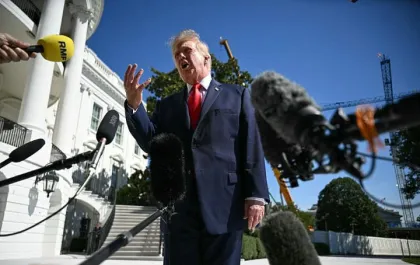

Trump Hints at Possible Sunday Attack on Iran or a Major Deal With Tehran
President Donald Trump has raised the possibility of renewed military action against Iran while leaving the door open to a major agreement, as tensions over nuclear ambitions, maritime security and the Strait of Hormuz continue.

Reporter · CSB News USA
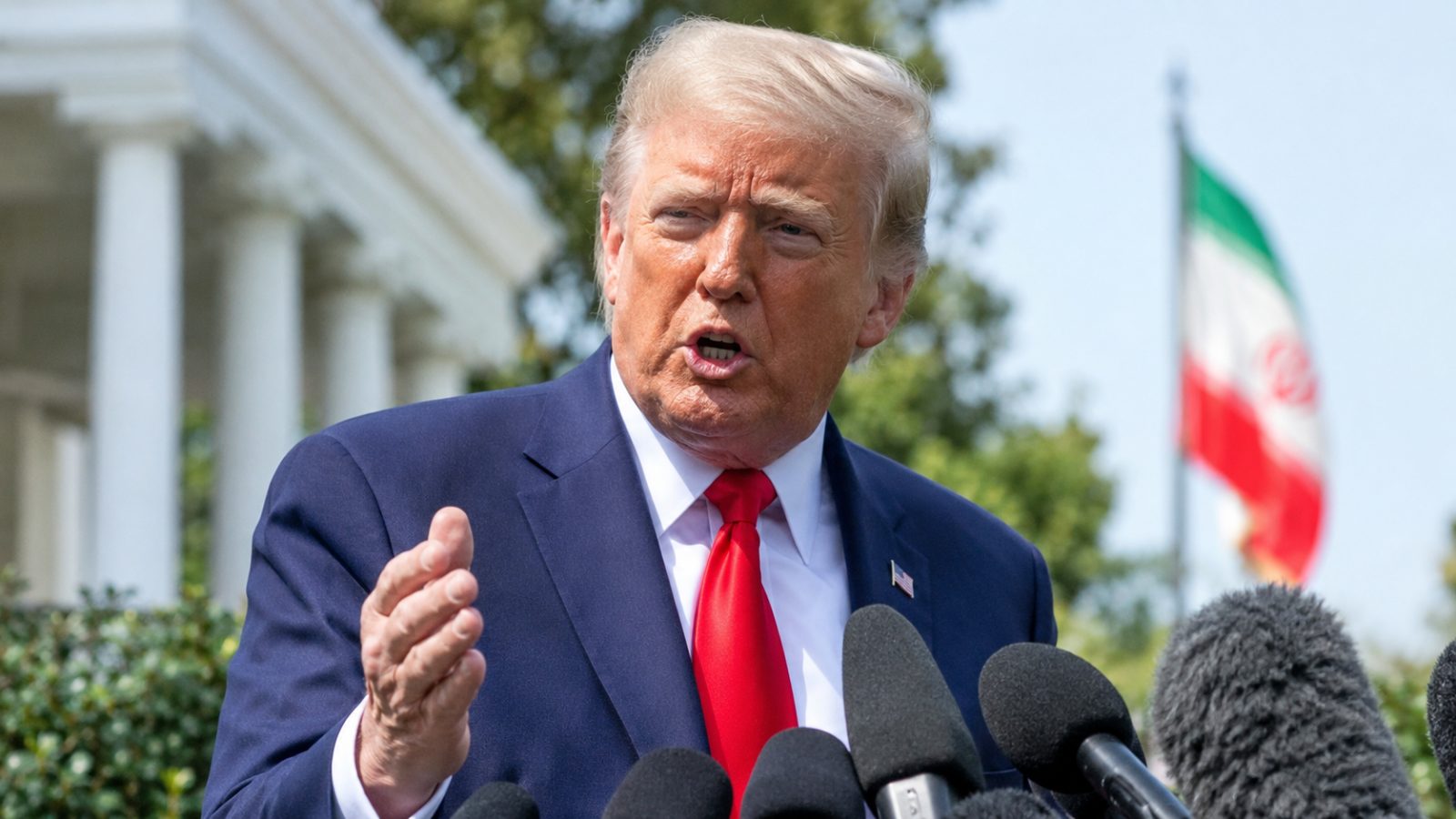
U.S. President Donald Trump has indicated that the United States could launch another attack on Iran as soon as Sunday, October 25, or reach a major agreement with Tehran instead. His remarks have intensified uncertainty over whether the months-long conflict will move toward renewed military escalation or a diplomatic breakthrough.
Speaking to reporters on Saturday, Trump declined to disclose whether an attack was imminent. He said Washington could take further military action but also suggested that a significant agreement with Iran remained possible. His comments, reported by international media, underline the administration’s continued reliance on both military pressure and negotiations.
However, there has been no independently confirmed announcement that a new U.S. attack on Iran will definitely take place on Sunday, nor confirmation that a final agreement has been reached. The situation remains fluid, with diplomatic efforts and competing claims from Washington and Tehran shaping the outlook.
According to Al Jazeera’s live coverage published on October 25, Trump said the United States was considering a possible attack as early as Sunday while maintaining that a deal with Iran could still be reached. Iranian President Masoud Pezeshkian, meanwhile, blamed Washington for undermining efforts to reach an interim agreement, although he maintained that Tehran should continue pursuing diplomacy.
Trump Wants a Lasting Agreement
Trump has repeatedly argued that any agreement with Iran must prevent the country from developing nuclear weapons. His latest comments suggest that he is unwilling to accept a settlement that merely pauses the fighting without addressing Washington’s long-term security concerns.
The president has questioned whether Iranian leaders would honor the terms of a potential agreement. From the U.S. administration’s perspective, a deal would need to provide lasting assurances rather than allow Iran to rebuild capabilities that Washington considers a threat.
Trump’s position presents Tehran with a difficult choice: negotiate terms acceptable to the United States or face the possibility of further military action. Nevertheless, the president’s remarks do not establish that a final decision to attack has been made.
The precise conditions Washington would demand in a new agreement have not been fully established in the latest public statements. Key questions include Iran’s nuclear activities, international inspections, sanctions, maritime security and the future of the U.S. naval blockade.
Strait of Hormuz Emerges as a Major Point of Dispute
The Strait of Hormuz remains central to the confrontation because it is one of the world’s most strategically important energy shipping routes. Connecting the Persian Gulf with the Gulf of Oman, the waterway carries substantial volumes of oil and other energy supplies to international markets.
Any prolonged disruption could affect shipping costs, energy prices and global trade. Countries that depend heavily on Gulf oil supplies would be particularly vulnerable to a sustained interruption.
Iran has reportedly sought to link the reopening of the strait to the lifting of the U.S. naval blockade on Iranian ports. According to an Associated Press report published on October 25, Iranian Ambassador to Pakistan Reza Amiri Moghadam said Tehran remained willing to resume negotiations under an interim arrangement brokered with Pakistan’s assistance.
The ambassador accused Washington of undermining diplomacy by maintaining the blockade. The proposed arrangement was intended to restore shipping through the strait, address the blockade and open negotiations on a broader agreement concerning Iran’s nuclear program.
However, reports about the precise terms of Iran’s latest proposal have been disputed. Shafaq News reported on October 24 that Iranian state-linked media had cited a source denying that Tehran had submitted a new proposal linking the reopening of the strait to the removal of the U.S. blockade.
These conflicting accounts mean that the details of any new diplomatic initiative remain uncertain. Neither the reopening of the waterway nor the lifting of the blockade should be treated as an accomplished outcome.
Iran Blames Washington for the Diplomatic Deadlock
Iranian President Masoud Pezeshkian has criticized the United States over the breakdown of interim agreement negotiations. According to Al Jazeera’s October 25 coverage, Pezeshkian argued that Washington had damaged the negotiating process but maintained that Iran should continue working toward an agreement.
Tehran’s position reflects a broader dispute over trust and the sequencing of concessions. Iran wants relief from economic and maritime pressure, while Washington is seeking assurances that any settlement will address its security concerns.
The two sides must also determine whether an interim arrangement can be implemented and monitored effectively. Without agreement on enforcement, maritime access and the nuclear issue, even a temporary understanding could prove difficult to sustain.
The diplomatic challenge is compounded by years of hostility, sanctions and failed negotiations. Each side has questioned the other’s willingness to honor commitments, making it harder to establish a durable framework for ending the conflict.
Pakistan and Qatar’s Diplomatic Roles
Pakistan has emerged as an important channel for communication between Washington and Tehran. Qatar has also played a role in regional diplomatic efforts, including the interim arrangement reached in June.
The purpose of such mediation is to provide a channel for negotiations when direct engagement between adversaries becomes difficult. Mediators can relay proposals, clarify conditions and help the parties identify areas where compromise may be possible.
The June interim arrangement was intended to help restore shipping through the Strait of Hormuz, address the U.S. naval blockade and establish a framework for broader negotiations over Iran’s nuclear program.
Yet the continuing disagreements demonstrate the limits of mediation when the parties remain divided over fundamental issues. A successful outcome would require both governments to accept terms that address their respective security and economic concerns.
Pakistan and Qatar could therefore remain important in efforts to prevent renewed fighting. Their ability to secure a breakthrough, however, will depend on whether Washington and Tehran are willing to make reciprocal concessions.
Nuclear Concerns Remain at the Heart of the Conflict
Iran’s nuclear program is one of the central issues separating the two governments. Washington wants assurances that Iran will not develop nuclear weapons, while Tehran has historically maintained that its nuclear activities are intended for peaceful purposes.
Any comprehensive agreement would likely need to address monitoring, verification and the conditions under which international inspectors could examine relevant facilities. The parties would also need to negotiate the relationship between nuclear commitments and economic sanctions.
A lasting settlement would require more than a general political declaration. It would need clear obligations, a process for verifying compliance and an agreed response if either side accused the other of violating the terms.
Military strikes alone would not necessarily resolve these underlying disagreements. Even if an attack damaged particular facilities, the political and security disputes that drive the confrontation could remain.
For that reason, negotiations could still provide a route toward a more durable settlement, provided that both sides accept a workable framework.
Potential Consequences for Global Energy Markets
The possibility of renewed military action has implications far beyond the United States and Iran. Any escalation around the Strait of Hormuz could increase uncertainty in global energy markets.
Oil prices are influenced by a range of factors, including supply expectations, shipping risks, inventories and traders’ assessments of future disruptions. A renewed confrontation could push prices higher if markets anticipate a significant interruption to exports.
Higher energy costs could affect transportation, manufacturing and household expenses. Countries that rely on imported oil and gas could face additional pressure on their trade balances and domestic prices.
However, the scale of any market reaction cannot be predicted with certainty. It would depend on the duration and intensity of the conflict, the extent of disruption to shipping and whether alternative supplies could compensate for any shortfall.
The same uncertainty applies to the wider regional economy. Commercial shipping, insurance costs and investor confidence could all be affected if the confrontation intensifies.
Regional Security Concerns Grow
A new U.S. attack could prompt retaliation and increase the risk of a broader regional confrontation. The consequences would depend on the targets, the scale of the operation and Iran’s response.
Military escalation could also complicate diplomatic efforts involving other countries in the region. Governments seeking to protect shipping routes and prevent the conflict from spreading would face increased pressure to support de-escalation.
The security of commercial vessels would remain a major concern. Shipping companies would need to assess the risks of operating near contested waters, while governments might face pressure to provide additional protection.
For regional countries, avoiding a wider conflict is an important economic and security priority. A diplomatic settlement could reduce uncertainty and help restore confidence in maritime trade. Renewed attacks, by contrast, could prolong instability.
What Happens Next?
The immediate question is whether Washington and Tehran can make enough progress to prevent another round of military action. Trump’s remarks leave open the possibility of both escalation and negotiation, but they do not establish which outcome is more likely.
Several developments will be important to watch: official statements from the White House and the Iranian government, any announcement concerning negotiations through Pakistan or Qatar, changes in the status of the U.S. naval blockade, and the security situation around the Strait of Hormuz.
It will also be important to distinguish confirmed decisions from political warnings and unverified reports. A statement that an attack is possible is not proof that an operation has been authorized. Likewise, a reported diplomatic proposal does not mean the parties have agreed to its terms.
For now, the United States appears to be keeping military pressure on the table while leaving room for negotiations. Iran, meanwhile, continues to face pressure over its economy, maritime access and nuclear program while arguing that diplomacy remains possible.
The coming hours could provide a clearer indication of whether the two governments are moving toward a new confrontation or attempting to revive negotiations. Until official announcements establish otherwise, neither a Sunday attack nor a final agreement should be presented as certain.
Related News
Trump Orders Lawsuit Over Alaska Senate Race, Triggering Election Authority Debate
Trump’s Election Fight Intensifies as Federal Judge Blocks Voting Investigations in Nine States

Abdul El-Sayed Brings a Public Health Vision to Michigan’s High-Stakes Senate Race