

Part of: US Midterm Election 2026
Abdul El-Sayed Brings a Public Health Vision to Michigan’s High-Stakes Senate Race
From Detroit’s health department to the U.S. Senate campaign, Abdul El-Sayed is putting healthcare affordability, cleaner communities and economic opportunity at the center of his message.

Reporter · CSB News USA
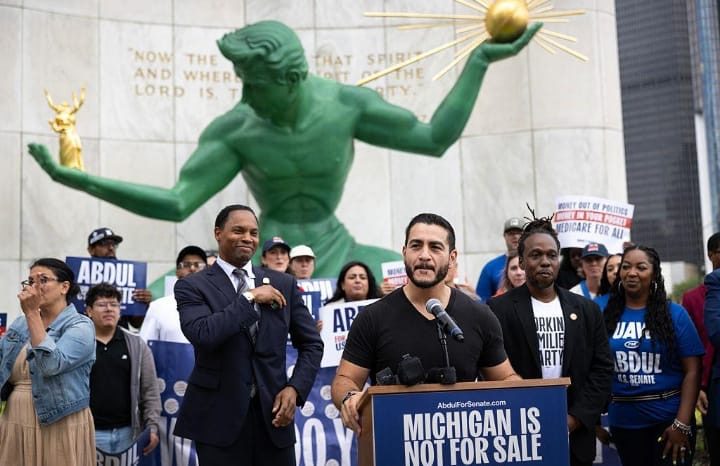
Abdul El-Sayed, the Democratic nominee for the U.S. Senate in Michigan, is bringing a public-health-focused message to one of the state’s most closely watched political contests. A former Detroit health department director and Wayne County health official, El-Sayed has built his campaign around healthcare access, affordability and improving the quality of life for ordinary Americans.
Born and raised in Michigan to Egyptian immigrant parents, El-Sayed has an academic background spanning biology, political science, public health and medicine. He studied at the University of Michigan, earned a medical degree from Columbia University and completed a doctorate at the University of Oxford as a Rhodes Scholar. Rather than pursuing a conventional clinical career, he focused his professional work on public health and government services.
During his time leading Detroit’s Health Department, El-Sayed worked on initiatives intended to address community health needs. His record included efforts to expand access to free eyeglasses for children and establish a free Narcan distribution program to help prevent fatal overdoses. He later led Wayne County’s health and human services department, where initiatives included a medical-debt relief program for residents.
These experiences form a central part of his argument that government should do more to help people manage the everyday costs of healthcare. His campaign has emphasized a Medicare-for-All system, which would seek to expand public health insurance coverage, alongside measures to address medical debt and make essential services more accessible.
El-Sayed has also highlighted concerns about food safety, clean drinking water and environmental pollution. His health policy agenda has proposed stronger accountability for polluters, efforts to reduce harmful substances in food and water, and greater investment in school meal programs and access to groceries. These issues have helped him reach voters who want public policy to focus more directly on health and living standards.
Affordability is another major theme of his campaign. El-Sayed argues that families should not have to struggle to pay for groceries, housing, transportation and medical care while large corporations exert substantial influence over public policy. He has called for campaign-finance reform and greater accountability for powerful corporate interests.
His candidacy has attracted support from prominent progressive Democrats, including Senators Bernie Sanders and Elizabeth Warren. El-Sayed won Michigan’s Democratic Senate primary on August 4, 2026, defeating Representative Haley Stevens. He is now challenging Republican nominee Mike Rogers in the November 3 general election for an open Senate seat, following Senator Gary Peters’ decision not to seek another term.
The campaign has also drawn national attention because El-Sayed could become the first Muslim elected to the U.S. Senate if he wins. His candidacy reflects the growing diversity of American politics and the participation of candidates whose family backgrounds connect the United States with other parts of the world.
At the same time, the race has become increasingly contentious. Rogers and other Republicans have raised questions about El-Sayed’s past associations and statements, including allegations involving the Muslim Brotherhood. El-Sayed denies having ties to the organization, and reporting has found no evidence that he is affiliated with it. The claims remain a point of political dispute, while El-Sayed has argued that voters should focus on healthcare, affordability and his public-service record.
For Michigan voters, the election presents a choice between different approaches to healthcare costs, economic policy and the role of government. El-Sayed’s proposals would require legislative support and, in several cases, congressional action; they are campaign goals rather than changes that would automatically take effect if he is elected.
For Bangladeshi Americans and other immigrant communities, the contest may be particularly interesting because it highlights issues affecting families across the country, including healthcare expenses, access to public services, economic opportunity and representation in national government. The outcome of the election itself, however, would not automatically change immigration or visa rules.
As the November election approaches, El-Sayed is seeking to turn his experience in public health into a broader national platform. His central message is that government should prioritize the health, financial security and everyday needs of the people it serves. Whether Michigan voters embrace that vision will help determine the future of this closely watched Senate race.

Cost of Living and Immigration Emerge as Major Battles in America’s Midterm Elections

California Faces $1.6 Billion Rehab Fraud Allegations in Major Federal Investigation

Iran War and Rising Prices Take Center Stage in Key Alaska Senate Debate
Hakeem Jeffries Says Democrats Are Closing In on Winning Back the US House
Related News

Trump Orders Lawsuit That Could Delay Alaska Senate Election Results
California Faces $1.6 Billion Rehab Fraud Allegations in Major Federal Investigation

US Limits Embassy Evacuation to Saudi Arabia as Gulf Security Fears Rise