

Trump Targets Wind Imports While Bombardier Announces $270 Million Investment in American Jobs
Trump orders negotiations over imported wind turbines while touting Bombardier’s investment, though the aerospace company has not confirmed its details.

CSB News USA
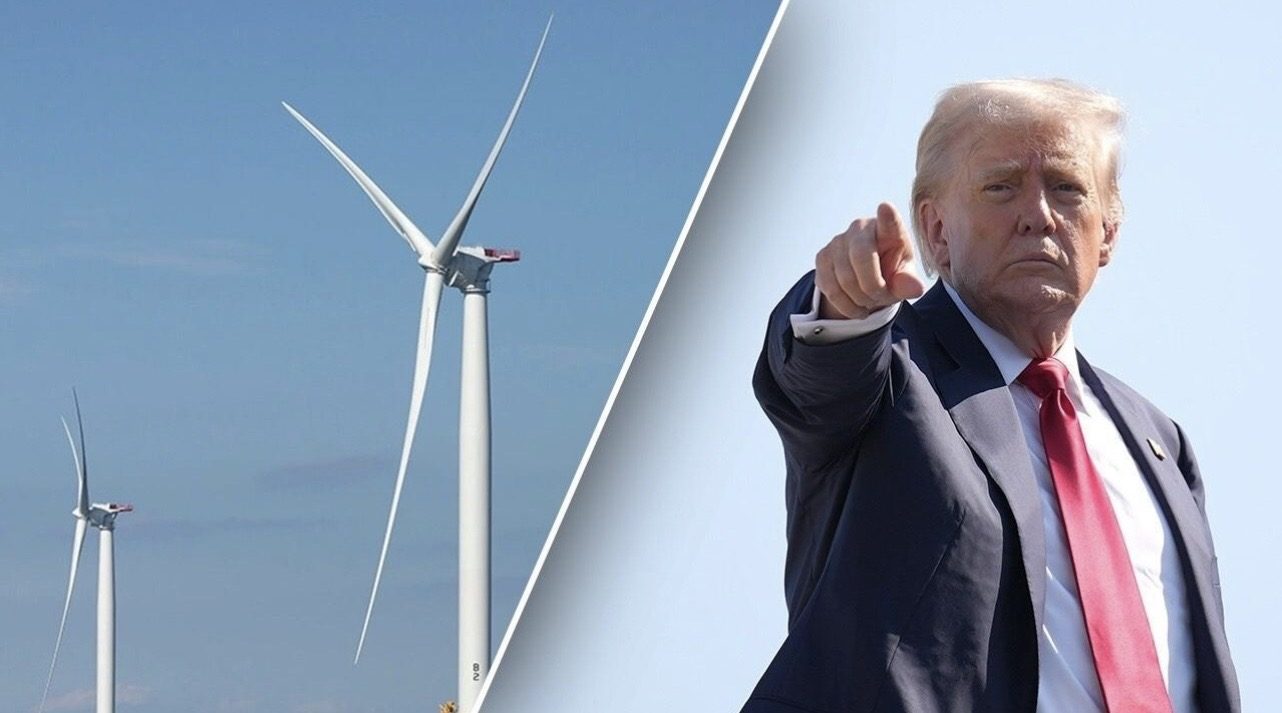
President Donald Trump has announced two significant developments affecting American trade and industrial policy: a new national security designation targeting imported wind turbines and a proposed $270 million investment by Canadian aircraft manufacturer Bombardier in the United States. The announcements highlight the administration’s efforts to reshape foreign trade, strengthen domestic manufacturing and influence the country’s energy sector. However, the two developments differ in their level of confirmation: the wind turbine decision is documented in an official presidential proclamation, while Bombardier’s larger investment commitment has been announced by Trump but has not yet been independently confirmed in full by the company.
On October 22, Trump declared that imported wind turbines and their components were being brought into the United States under circumstances that threatened national security. The decision followed an investigation conducted by the Department of Commerce under Section 232 of the Trade Expansion Act of 1962, a law that allows the president to take action against imports considered a threat to national security. The investigation began in August 2025 and examined the potential effects of foreign-made wind energy equipment on American security and economic interests.
Despite the strong language surrounding the announcement, the administration did not impose a new blanket tariff on imported wind turbines through this proclamation. Instead, Trump instructed Commerce Secretary Howard Lutnick and United States Trade Representative Jamieson Greer to pursue or continue negotiations with appropriate foreign trading partners. They must provide the president with at least one update on those negotiations within 180 days of the October 22 proclamation. The administration may consider additional measures later, depending on the progress and outcome of the discussions.
The White House’s stated concerns include cybersecurity vulnerabilities associated with foreign-made equipment, possible interference with radar systems and air traffic operations, and growing dependence on overseas suppliers. These concerns are particularly relevant when equipment is connected to critical infrastructure or has digital systems that could potentially be accessed or disrupted. However, the administration’s declaration represents an official national security determination; it should not be interpreted as proof that every imported turbine poses an immediate danger or that every foreign manufacturer has engaged in harmful activity.
The decision could have implications for international manufacturers supplying the American wind energy market. Countries identified among the important suppliers of wind turbines and related components include Mexico, France, India, Denmark and Germany. Future restrictions or additional tariffs could affect manufacturers, importers, project developers and electricity providers that rely on international supply chains. For now, the extent of any commercial impact remains uncertain because the administration has chosen negotiations before deciding whether further trade measures are necessary.
Trump has repeatedly criticised wind energy, arguing that its intermittent generation makes it less dependable than certain conventional energy sources. In the October 22 proclamation, he reiterated his position that wind power could undermine the reliability of the American electricity grid. That is the administration’s stated policy position, rather than a comprehensive independent assessment of wind energy’s performance. Electricity systems can combine wind generation with other power sources, energy storage, transmission infrastructure and demand management to address fluctuations in renewable output. The policy debate therefore involves not only security but also electricity prices, reliability, investment and the future composition of the national energy supply.
The second development concerns Bombardier, the Montreal-based Canadian aerospace manufacturer. In a statement published on Truth Social late on October 22, Trump said the company was investing $270 million in the United States and that the investment would create thousands of American jobs in Kansas, Texas and Indiana. He credited Kansas Republican Senator Roger Marshall and Texas Attorney General Ken Paxton with helping secure the arrangement. The announcement was reported by Reuters on October 23.
The announcement follows a period of tension between the administration and Bombardier. In September, Trump threatened to prevent the Canadian manufacturer from selling aircraft in the American market amid a dispute involving aircraft certification and rival manufacturer Gulfstream Aerospace. The threat raised concerns in Kansas, where Bombardier employs approximately 1,500 people at its Wichita operations. Kansas lawmakers contacted the White House as the dispute threatened a company with an established manufacturing and employment presence in their state.
Trump subsequently softened his position during remarks in Wichita on October 19, saying he did not intend to harm Bombardier or its employees. His latest investment announcement signals a more cooperative public stance towards the company and its American operations. Nevertheless, the precise relationship between the earlier dispute, the proposed investment and any formal commitments remains unclear from the information publicly confirmed so far.
Bombardier had separately announced a $50 million investment in its Wichita facility in the week preceding Trump’s latest announcement. Reuters reported that the company had not responded to a request for comment on the details of the additional $270 million investment. As of October 23, the larger figure should therefore be attributed to Trump rather than described as a fully verified corporate commitment. The same caution applies to the claim that thousands of jobs will be created: the president announced that expected outcome, but detailed employment projections and implementation plans were not provided in the cited report.
The two announcements illustrate different aspects of the administration’s economic approach. In the wind turbine case, the government is using national security law to open negotiations that could eventually reshape imports. In the Bombardier case, Trump is highlighting an anticipated investment by a foreign company with existing American operations. One approach could create uncertainty for overseas suppliers, while the other seeks to emphasise domestic employment and industrial expansion. Both developments may influence decisions by companies assessing their exposure to American trade policy.
For businesses, investors and workers, the key issue will be what happens next. The wind turbine negotiations could determine whether additional trade restrictions are introduced within the coming months. Meanwhile, Bombardier’s investment announcement will require further details from the company before its full financial scope, timing and employment effects can be established. Until those details emerge, neither potential tariffs nor the projected job gains should be treated as completed outcomes.
The developments come less than two weeks before the November 3, 2026, midterm elections, when control of Congress will be contested. Trade, energy costs, manufacturing employment and economic performance are important political issues, but the timing alone does not establish the motives behind either announcement. The documented facts show an administration pursuing negotiations over wind turbine imports while publicly promoting a major proposed aerospace investment. The ultimate economic consequences will depend on the results of the trade talks and whether Bombardier confirms and implements the larger investment plan.
Reporter
CSB News USA
Related News

Iran War and Rising Prices Take Center Stage in Key Alaska Senate Debate
Hakeem Jeffries Says Democrats Are Closing In on Winning Back the US House
November Elections Could Reshape Political Power Across 15 State Legislatures