
Part of: US Midterm Election 2026
Trump Sues Alaska as Explosive Senate Election Fight Raises Questions Over Certification
A federal lawsuit challenges Alaska’s Senate election certification, citing possible voter confusion between two candidates named Sullivan ahead of November’s crucial midterm elections.

International Broadcast Journalist · CSB News USA
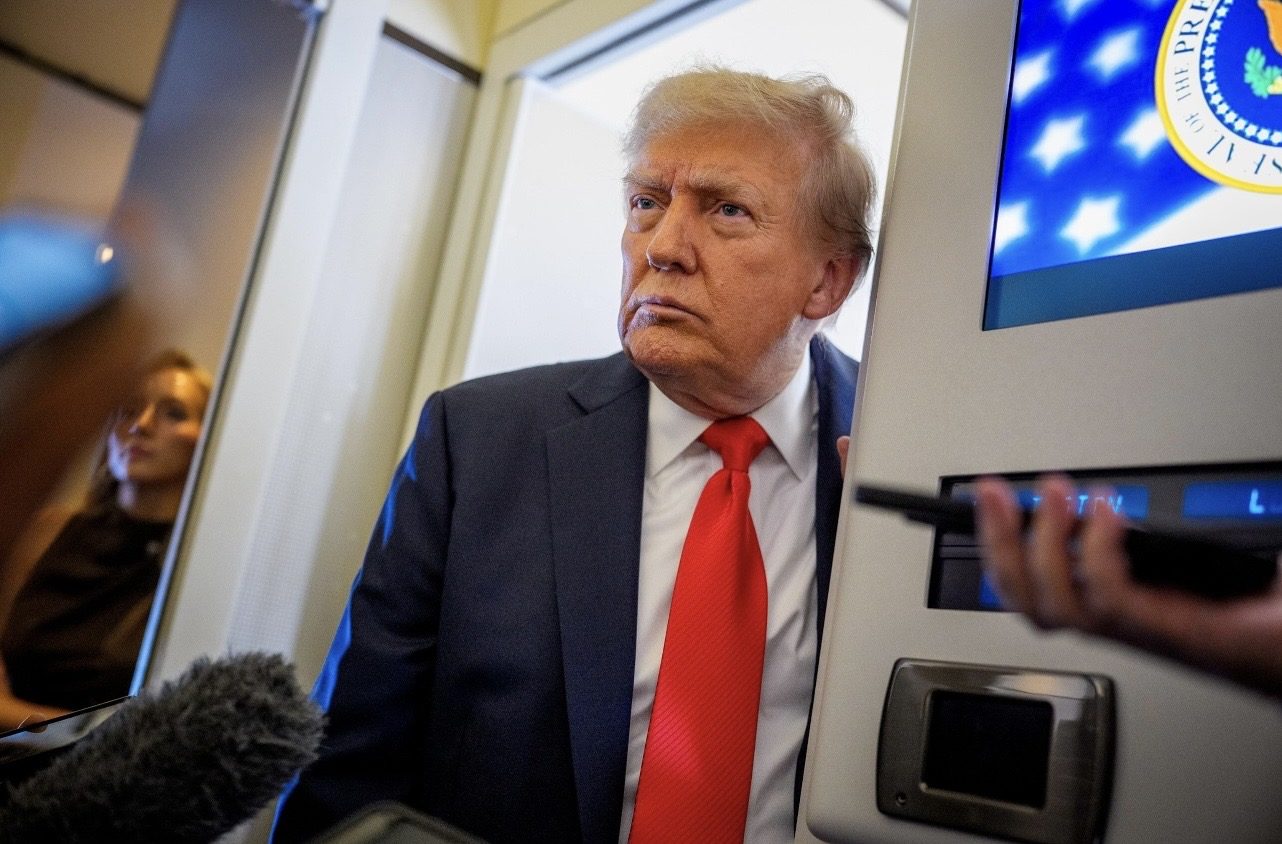
The Trump administration has filed a federal lawsuit seeking to prevent Alaska from certifying the results of its closely watched 2026 U.S. Senate election under certain circumstances, escalating a legal dispute over two candidates with nearly identical names. The case centers on Republican incumbent Senator Dan S. Sullivan, Democratic challenger Mary Peltola, and another candidate, Daniel J. Sullivan Jr., whose presence on the ballot has raised allegations of potential voter confusion.
The U.S. Department of Justice filed the lawsuit in federal court in Anchorage on October 22, just 12 days before Alaska’s November 3 general election. President Donald Trump publicly confirmed the following day that he had personally directed the department to pursue the legal action.
“I’m the one that said, ‘do it,’” Trump told reporters on October 23, acknowledging his role in the decision. The lawsuit seeks to prevent Alaska election officials from certifying a result under specified circumstances if the incumbent Republican loses and an investigation is needed to determine whether confusion between the candidates affected the outcome. The court has not been reported to have granted the requested relief.
The dispute involves two men whose names are similar but whose ballot listings distinguish them. The incumbent senator appears as “Sullivan, Dan S. (Registered Republican) Incumbent,” while the other candidate is listed as “Sullivan, Daniel J. Jr.” without a party designation.
The Justice Department argues that voters intending to support the incumbent could mistakenly select Daniel J. Sullivan instead. According to the federal complaint, such confusion could potentially affect the result of a close election, particularly if votes attributed to the second candidate would otherwise have changed the outcome.
The department invokes the National Voter Registration Act, arguing that federal law requires protections for the integrity of federal elections. Its requested remedy would delay certification while authorities investigate whether votes cast for Daniel J. Sullivan were actually intended for the incumbent senator.
However, the allegations remain disputed and have not been established as facts by a court. The lawsuit does not demonstrate that voters have actually confused the two candidates on a scale sufficient to change the election result.
Daniel J. Sullivan, a retired teacher from Petersburg, Alaska, has maintained that he entered the race independently. Republicans have alleged that his candidacy is designed to divert support from the incumbent and benefit Peltola. Those allegations should not be treated as proven misconduct.
The controversy began months before the general election. Alaska election officials initially moved to disqualify Daniel J. Sullivan, citing concerns about his candidacy, his requested ballot name and his political affiliation. Officials argued that the circumstances suggested a potential attempt to confuse voters.
The candidate challenged the decision, arguing that election authorities lacked a legal basis to exclude him simply because of his name or suspected motivations. In June, the Alaska Supreme Court ruled that he could remain on the ballot, following earlier court action in his favor. The dispute over his eligibility had therefore already been considered by the state judiciary before the federal government filed its new lawsuit.
The timing of the federal case has intensified the controversy. The lawsuit was filed after the candidates had been determined and shortly before voters are due to cast their ballots. Critics question why the federal government is seeking to intervene in the certification process so close to Election Day rather than resolving its concerns earlier.
Peltola, a former member of Congress and the Democratic challenger, has criticized the legal action. Speaking to reporters in Anchorage on October 23, she described the lawsuit as political corruption and argued that the dispute distracts from the economic issues facing Alaskans.
Republican Senator Lisa Murkowski has also criticized the federal intervention, despite endorsing the incumbent. She said Alaska’s election officials had already addressed the issue by clearly distinguishing the candidates on the ballot and argued that the Justice Department should not have filed the lawsuit.
The incumbent senator’s campaign has indicated that it will allow the Justice Department’s complaint to proceed through the legal process. His campaign has not publicly established that the other candidate’s presence would alter the outcome.
Legal experts have questioned whether the federal government can use the law cited in the complaint to prevent a state from certifying an election result. The Constitution gives states a central role in administering elections, while Congress has authority to establish certain rules governing federal elections. Whether the department’s legal argument can support the requested remedy is a central question for the court.
Election law scholars have also raised practical concerns about the proposed investigation. Because ballots are secret, determining whether an individual who voted for Daniel J. Sullivan actually intended to support Dan S. Sullivan may be difficult or impossible in many cases.
The election is further complicated by Alaska’s ranked-choice voting system. Voters can rank candidates in order of preference. If no candidate receives the required majority of first-choice votes, the ranked-choice tabulation process eliminates the lowest-performing candidate and redistributes ballots according to voters’ next available preferences. As a result, the final outcome may depend on how voters rank the candidates, rather than simply on the first-choice totals.
The Senate contest is particularly significant because control of the closely divided chamber could be affected by the results of the 2026 midterm elections. Peltola and Sullivan are the principal contenders, while Daniel J. Sullivan and Republican Gerald Heikes are also on the ballot.
The legal dispute could create further uncertainty if the election is close. However, the lawsuit does not mean the election has been cancelled, that the incumbent has lost, or that Alaska’s results have already been rejected. Those outcomes depend on the election itself and subsequent legal proceedings.
As of October 24, 2026, the central question remains whether a federal judge will grant the Justice Department’s request and, if so, how broadly any order would apply. The court’s decision could have implications beyond Alaska by clarifying the limits of federal authority over state election certification.
For now, voters are preparing to participate in the November 3 election while state and federal authorities face an unresolved legal confrontation. The final outcome will depend on the votes cast, Alaska’s established counting procedures and any rulings issued by the courts. Until evidence is presented and assessed through the legal process, allegations of deliberate voter confusion remain allegations rather than established findings.
Abdul El-Sayed Brings a Public Health Vision to Michigan’s High-Stakes Senate Race
Cost of Living and Immigration Emerge as Major Battles in America’s Midterm Elections
California Faces $1.6 Billion Rehab Fraud Allegations in Major Federal Investigation
Iran War and Rising Prices Take Center Stage in Key Alaska Senate Debate
Related News
Federal Judge Restricts Trump Administration’s Voter Investigations in Nine States

Trump Targets Wind Imports While Bombardier Announces $270 Million Investment in American Jobs
Iran War and Rising Prices Take Center Stage in Key Alaska Senate Debate