

Part of: US Midterm Election 2026
California Faces $1.6 Billion Rehab Fraud Allegations in Major Federal Investigation
Federal prosecutors accuse four people of a $1.6 billion sham rehabilitation scheme allegedly exploiting vulnerable patients and private health insurance companies.

Reporter · CSB News USA
8,645 views 6 min read
Listen to this article6 min
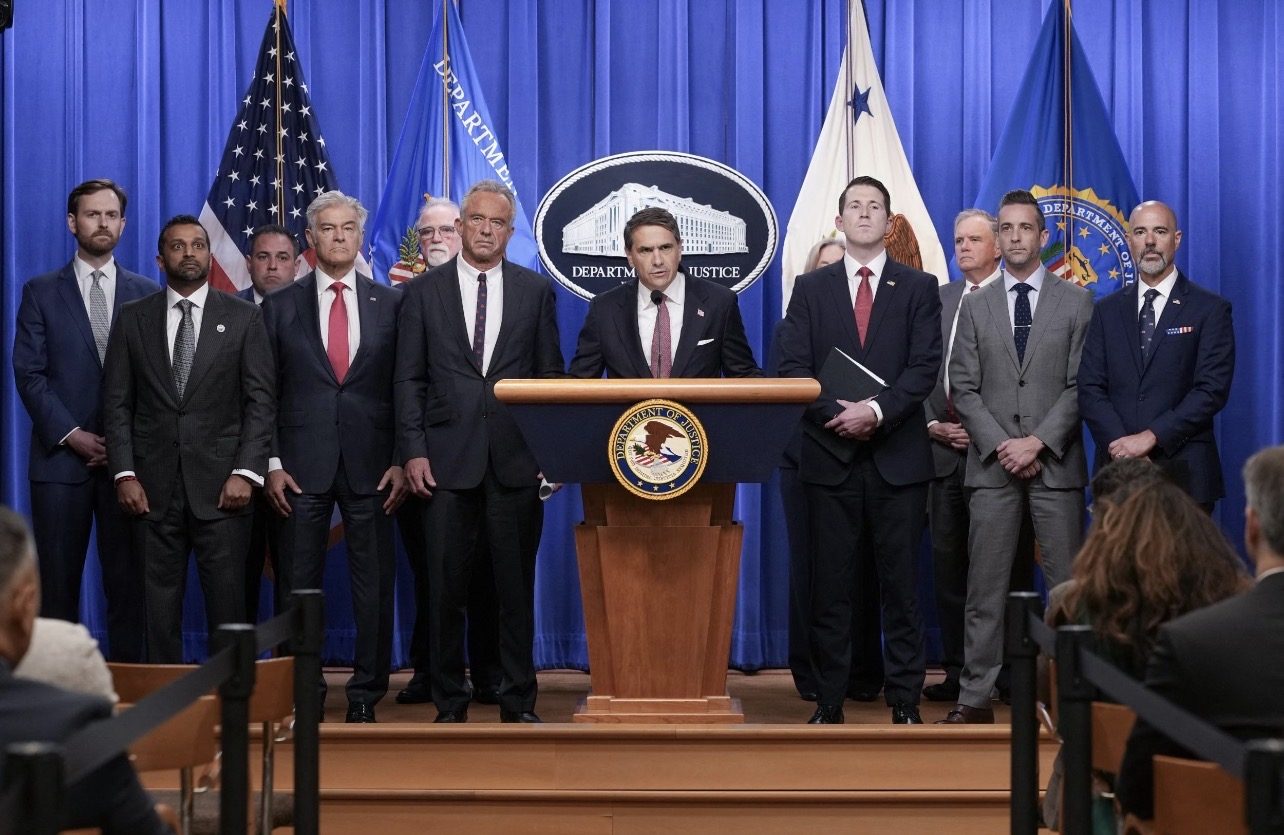
Federal prosecutors in the United States have announced criminal charges in a sweeping health care fraud investigation involving alleged sham addiction-treatment services, unnecessary medical procedures and fraudulent hospice claims. The Justice Department announced the cases on October 22, 2026, saying the alleged schemes involved more than $1.8 billion in fraudulent claims to government and private health insurance programs.
At the center of the announcement is an alleged $1.6 billion scheme involving substance abuse treatment facilities that prosecutors say recruited vulnerable people and billed private insurers for treatment that was not provided, was medically unnecessary or was misrepresented.
The case has drawn attention because the alleged victims included people experiencing homelessness, people living in poverty and individuals seeking help for substance use disorders. Federal authorities say the defendants allegedly exploited their need for treatment to generate insurance payments.
The Justice Department described the substance abuse treatment case as the largest scheme of its kind that it has prosecuted. However, the $1.6 billion figure refers to the amount allegedly billed, not necessarily the amount ultimately paid by insurers or the amount established as actual financial losses.
According to the federal indictment, four people were charged in connection with the alleged scheme: Nathan Young, 39, also known as “Pablo”; his father, David Young, 71, also known as “Sancho Lopez”; Honey Phipps, 42; and Cody Phipps, 36.
The two Youngs are from Los Angeles, California, while Honey and Cody Phipps are from Greenville, Texas, according to prosecutors.
Investigators allege that David and Nathan Young controlled dozens of companies that purported to provide substance abuse treatment in the Los Angeles area and elsewhere in the country. They allegedly worked with patient recruiters, referred to in the indictment as “body brokers,” to bring people to treatment facilities.
The alleged recruitment strategy included offering prospective patients free flights, money, apartments, hotel accommodations, cars, gift cards, marijuana, cigarettes and prescription medications. Prosecutors say these incentives were used to attract people whose insurance policies offered particularly high reimbursement rates.
The indictment further alleges that some individuals were fraudulently enrolled in insurance policies for which they were not eligible, allowing the operators to seek higher payments for purported treatment services.
Prosecutors allege that the treatment provided after patients arrived frequently failed to match the promises made during recruitment.
According to the indictment, some patients with insurance policies that generated higher reimbursements received better accommodation, including hotel stays, private apartments and meals. Others were allegedly placed in crowded, unsanitary and poorly maintained housing.
The indictment describes an alleged system in which patients were repeatedly moved through facilities so the operators could continue submitting insurance claims. Prosecutors contend that billing continued regardless of whether the services were medically necessary or actually delivered.
The allegations extend beyond financial fraud. Prosecutors say some patients were allegedly given medication to prevent them from leaving facilities, while others were offered drugs to persuade them to remain. The indictment also alleges that some patients were separated from family communications, denied access to their belongings or physically prevented from leaving.
These claims are serious allegations made by federal prosecutors. They have not all been established through a criminal trial, and the defendants are presumed innocent unless proven guilty in court.
Another significant allegation concerns the way patients were qualified for detoxification services. Prosecutors say employees were instructed to coach some individuals to fabricate symptoms so that they would appear eligible for treatment. In some instances, the indictment alleges, patients were encouraged to use drugs or alcohol to qualify for detox services.
After detoxification, patients were allegedly billed for therapy sessions that did not provide meaningful treatment. According to the Justice Department, some sessions were conducted through online video meetings involving more than 100 participants. Patients allegedly were not required to participate actively, beyond turning on their cameras, even though insurers were billed for therapy.
If established in court, these practices would raise questions not only about the use of insurance money but also about the safety and effectiveness of addiction treatment provided to vulnerable patients.
The four defendants face charges including conspiracy to commit health care fraud and wire fraud, conspiracy to violate the federal Eliminating Kickbacks in Recovery Act, three counts of health care fraud and two counts of violating that anti-kickback law. Nathan and David Young face additional health care fraud and anti-kickback counts, according to the Justice Department.
The law against kickbacks in addiction treatment is intended to address financial incentives that can distort patient referrals. When recruiters are compensated improperly for sending people to treatment centers, the financial interests of the facility may take priority over a patient's clinical needs.
The case also involves a separate defendant, Nicholas Moore, 33, of North Myrtle Beach, South Carolina. Prosecutors say Moore managed or served as a nominal owner and director of certain facilities associated with the Youngs. He has pleaded guilty to a charge of conspiracy to commit health care fraud and wire fraud in connection with the alleged treatment scheme. According to the Justice Department, he admitted to helping submit $199 million in fraudulent insurance claims for sham substance abuse treatment.
Moore's guilty plea is a distinct legal development and should not be confused with a finding of guilt against the four defendants who were charged in the main case.
The broader federal announcement involved several other alleged health care fraud schemes. Prosecutors said 15 defendants were charged across the cases announced on October 22, including six medical professionals. Eight defendants were arrested that day.
One separate case involved allegations that a surgeon and a business partner billed Medicare for approximately $134 million in medically unnecessary procedures to clear plaque from arteries. The procedures, known as atherectomies, are invasive interventions that can be appropriate for certain patients but may expose patients to unnecessary risks when performed without medical justification.
Federal prosecutors also announced cases involving more than $138 million in allegedly fraudulent Medicare claims connected to three hospice schemes. In those cases, the government alleges that patients who were not terminally ill were improperly enrolled in hospice care or that services were billed fraudulently.
In another case, a defendant was indicted in connection with an alleged scheme involving nearly $270 million in fraudulent prescription claims submitted to Medi-Cal, California's Medicaid program.
Taken together, the cases illustrate how alleged fraud can affect different parts of the American health care system, from private insurance-funded rehabilitation to publicly funded medical and hospice programs.
The consequences can extend beyond insurers and taxpayers. Fraudulent billing can increase administrative costs, undermine confidence in legitimate treatment providers and divert resources from patients who need medical care. In addiction recovery, the alleged conduct can be particularly damaging because people seeking treatment may already face significant medical, financial and social challenges.
Federal authorities involved in the investigation include the Federal Bureau of Investigation, the Internal Revenue Service's Criminal Investigation division and the Drug Enforcement Administration. The Department of Health and Human Services Office of Inspector General is also involved in the wider effort to investigate health care fraud. Prosecutors say the agencies are working to identify schemes, follow financial transactions and pursue criminal charges where the evidence supports them.
The investigation comes amid a broader federal effort to pursue alleged fraud involving health care programs and other publicly funded services. Officials have emphasized that fraudulent claims can drain money from programs designed to support patients, seniors and people with limited resources.
At the same time, criminal charges must be distinguished from final court findings. The amount alleged in an indictment is not automatically the amount a defendant has been proven to have stolen, and a charge does not establish guilt. Evidence must be presented and evaluated through the judicial process.
The key question in the California rehabilitation case will be whether prosecutors can prove that the defendants knowingly participated in a coordinated scheme to recruit vulnerable patients, misrepresent treatment services and obtain insurance payments through fraudulent claims.
For patients and families looking for addiction treatment, the allegations also underscore the importance of verifying a provider's credentials, understanding the proposed treatment plan and asking insurers to confirm coverage and billing practices. Offers of free travel, cash or other substantial benefits in exchange for entering a treatment program deserve careful scrutiny, particularly when the provider's clinical services and licensing cannot be independently verified.
The Justice Department says it intends to pursue people accused of exploiting patients and health care funding. The outcome of the criminal proceedings will determine which allegations are proven and what penalties, if any, the courts impose.
More in US Midterm Election 2026
Iran War and Rising Prices Take Center Stage in Key Alaska Senate Debate
Hakeem Jeffries Says Democrats Are Closing In on Winning Back the US House
November Elections Could Reshape Political Power Across 15 State Legislatures
Three Bangladeshi-Origin Candidates Running in Elections Across Three U.S. Cities
Related News

US Limits Embassy Evacuation to Saudi Arabia as Gulf Security Fears Rise

Trump Takes Greenville Stage as North Carolina Midterm Election Battle Intensifies Nationwide

Two Years Ago, Trump Served French Fries at McDonald’s; His Campaign Stunt Still Draws Attention