US Supports Bangladesh to Vaccinate 3.4 Million Children Amid Measles Outbreak
Bangladesh is launching a special vaccination drive targeting 3.4 million children against measles and rubella, with support from the United States through UNICEF.

US Supports Bangladesh to Vaccinate 3.4 Million Children Amid Measles Outbreak
On October 7, the US Embassy in Dhaka said that under the America First Global Health Strategy, the United States is supporting Bangladesh’s national measles-rubella catch-up vaccination campaign through UNICEF. One of the key objectives of the assistance is to protect vulnerable children amid the ongoing measles outbreak.
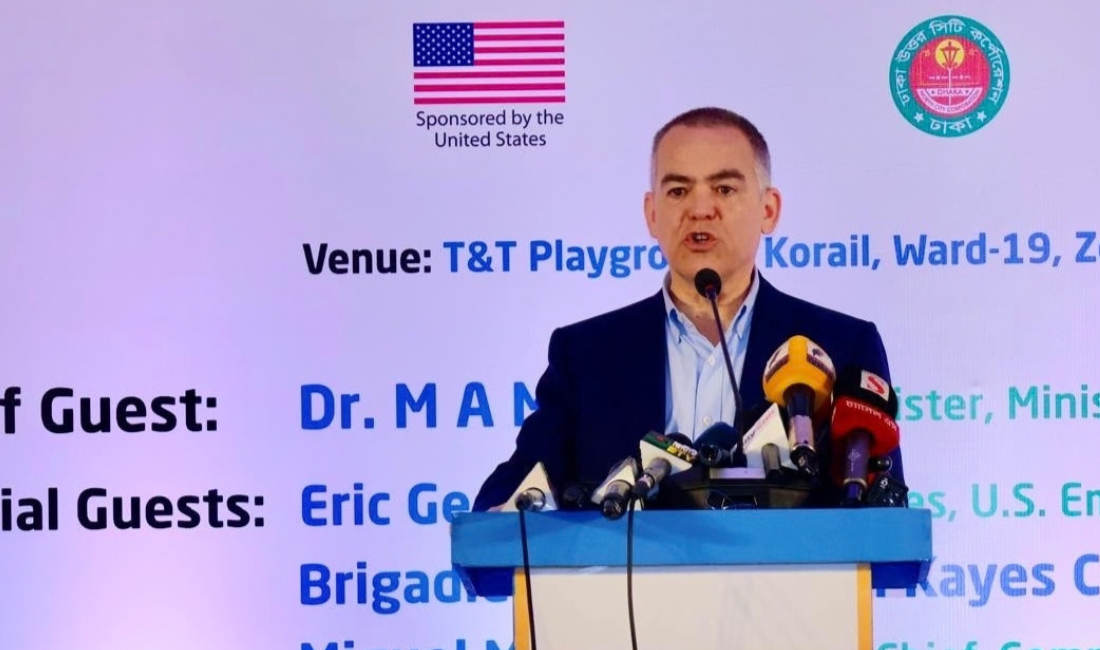
On Wednesday, US Chargé d’Affaires Eric Gill visited the ongoing vaccination activities at the T&T Field in Korail, Dhaka. He was accompanied by Health and Family Welfare State Minister Dr. Mohammad Abdul Muhit, Dhaka North City Corporation Administrator Md. Shafiqul Islam Khan, Chief Health Officer Brigadier General Imrul Kayes Chowdhury and UNICEF Bangladesh officials.
The government said it plans to vaccinate around 3.5 million more children under the ongoing special campaign. As of October 7, nearly 20 million children had been covered by the national measles-rubella vaccination programme. However, a significant number of children were missed during previous campaigns, prompting the launch of the new catch-up initiative.
The nationwide Intensified MR Catch-up Vaccination campaign began on September 26 and is scheduled to continue until October 31. Under the campaign, children aged 6 to 59 months are being given special priority for vaccination. Health workers are identifying children who were missed during previous campaigns and are also registering children who have recently reached six months of age.
According to the Health Ministry, around 1 million of the targeted 3.4 million children have recently reached six months of age, while around 2.4 million were missed during previous vaccination campaigns. Therefore, the current campaign is aimed not only at vaccinating newly eligible children but also at addressing previous immunisation gaps.
The severity of the current measles situation in Bangladesh is one of the main reasons behind the special campaign. In April, the World Health Organization reported measles infections in 58 of the country’s 64 districts, with children under five accounting for a large proportion of those affected. The WHO assessed the national measles risk as high at the time.
The situation subsequently became more serious. A Reuters report on September 26 said that Bangladesh had recorded a large number of suspected and confirmed measles cases since mid-March, along with more than 1,000 reported deaths. The report also said that the US Centers for Disease Control and Prevention had described Bangladesh’s ongoing situation as the world’s largest measles outbreak.
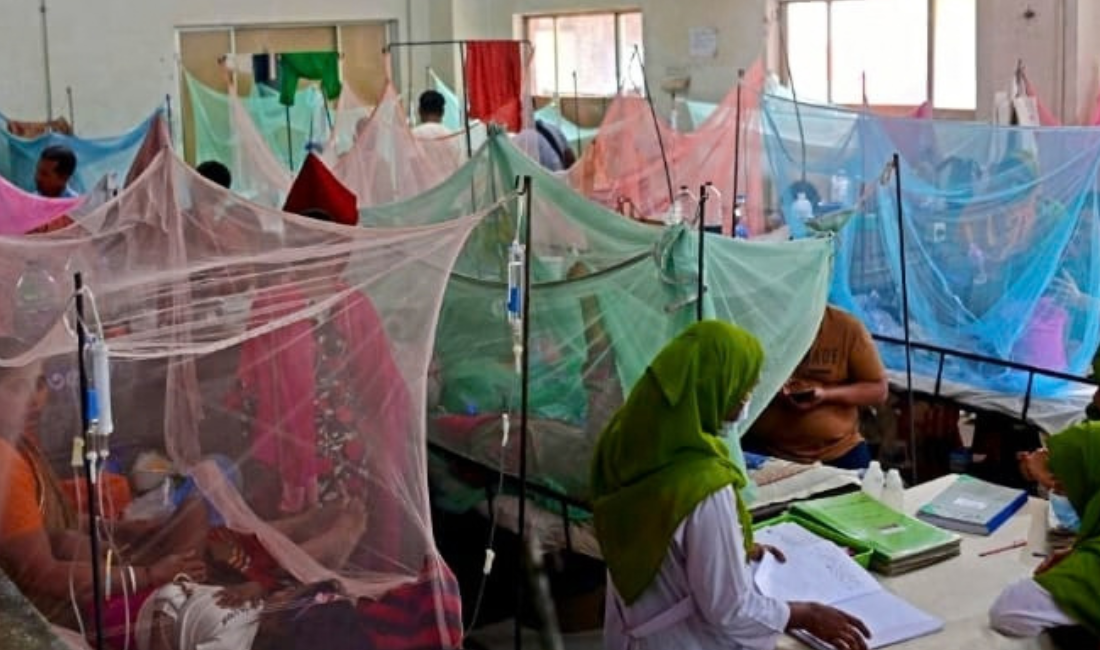
Alongside measles, Bangladesh is also facing pressure from dengue. Reuters reported in early October that 148 people died from dengue in September, bringing the reported death toll in 2026 to at least 245. The simultaneous burden of two infectious diseases is putting additional pressure on the country’s healthcare system.
Vaccination is particularly important in preventing measles because the disease is highly contagious. According to WHO data, recent immunisation gaps in Bangladesh were linked to shortages of measles-rubella vaccines in 2024 and 2025, as well as various weaknesses in routine vaccination services. As a result, a large number of children remained without adequate protection against the disease.
The current campaign is not relying solely on designated vaccination centres to reach children. Health workers and volunteers are visiting households to verify children’s vaccination status. Vaccination centres have also been established at the union level. In some areas, vaccination services are being provided in the evening to make them more accessible to working parents.
Dhaka North City Corporation has also taken special measures to identify children who were missed. Authorities said targeted awareness campaigns and special transport arrangements are being used where necessary to help bring children to vaccination centres.
UNICEF said the main objective of the ongoing campaign is to ensure that no vulnerable child is left unvaccinated. The organisation is working with the government on planning, vaccine supplies, cold-chain systems, public awareness and field-level implementation. During the nationwide campaign in April, UNICEF also stressed the importance of reaching at least 95 percent of children to ensure adequate protection.
Bangladesh has also begun a fresh review of its vaccination system to prevent future outbreaks from reaching a similar scale. The WHO said an independent review of the country’s national immunisation programme had been launched following the 2026 measles outbreak.
The review is examining vaccine supply, storage and transportation systems, health workers, vaccination coverage, information systems, disease surveillance and the country’s capacity to respond to future outbreaks. Field-level assessments are being conducted across all eight divisions. Preliminary findings are expected on October 14, while a draft report and action plan are expected in November.
At the October 7 event, US Chargé d’Affaires Eric Gill said the United States was pleased to support Bangladesh’s national vaccination programme in responding to the ongoing measles situation. The US Embassy said the assistance would not only help address the current outbreak but also strengthen Bangladesh’s capacity to prevent and respond to diseases in the future.
The biggest challenge for Bangladesh now is to identify every child who remains outside the vaccination programme and ensure they receive the vaccine within the designated period. The faster and more comprehensively the campaign is implemented, the sooner the number of children at risk of measles infection can be reduced.
The current special campaign will continue until October 31. If successfully implemented, the programme targeting 3.4 million children could play an important role in controlling the ongoing measles situation. At the same time, implementing the recommendations of the independent review of the immunisation system could help provide stronger protection for Bangladeshi children against preventable diseases such as measles and rubella in the future.