Deceptive Diplomacy and Our Youth: Pakistan’s Trap in the Name of Bilateral Ties
Pakistan’s "Knowledge Corridor" promises fully-funded scholarships to Bangladeshi youth, but delivers broken benefits, rural reassignments, and diplomatic deception.

Deceptive Diplomacy and Our Youth: Pakistan’s Trap in the Name of Bilateral Ties
The role of Pakistan in the complex equations of South Asian geopolitics and international relations, along with the recent initiatives to warm up diplomatic ties between the two countries, has consistently remained a focal point of discussion. The sudden surge in diplomatic engagement between Dhaka and Islamabad, coupled with discussions on military and economic cooperation during the interim government led by Professor Dr. Muhammad Yunus, sparked intense public reactions. However, a closer look beneath the surface of this relationship reveals Pakistan's long-standing historical facade of deception and betrayal.
Pakistan's history of political maneuvering and deceit is not confined to Bangladesh alone; it is a troubling name on the global stage as well. An analysis of the experiences of expatriates and immigrants living in various Middle Eastern countries shows that local governments and ordinary citizens hold a rather unfavorable view of Pakistanis. Complaints regarding their involvement in bickering, fraud, begging, and various undisciplined wrongdoings are widespread globally. A state that has spent its lifetime deceiving its own citizens can hardly be expected to act with integrity in international relations.
Yet, following the recent political transition, a bizarre push began to transform the country into a "mini-Pakistan." High-ranking officials like Pakistan's defense and foreign ministers visited Dhaka, and talks of strengthening military cooperation raised immediate public concerns. This effort to foster diplomatic closeness paved the way for various traps masquerading as cooperation in education, travel, and healthcare. When it comes to the medical sector, Pakistan's healthcare system holds no notable standing by global standards. While Pakistanis historically used to travel to India for medical treatment when borders were open, that very nation is now making grand pronouncements about medical and educational partnerships with Bangladesh.
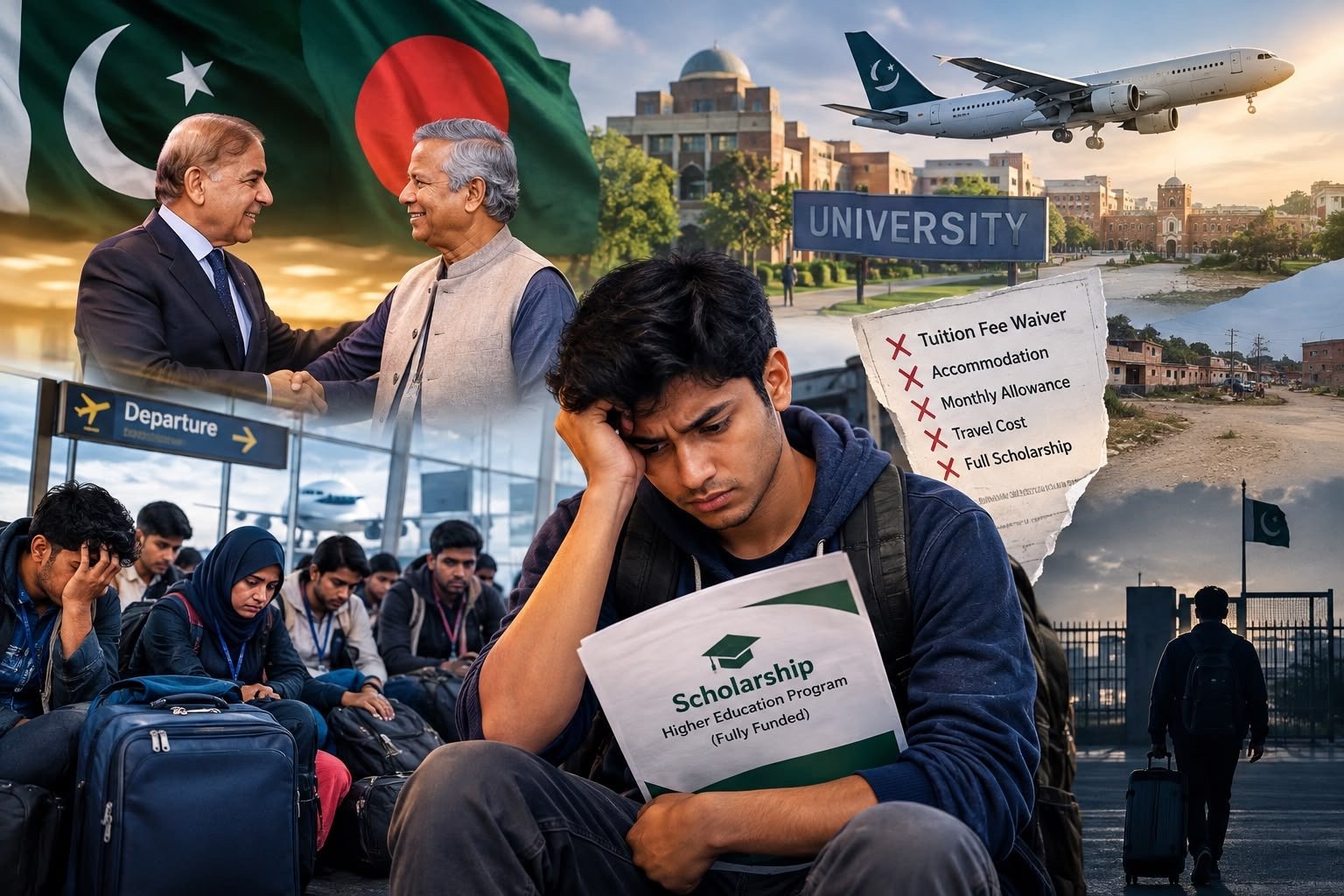
The most tragic and severe victims of this deception have been the youth of Bangladesh. Under an attractive project called the "Knowledge Corridor," scholarship programs for higher education in various Pakistani universities were launched starting in 2025. Initially, it was heavily publicized as a fully funded scholarship. According to the declared conditions, 500 comprehensive scholarships were announced for Bangladeshi students over five years, covering tuition fees, accommodation, monthly allowances, settlement allowances, and round-trip airfare. However, after rigorous screening and competition, once students were finally selected and arrived in Pakistan, the true picture emerged.
In the second stage, it was revealed that master's level students were only being offered tuition fee waivers and dormitory provisions. In other words, travel expenses, food costs, and any form of monthly stipends or allowances were completely scrapped. Given the exorbitant cost of living and food so far away from home, surviving without financial support is practically impossible for a student. Canceling the primary benefits of the scholarship without prior notice or warning has plunged students into severe uncertainty and mental despair.
The situation did not stop there; students were also shifted to different universities without their consent. Although students applied with the dream of studying at renowned institutions in major cities like Lahore, they were instead assigned to substandard institutions in distant rural towns. Given that these lesser-known institutions lack international recognition or acceptance, it is easy to imagine how valuable such a degree will be when these students enter the job market. This reckless gambling with the future of talented youth proves that Pakistan can never be a true well-wisher of Bangladesh.
Despite repeated emails sent by students to the Knowledge Corridor authorities in protest of this fraud, no satisfactory response has been received. The Pakistani High Commission in Dhaka has also maintained a completely silent stance. Meanwhile, the Ministry of Foreign Affairs of Bangladesh stated that they were unaware of the matter. Such an indifferent attitude from responsible authorities while domestic students face severe harassment and fraud abroad is deeply regrettable.
There are numerous persistent complaints regarding mistreatment of ordinary Bangladeshis at Pakistani airports. The severe deterioration of internal law and order, rampant terrorist and militant activities across the country, and deep economic bankruptcy have left Pakistan drowning in profound crises of its own. Anyone should think a thousand times before investing their future and talent in such a state. The diplomatic trap and deceit spun by Pakistan by exploiting the emotions and higher education dreams of the young generation must be remembered, and any future international steps must be taken with utmost caution.
Akib Hossain Zabir
akibhossainzabir@gmail.com