Gaza Students Return to Classrooms After Three Years
Hundreds of thousands of children in Gaza returned to in-person classrooms on Saturday after nearly three years. However, because schools have been destroyed or damaged by the war, many students are attending classes in tents, temporary structures and damaged buildings. For many families, buying school uniforms, notebooks and pens has also become difficult

Gaza Students Return to Classrooms After Three Years
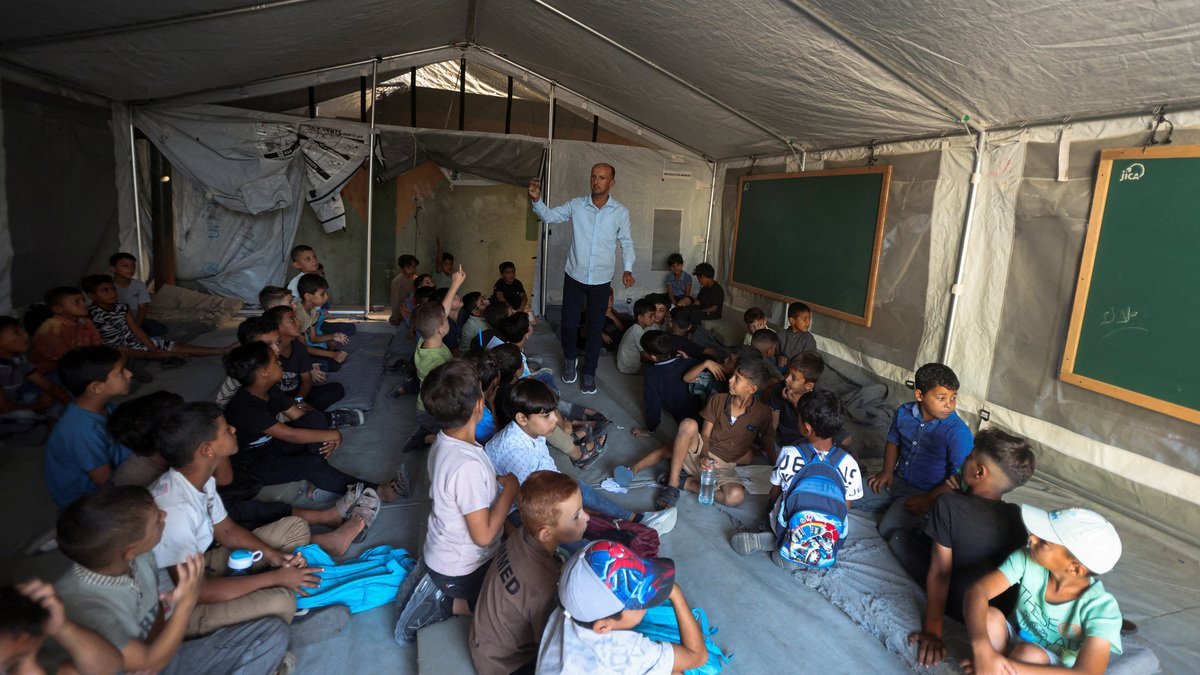
Hundreds of thousands of children in Gaza returned to in-person classrooms on Saturday after nearly three years. However, because schools have been destroyed or damaged by the war, many students are attending classes in tents, temporary structures and damaged buildings. For many families, buying school uniforms, notebooks and pens has also become difficult.
The United Nations Children’s Fund (UNICEF) said 98% of schools in Gaza have been destroyed or damaged during the war. According to Gaza education officials, about 660,000 students have been deprived of in-person education and regular school activities for a prolonged period.
According to Ibrahim Ramadan, director of education for East Khan Younis, about 22,000 students and more than 770 education workers have been killed in the conflict. Among those killed were 532 teachers.
Moayed Abu Mustafa, a student in Khan Younis, said they were happy to return to school after three years. Despite having to sit on the floor of a tent, inadequate ventilation and a lack of essential educational materials, he expressed his determination to continue his studies.
Fifteen-year-old displaced student Samar Abu Salmi also lives with her family in a tent. She said they studied on mobile phones during the war and could not see their teachers in person. Now, by returning to temporary schools, they are trying to pursue their dreams again.
The Gaza Education Ministry has begun the 2026-27 academic year with support from various international and local organisations. Temporary schools have been built using tents, tarpaulins, sheet metal and wood. In some places, classrooms have been set up on sandy ground, while elsewhere classes are being held with only a few mattresses and a blackboard. Some school buildings are still being used to house displaced families.
Fourteen-year-old Yamen Abu Samra said they used to be happy when going to school. Now, they remain afraid of gunfire, rockets and attacks even while going to school. Describing his experience of studying in a tent, he said there are almost no facilities there and students have to study under intense sunlight and heat.
According to education officials, at least 540,000 students are expected to attend in-person classes this year in temporary private schools, temporary learning centres and various educational facilities. Online education will continue for those who cannot attend classes in person or who left Gaza during the war.
Meanwhile, the prices of educational supplies have also increased alongside the reopening of schools. Khaled Aliyan, a stationery trader, said restrictions imposed by Israel on imports have reduced supplies and pushed up prices. According to him, a notebook that cost 3 shekels before the war now costs 15 shekels.
The Israeli military agency COGAT, which controls access to Gaza and the movement of supplies, did not respond to Reuters’ questions. Israel has repeatedly accused Hamas of using schools for military purposes. Hamas has denied the allegation.
Although last year’s ceasefire halted much of the major fighting, the conflict has not completely ended. According to the Reuters report, Israeli forces still control more than 60% of Gaza. Palestinian authorities say more than 73,000 people have been killed in Gaza during the Israeli offensive that began after Hamas-led fighters attacked southern Israel in October 2023.
Source : Reuters