Japan, Facing China’s Pressure, Hopes Trump Can Help Ease Tensions
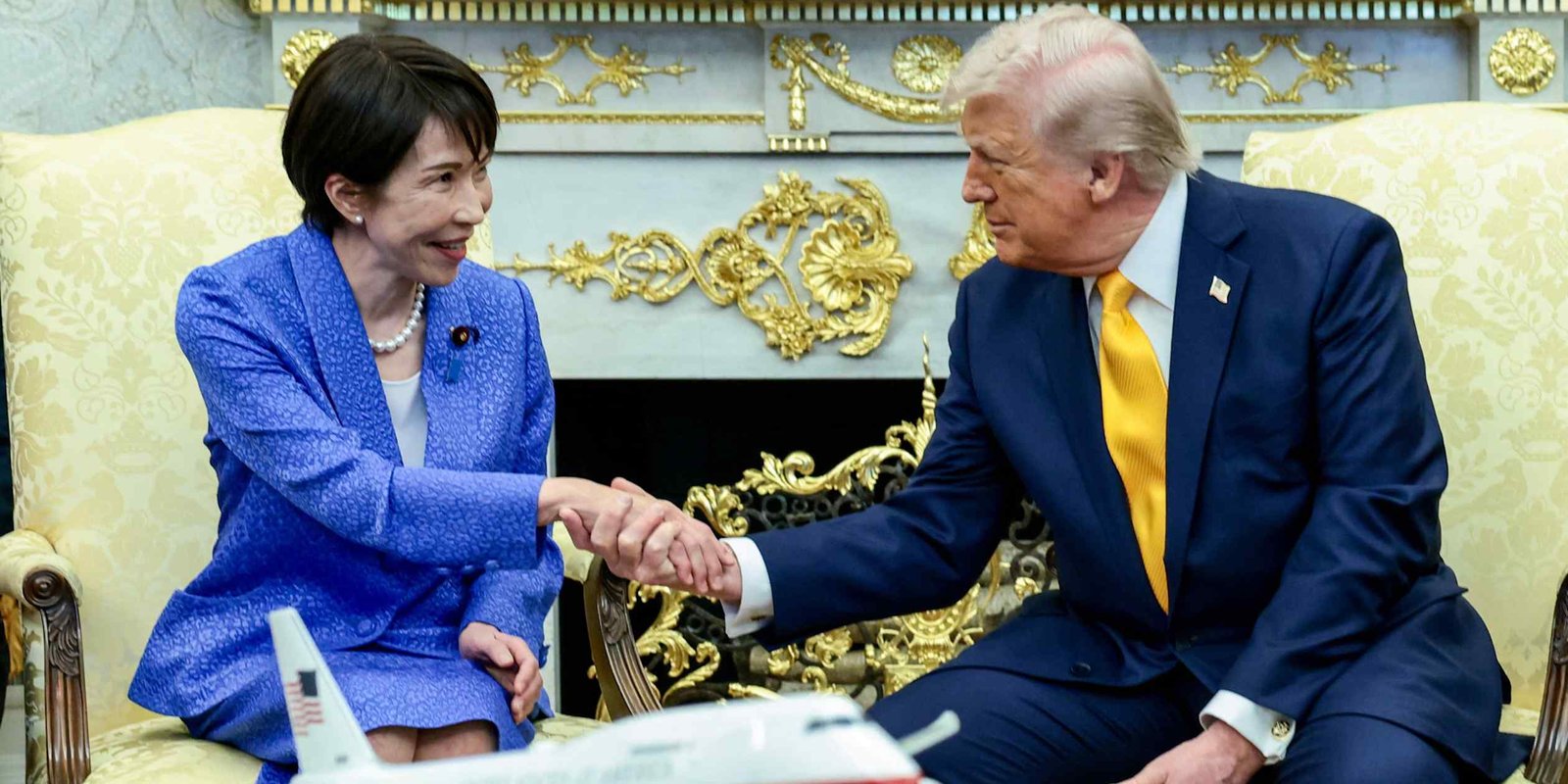
Japan’s Prime Minister Sanae Takaichi is expected to raise concerns about China’s growing economic and security pressure on Japan when she meets U.S. President Donald Trump in New York on Tuesday, while also seeking to prevent further escalation with Beijing

Japan, Facing China’s Pressure, Hopes Trump Can Help Ease Tensions
Japan’s Prime Minister Sanae Takaichi is expected to raise concerns about China’s growing economic and security pressure on Japan when she meets U.S. President Donald Trump in New York on Tuesday, while also seeking to prevent further escalation with Beijing.
According to The New York Times, Takaichi is expected to discuss China’s restrictions on Japanese exports, including rare-earth minerals, as well as broader security concerns. She is also likely to emphasize the importance of the U.S.-Japan alliance and seek assurances that Washington will maintain its security commitments in East Asia, including its deployment of more than 50,000 American troops in Japan.
The meeting comes one day before Trump is scheduled to host Chinese President Xi Jinping in Washington. Takaichi is expected to urge Trump to maintain a strong U.S. commitment to Japan as tensions between Tokyo and Beijing remain elevated.
Relations between China and Japan deteriorated sharply after Takaichi said in November that Japan could consider military intervention if China attacked Taiwan, which Beijing claims as part of its territory. China subsequently imposed a series of measures affecting Japan, including restrictions on seafood imports, discouraging tourism to Japan and limiting exports of critical minerals.
The economic pressure has intensified in recent months. Chinese tourism to Japan fell 59 percent in August compared with the same month a year earlier, according to the report. Chinese customs data also showed that China exported 122 tons of rare-earth magnets to Japan in July, down 52 percent from a year earlier. Exports in August were 17 percent lower than the previous year.
Despite the tensions, Takaichi’s government has sought to restore communication with Beijing. Japanese lawmakers and business representatives have recently traveled to China for talks. Japanese officials said Chinese counterparts continued to press Tokyo over Takaichi’s Taiwan remarks and called on her government to reconsider its position.
Chinese officials have described Takaichi’s remarks as a major obstacle to improving bilateral relations. Liu Bin, China’s assistant foreign minister, reportedly told Japanese lawmakers that her “erroneous remarks and actions” were a key problem in the relationship.
Takaichi’s advisers, however, say she has no intention of withdrawing her position because of her longstanding support for Taiwan and concerns about China among the Japanese public.
The lack of a trusted intermediary between Tokyo and Beijing has also complicated efforts to improve relations. Analysts cited by The New York Times said the loss of Komeito as the Liberal Democratic Party’s coalition partner has weakened an important channel of communication between Japan and China.
Beyond China, Takaichi and Trump are expected to discuss trade, defense and Japan’s currency concerns. She is also expected to highlight Japan’s commitment to invest $550 billion in the United States, as agreed under a trade deal reached with the Trump administration last year.
Takaichi may also raise Japan’s concerns over the Trump administration’s sanctions against International Criminal Court President Tomoko Akane, a Japanese judge. She previously described the decision as “very unfortunate.”
The Japanese and Chinese leaders are expected to meet again at the Asia-Pacific Economic Cooperation forum in Shenzhen in November, although neither government has confirmed whether they will hold a bilateral meeting.
Source: The New York Times