How Pakistan Is Rewiring Its Terror Network in India
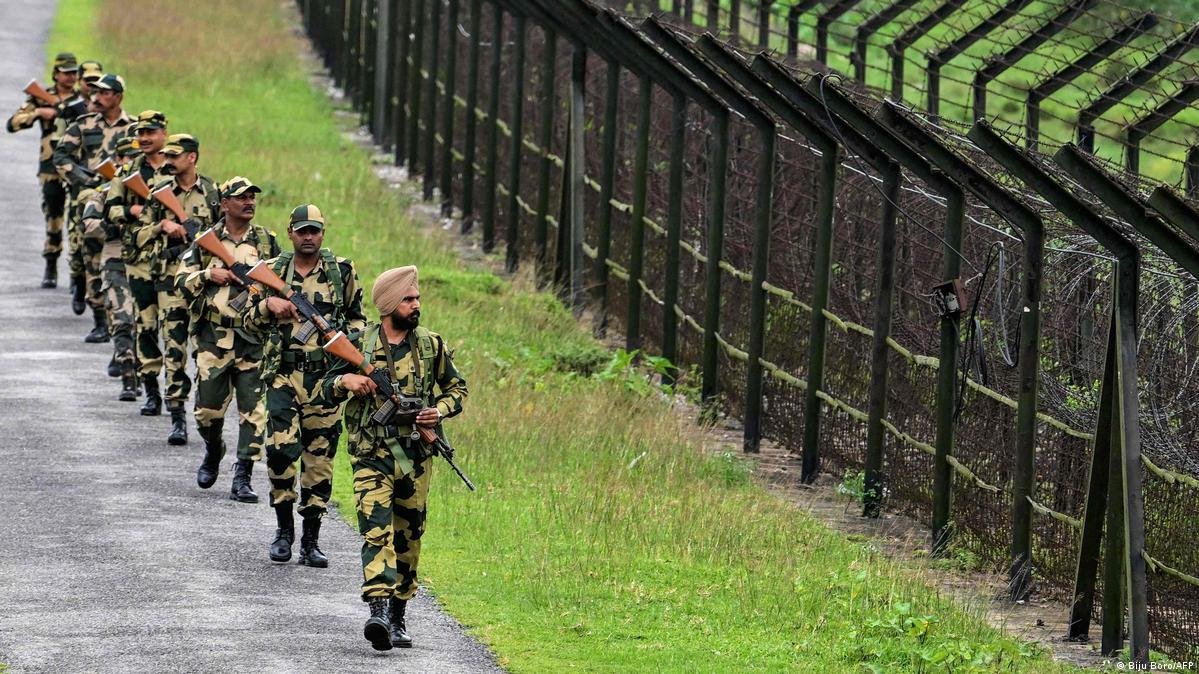
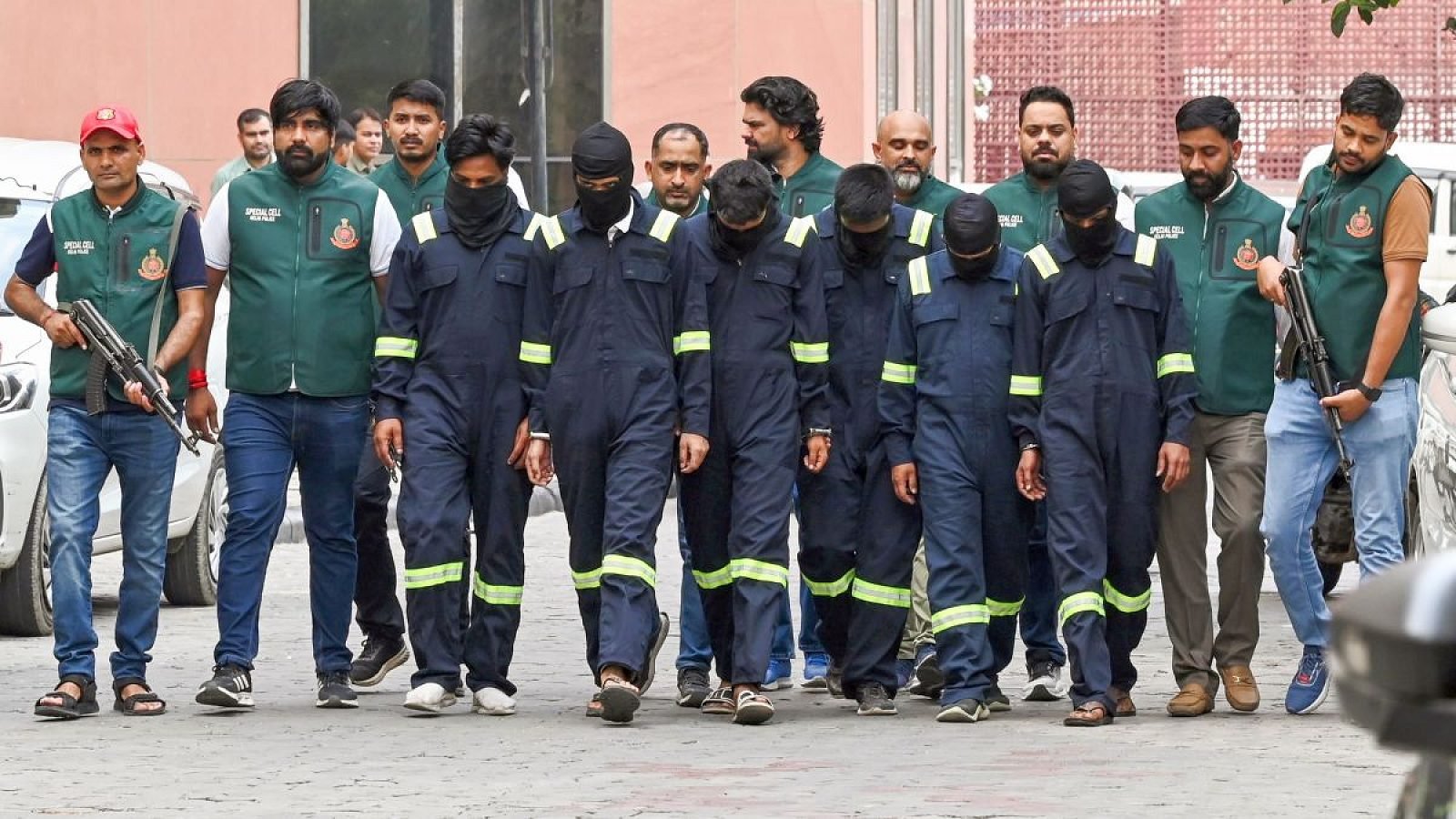
In the days leading up to this year's Independence Day, security agencies moved simultaneously across fourteen states and detained 253 people allegedly being recruited for terror attacks. On the surface, this reads like a routine counter-terrorism success story: a plot conceived, a plot foiled, a nation kept safe

How Pakistan Is Rewiring Its Terror Network in India
Wrriten by Rashi Randev
In the days leading up to this year's Independence Day, security agencies moved simultaneously across fourteen states and detained 253 people allegedly being recruited for terror attacks. On the surface, this reads like a routine counter-terrorism success story: a plot conceived, a plot foiled, a nation kept safe. But the scale and shape of the operation attributed to the Shahzad Bhatti network deserve a closer look, because they suggest something more unsettling than a single module being dismantled. They suggest that the underlying architecture of Pakistan-sponsored terrorism in India is being rebuilt from the ground up.
For three decades, the template was familiar enough to be almost predictable. Organisations such as Lashkar-e-Taiba and Jaish-e-Mohammed operated through recognisable stages: ideological indoctrination, dedicated training camps, cross-border infiltration, and sleeper cells awaiting activation. It was a hierarchical model, and hierarchy, for all its operational discipline, carried an inherent vulnerability. Commanders could be identified. Financial trails could be traced. Communication networks could be penetrated and, eventually, unravelled. Indian security agencies spent decades learning to fight precisely this kind of enemy.
What the Bhatti network appears to represent is a departure from that template altogether. Instead of building a conventional organisation, it seems to function as a distributed ecosystem: one capable of drawing in a gangster in one state, a socially isolated young social media user in another, and a weapons trafficker in a third, and binding all of them to a single Pakistan-based handler without ever constructing anything resembling a traditional terrorist outfit. Two hundred and fifty three individuals spread across fourteen states were not, in all likelihood, part of one trained, ideologically committed cell. They were fragments of an operation, many of whom may not have understood the scale of the network they had become part of.
This is compartmentalisation as strategy. One person photographs a location. Another records a video. A third transports a weapon. A fourth supplies local information. Each individual knows only his immediate task, and quite possibly does not know that his handler is connected to a larger design at all. It is an approach that borrows directly from the logic of organised crime, and that borrowing is the more troubling development here. Criminal networks already possess what a newly assembled terror cell would otherwise take years to build: access to illegal weapons, to untraceable money, to local contacts, to transport, and to people willing to operate outside the law. A foreign intelligence apparatus no longer needs to construct this infrastructure from scratch. It simply needs to plug into what already exists. Investigators have reportedly recovered Pakistani-made hand grenades and firearms linked to individuals associated with this network, evidence that outsourcing operational capability to existing criminal ecosystems is not a hypothetical risk but an active method.
The consequence for Indian law enforcement is structural, not incidental. A gangster investigation may now carry a national security dimension. A weapons seizure may conceal a terror financing trail. A financial transaction dismissed as ordinary money laundering may in fact be a resourcing chain for reconnaissance or logistics. The relevant question is no longer only who pulled the trigger, but who was directing the capability behind the act, because the person who ultimately executes an attack may be the least significant node in the entire architecture.
Equally significant is the reported recruitment of individuals across different religious and social backgrounds, a detail that punctures a long-standing assumption in counter-terrorism analysis. It suggests that, for a foreign handler, operational utility can now matter more than ideological conviction. A recruit does not need to believe in an extremist cause to be useful; he can be moved by money, criminal ambition, peer pressure, or simple manipulation. This does not mean ideology has vanished from terrorism (it has not), but it does mean that security agencies can no longer rely primarily on ideological profiling to identify threats. The focus must widen to behaviour: unusual financing, unexplained associations, patterns of reconnaissance, and signs of foreign digital contact.
Perhaps the most disquieting element is how this model exploits young people. Radicalisation, in the classical sense, is no longer a precondition for recruitment. Grooming is. A message becomes a conversation. A conversation becomes a small paid task. A small task becomes a piece of reconnaissance, and reconnaissance can eventually become participation in violence, all without the individual ever grasping the true nature of what he has been drawn into. This places new obligations not just on intelligence agencies but on families, schools, and technology platforms, all of whom are better positioned to catch early-stage grooming than to intervene once an operation is already in motion.
None of this would be possible at this scale without the internet, which has quietly rewritten the economics of clandestine recruitment. A handler in Pakistan no longer needs physical proximity to a recruit. Social media identifies targets, encrypted messaging apps sustain contact, and digital payments move money without ever crossing a border in the conventional sense. The technology itself is neutral; the threat lies in how disparate tools are stitched together into a single operational chain, which is exactly why India's response must be equally networked, linking cyber investigators, state police, and central intelligence agencies so that seemingly unrelated fragments of information can be connected before they cohere into an attack.
There is also a colder strategic logic at work. This model offers Pakistan-based sponsors a level of deniability that direct infiltration never could. A captured infiltrator leads investigators back to a training camp, a route, an organisation. A locally recruited criminal generates ambiguity instead: a gang dispute, a routine weapons case, an unremarkable teenager with a phone. The foreign hand becomes visible only once investigators connect scattered dots, by which point much of the operational risk has already shifted from the sponsor to the recruit.
The lesson, then, is not that a new form of terrorism has arrived, but that an old threat has been reorganised. India's counter-terrorism strategy has historically been built to dismantle terrorist organisations. The Bhatti network suggests the fight now has to move further upstream, to recruitment before it becomes mobilisation, to reconnaissance before it becomes targeting, to money before it becomes weapons. The next module may not resemble a terrorist organisation at all. It may look like nothing more than a scattering of ordinary criminals and vulnerable young people, with a foreign handler quietly connecting the fragments toward one objective.
The author, Rashi Randev, is a geopolitical analyst based in Canada and holds a PhD in International Relations from the Centre for the Study of the Americas at Jawaharlal Nehru University.