From Educational Reform to Political Theatre: The Transformation of Sonam Wangchuk's Protest
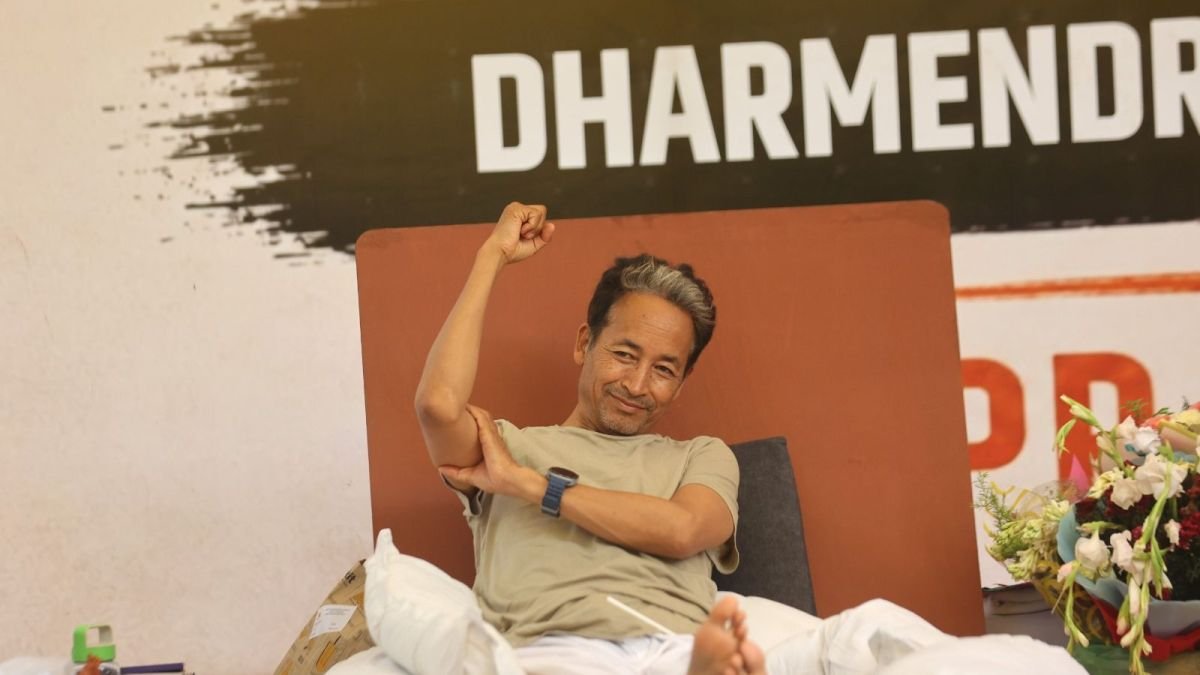
When Mr Sonam Wangchuk was shifted to Delhi's Safdarjung Hospital after nearly three weeks of fasting, concern poured in from across India and abroad. The images of a frail, exhausted Wangchuk being taken away on a stretcher resonated far beyond political affiliations. Whatever one's political beliefs, nobody wishes to see a respected educator and environmentalist endanger his life. The encouraging news is that Wangchuk is stable and under medical supervision. That should remain everyone's first concern

From Educational Reform to Political Theatre: The Transformation of Sonam Wangchuk's Protest
Analyst: Dr. Sreoshi Sinha, Post Doctoral Fellow, School of International Relations and Peace Studies (SIRPS), Nalanda University
When Mr Sonam Wangchuk was shifted to Delhi's Safdarjung Hospital after nearly three weeks of fasting, concern poured in from across India and abroad. The images of a frail, exhausted Wangchuk being taken away on a stretcher resonated far beyond political affiliations. Whatever one's political beliefs, nobody wishes to see a respected educator and environmentalist endanger his life. The encouraging news is that Wangchuk is stable and under medical supervision. That should remain everyone's first concern.
For over two decades, Sonam Wangchuk has built a reputation that extends well beyond politics. Through SECMOL, he transformed educational opportunities for thousands of students in Ladakh who had been failed by conventional schooling. His work on sustainable development brought international recognition to the fragile Himalayan ecosystem. The Ice Stupa initiative, which popularised innovative methods of conserving water in cold desert regions, became one of the most widely discussed climate adaptation projects in the world. At the same time, discussions surrounding the project have also acknowledged the pioneering work of engineer Chewang Norphel, popularly known as the "Ice Man of Ladakh," whose earlier artificial glacier experiments laid the foundation for many of today's water conservation efforts in the region.
None of this deserves to be forgotten.
That is precisely why the present situation is so unfortunate.
The issue is not whether Sonam Wangchuk has the right to protest. In a democracy, peaceful protest is not merely permissible, it is essential. The issue is whether the movement surrounding him still reflects the cause that first brought him to Jantar Mantar.
The original grievance was understandable. The NEET examination controversy raised legitimate questions about fairness, transparency and accountability in India's education system. Millions of students invest years of hard work preparing for competitive examinations. Any compromise in that system naturally invites public anger. Calls for reform could have attracted support from citizens across ideological lines. Even many supporters of the present government would have agreed that examination integrity must never be compromised.
Had the movement remained firmly focused on educational reform, it could well have become a rare moment of national consensus.
Instead, something changed.
Gradually, the protest ceased to be only about examination reforms. A widening network of activist groups, political campaigns and advocacy organisations began associating themselves with the movement. New slogans emerged. Online mobilisation intensified. Causes unrelated to educational reform were folded into the same campaign. The result was that the original message slowly receded behind a much broader political narrative.
That is where genuine concern begins.
History offers many examples of legitimate grievances evolving into platforms for larger political mobilisation. Often, the individual at the centre remains sincere while the movement around him acquires objectives that extend far beyond the original issue. Once that happens, the protest no longer belongs entirely to its founder. It becomes a coalition, and coalitions inevitably bring competing agendas.
Whether intentionally or otherwise, Sonam Wangchuk now appears to find himself in precisely such a situation.
The people standing beside a movement are often as important as the person standing at its centre.
Some of the organisations and activist networks now championing Wangchuk's protest have long been associated with campaigns that go well beyond educational reform. Their language increasingly frames the issue not simply as administrative failure but as evidence of a broader political crisis. As a result, public attention has shifted away from examination reforms towards debates over political legitimacy itself.
That shift has consequences.
It changes how governments respond.
It changes how ordinary citizens perceive the movement. Most importantly, it changes the possibility of achieving the original objective. The regional response is equally revealing.
A regional echo, read carefully
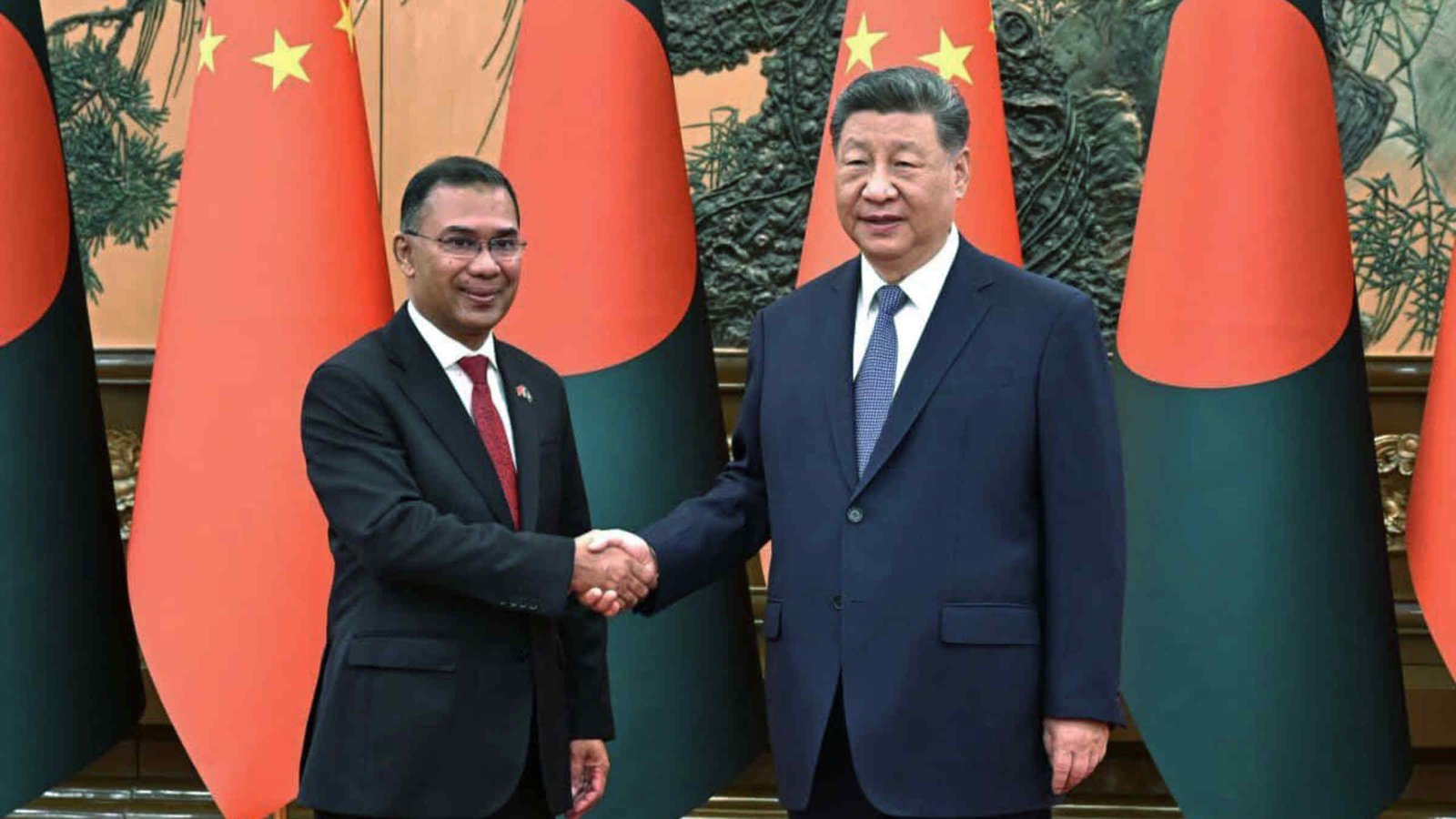
The regional response is worth noting, though it deserves precise handling. Bangladeshi outlets gave Wangchuk's hospitalisation swift and sympathetic play: The Daily Star and Dhaka Tribune both carried the AFP wire report on his hospitalisation within hours, and Prothom Alo introduced him to Bangladeshi audiences as the “Rancho” of 3 Idiots, a reference instantly recognisable across South Asia. It is worth being exact about what this shows: the Daily Star and Dhaka Tribune pieces were syndicated AFP copy, identical to what ran in newsrooms worldwide, rather than original editorial commentary from either outlet. What deserves closer scrutiny is not the international coverage itself, but the political ecosystem that has enthusiastically embraced Wangchuk's campaign. The resurfacing of his past public engagements with Bangladesh's Interim Chief Adviser, Muhammad Yunus, has fuelled debate over the ideological circles within which the movement now resonates. These associations may not define Wangchuk's personal convictions, but they inevitably influence how his campaign is perceived. A protest that initially centred on specific policy concerns is now increasingly intertwined with networks and political currents whose objectives are considerably broader than the issues Wangchuk first sought to raise.
Yet the prominence of this coverage also reflects something larger
South Asia has witnessed successive waves of political mobilisation and regime change, often backed by invisible actors, over the past few years. Bangladesh experienced the most dramatic political upheaval, where a minor student protest against the Quota movement, suddenly resulted in a nationwide call for Prime Minister Sheikh Hasina’s resignation, and that even after the Quota Policy was rolled back! Nepal has seen repeated cycles of political instability, and finally a sudden nationwide call to over throw the sitting government. Across the region, domestic protests increasingly acquire cross-border visibility through traditional media and social media alike. In such an environment, protests inside India are rarely viewed solely through the prism of their original demands. They quickly become part of broader regional political conversations, and more often took a turn towards absolute destabilisation of the particular nation!
Yet, that does not mean every foreign newspaper or every activist supporting Wangchuk shares the same objective.
But it definitely means that once a domestic movement becomes embedded in wider political narratives, it inevitably attracts actors whose priorities may differ from those of the individual who actually started it.
That distinction matters-
One can admire Sonam Wangchuk's contributions to education and climate resilience while simultaneously questioning whether the movement surrounding him still serves those causes. Respect for an individual should never require unquestioning acceptance of every organisation that claims to speak on his behalf.
Perhaps the greatest irony is this: Sonam Wangchuk may have secured broader public support had his campaign remained tightly focused on educational reform. Instead, the expanding political ecosystem around the protest has gradually altered public perception. Today, discussions surrounding the protest often extend well beyond its original demands. Demonstrations and online campaigns have, at various points, featured a wider range of political slogans and causes, from calls for "Azadi" and anti-government rhetoric to expressions of solidarity with unrelated activist campaigns. Whether these interventions are spontaneous or organised, they have diluted the clarity of Wangchuk's original message. The result is that public attention is increasingly drawn not to the specific policy issues he sought to raise, but to the broader ideological contest unfolding around the protest.
That is a loss for everyone
A genuine grievance deserves to remain genuine. Educational reform should never become secondary to political theatre. Wangchuk's decades of work in education, sustainable development and climate resilience deserve respect, but those achievements should not become the vehicle through which others pursue agendas that extend far beyond the classrooms and students he originally sought to defend.
Sometimes the greatest threat to a worthy cause does not come from its opponents.
It comes from the company it keeps!!!