“Strained India–Bangladesh Ties Could Trigger Regional Geopolitical and Economic Shockwaves Across South Asia”
If India–Bangladesh diplomatic relations were to significantly deteriorate or break down, the impact would not remain limited to bilateral ties. It would likely trigger wide-ranging geopolitical, economic, and security consequences across South Asia and beyond. Given the geographical proximity, shared borders, and deep economic interdependence, even a partial breakdown in relations could quickly escalate into a regional strategic challenge

“Strained India–Bangladesh Ties Could Trigger Regional Geopolitical and Economic Shockwaves Across South Asia”
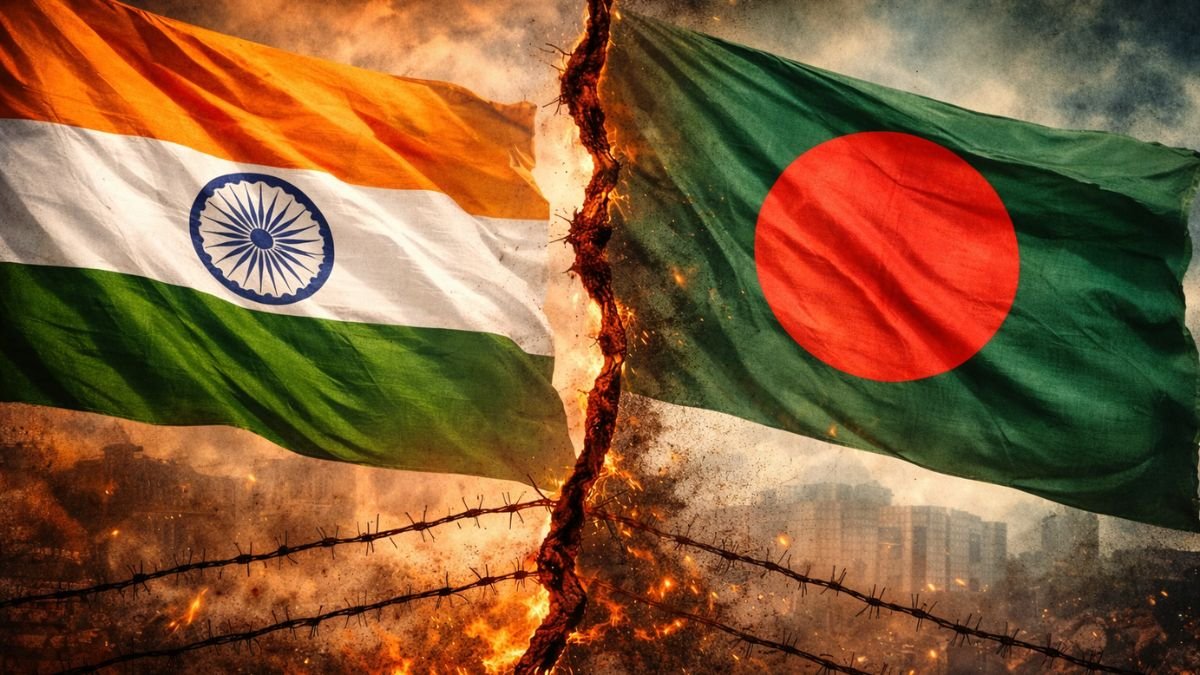
If India–Bangladesh diplomatic relations were to significantly deteriorate or break down, the impact would not remain limited to bilateral ties. It would likely trigger wide-ranging geopolitical, economic, and security consequences across South Asia and beyond. Given the geographical proximity, shared borders, and deep economic interdependence, even a partial breakdown in relations could quickly escalate into a regional strategic challenge.
Regional Geopolitical Pressure and Strategic Competition
A major deterioration in relations would reshape the geopolitical balance in South Asia.
Great power competition intensifies:
If Bangladesh moves closer to China or other regional actors in response to strained ties with India, it could increase strategic rivalry in the Bay of Bengal region. This would also draw attention from the United States and other Western powers, who may reassess their regional security interests.
Erosion of trust and diplomatic coordination:
Reduced political trust could weaken cooperation in border management, counterterrorism, and intelligence sharing, increasing regional insecurity.
Border Management, Security, and Transit Disruptions
One of the most immediate impacts would be felt along the long and sensitive border.
Tighter border controls:
Trade flow, cross-border movement, and informal economic activities could face stricter restrictions, affecting livelihoods in border regions.
Transit and connectivity issues:
Bangladesh plays a strategic role in connecting India’s northeastern states. Any disruption in transit agreements would significantly affect regional logistics and connectivity.
Rising border tensions:
Incidents such as push-ins or disputes could escalate, further complicating diplomatic relations and drawing international attention.
Economic and Trade Consequences
Economic interdependence between the two countries means trade disruptions would have immediate effects.
Supply chain disruption:
Bangladesh relies on India for essential goods such as food items, raw materials, fertilizers, and industrial inputs. Any disruption could lead to inflationary pressure and shortages.
Export delays and increased costs:
Regional transport bottlenecks could slow down export shipments, particularly in the garment sector, which depends heavily on timely logistics.
Investment uncertainty:
> Political instability may discourage foreign direct investment, as investors typically prefer predictable regional environments.
> Water and Natural Resource Tensions
> Shared rivers and water resources are among the most sensitive issues.
Stalled water-sharing agreements:
Key agreements such as the Teesta water-sharing deal could remain unresolved, affecting agriculture and water availability in northern Bangladesh.
Upstream control concerns:
Infrastructure developments on shared rivers may create downstream vulnerability, increasing seasonal water stress.
Humanitarian and Social Impacts
Beyond state-level diplomacy, ordinary citizens would also be affected.
Visa and medical access restrictions:
Many Bangladeshis rely on India for medical treatment, education, and business travel. Restrictions would create significant hardship.
Border community pressure:
Cross-border trade-dependent communities could face economic disruption and loss of livelihoods.
Strategic Policy Options for Bangladesh
1. Economic Diversification
> Expand import sources beyond India, including China, Japan, South Korea, and ASEAN countries
> Develop new labor markets in the Middle East, Europe, and East Asia to stabilize remittance inflows
2. Balanced Foreign Policy
> Maintain strategic balancing between China, India, and Western powers
> Avoid overdependence on any single geopolitical actor while protecting national interests
3. Strengthening Multilateral Diplomacy
> Use platforms such as the United Nations (UN), OIC, and Commonwealth to project peaceful foreign policy positions
> Leverage international water law and climate diplomacy in river-sharing disputes
4. Internal Resilience and Stability
> Strengthen food security through domestic agricultural production
> Maintain political and social stability as a key pillar of external resilience
> Enhance industrial and energy self-sufficiency over time
Reality Check and Long-Term Outlook
In practical terms, a complete breakdown of India–Bangladesh relations is highly unlikely due to deep geographical, economic, and historical interdependence. Instead of total disengagement, the more realistic path is strategic engagement with sovereignty protection and mutual interest-based negotiation. Both countries are structurally connected through geography, trade routes, and regional stability requirements.