New Geopolitics of the Eastern Border: India-Bangladesh Relations
With the Bangladesh Nationalist Party returning to power in Dhaka and a BJP-led government taking charge in West Bengal, one of India's most consequential bilateral relationships is being recast. This double transition reshapes the vectors of diplomacy, water politics, and border management between New Delhi and Dhaka

New Geopolitics of the Eastern Border: India-Bangladesh Relations
The relationship between India and Bangladesh has rarely been simple, but it has, for much of the past decade and a half, been largely predictable. Sheikh Hasina's long tenure in Dhaka provided New Delhi with a reliable interlocutor — one who prioritised strategic accommodation with India in exchange for political support. However, that predictability no longer exists. With the Bangladesh Nationalist Party returning to power in Dhaka and a BJP-led government taking charge in West Bengal, one of India's most consequential bilateral relationships is being recast. This double transition reshapes the vectors of diplomacy, water politics, and border management between New Delhi and Dhaka.
Two Elections, One Rupture
The twin political transitions have changed the architecture of the old relationship. Under Sheikh Hasina, Indian security interests — transit access, counter-insurgency cooperation, curbing anti-India militants — were accommodated to a great extent. The BNP's return represents not merely a change of government but a fundamental reset of that system. Dhaka is no longer obligated to manage Indian interests as a first priority. For Bangladesh, this is an assertion of the right to conduct foreign policy on the basis of national interest rather than factional alignment. New Delhi must now engage a government it did not cultivate, on terms it did not set.
Water Diplomacy
The most immediate diplomatic opportunity may lie precisely where the relationship has been most frozen. The Teesta river water-sharing agreement — stalled since 2011 when West Bengal's then-Chief Minister Mamata Banerjee withdrew her consent — now has a genuine chance of resolution. With a BJP government in Kolkata aligned with the Centre in New Delhi, the domestic political veto that blocked the deal for over a decade has, for the first time, been lifted. The timing is important. The landmark 1996 Ganges Water Treaty, which regulates dry-season flows at the Farakka Barrage, is set to expire in December 2026. Joint technical teams from the Rivers Commission are already meeting to measure flows, and the new BNP regime has publicly framed the renewal of this treaty on fair, climate-proof terms as the first major test of New Delhi’s intentions.
For Bangladesh, the Teesta is a lifeline for millions of farmers in the northwest, and the delay in an agreement has been a source of legitimate grievance. The expiry of the Ganges Water Treaty adds further urgency — a vacuum in river-water diplomacy would adversely impact both sides, but Bangladesh would bear the greater cost. India also faces a strategic issue: Bangladesh recently revived talks with Beijing over a Chinese-funded "Teesta Mega Project." For India, a Chinese presence near the vulnerable Siliguri Corridor (the "Chicken’s Neck") is an absolute red line. To keep Chinese infrastructure away from this sensitive region, India's best leverage is to offer Bangladesh a sustainable, official water agreement.
Yet optimism must be tempered. The BNP government will need to demonstrate to its own constituency that any agreement represents genuine equity, not the perceived asymmetric concessions of the previous regime. India, for its part, must approach these negotiations as a partner rather than a patron. The window is real, but it is narrow, and it will not remain open indefinitely.
Border Management
The cooperative potential on water is, however, counterbalanced by tensions on the security front. Border management remains a festering issue — illegal immigration, fencing disputes, and the treatment of Bangladeshi nationals at the border have generated public anger in Bangladesh that no government in Dhaka can afford to ignore. New Delhi also has serious concerns of its own. The Northeast — Assam, Tripura, Meghalaya — is geographically dependent on a stable Bangladesh. The Agartala-Akhaura rail link and potential access to Chittagong port are critical to India's Act East connectivity. Any deterioration in border stability or rise in cross-border militancy would impact India directly. Both sides, in other words, have strong incentives to get border management right.
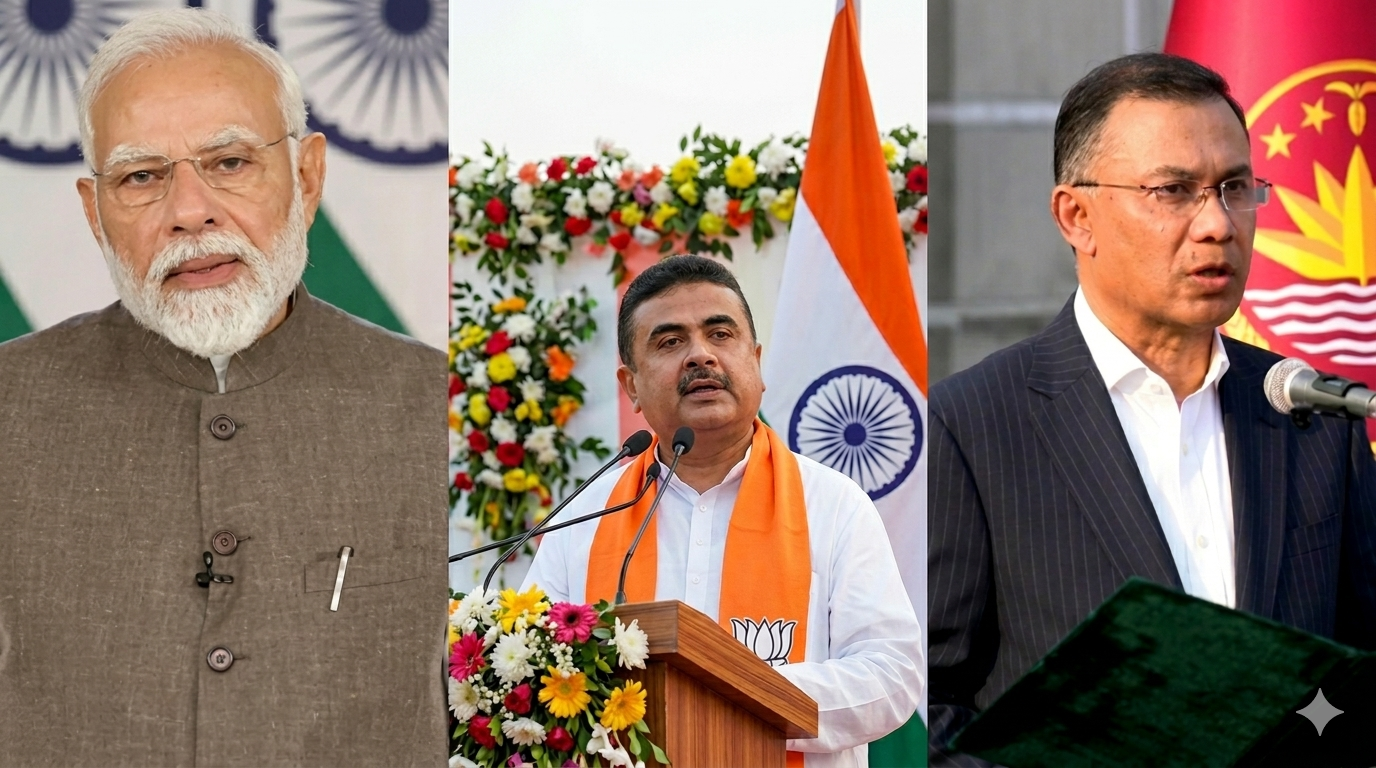
West Bengal’s new Chief Minister, Suvendu Adhikari, secured a mandate on an anti-infiltration platform, promising to curb illegal migration and fast-track the comprehensive fencing of West Bengal’s remaining riverine borders. The new state administration has already committed to expediting land transfers to the Border Security Force within a strict 45-day window. This has led to a pushback from Dhaka. The BNP government is highly sensitive to political rhetoric from West Bengal. While Bangladesh’s Home Minister Salahuddin Ahmed called India’s citizenship laws an internal matter, Dhaka’s Foreign Ministry warned that aggressive, unilateral deportations could damage bilateral relations.
Chinese Footprints
No analysis of this relationship is complete without acknowledging Beijing's expanding presence in Bangladesh. China has emerged as a major infrastructure investor, and as Bangladesh navigates the economic headwinds of graduating from Least Developed Country status — losing preferential trade access in key markets — the appeal of Chinese investment and market will only grow. If New Delhi has to be Bangladesh's preferred partner, it will have to offer a credible economic alternative — whether in preferential trade terms, investment in connectivity infrastructure, or support for Bangladesh's industrial transition.
Pragmatism
The era of sentiment-based diplomacy — anchored in the shared memory of 1971 — is probably drawing to a close. A relationship grounded in mutual, clearly defined interests may prove more resilient than one dependent on personal ties between leaders or the emotional weight of a liberation war now more than fifty years in the past.
Bangladesh has clear interests: equitable water sharing, fair border treatment, market access, and investment. India has equally clear interests: a stable corridor for its Northeast, counter-terrorism cooperation, and a strategic buffer against further Chinese entrenchment. These interests are not incompatible. They are, in fact, the basis for a functional partnership — if both sides can resist the temptation to revert to old habits of asymmetry and suspicion.
Prognosis
The prompt outreach from Prime Minister Narendra Modi to Tarique Rahman, followed by a visit from Bangladeshi Foreign Minister Khalilur Rahman to New Delhi, indicates a mutual desire for stability. However, India has communicated its strategic non-negotiables:
Zero Tolerance for Insurgency: Bangladesh must ensure that its territory is not used as a safe haven for Indian Insurgent Groups operating in the Northeast.
Pluralism: Safety and socio-economic security of Bangladesh's Hindu minority community remain a prerequisite for normal diplomatic warmth.
Preventing Dual-Use Infrastructure: While India respects Dhaka's strategic autonomy, maritime infrastructure projects at ports like Mongla and Payra must not be developed into dual-use military facilities capable of hosting Chinese naval assets.
Political alignment between New Delhi and Kolkata has removed the most stubborn domestic obstacle to progress on Teesta. A new government in Dhaka, unburdened by obligations of its predecessor, has the political space to negotiate on its own terms. The conditions for a genuine reset exist. Whether that reset materialises depends on choices that have yet to be made. Does India engage the BNP government as an equal interlocutor, or does it treat the relationship as a problem to be managed until a more amenable government returns? Does Bangladesh leverage this moment to strengthen institutional agreements — on water, trade, connectivity — that will outlast any single government on either side?
The old India–Bangladesh relationship was held together by personal ties and political debt. The new one must be held together by something more enduring: the steady, unglamorous work of shared interest and mutual respect.
Dr. Kanchan Lakshman is a Delhi-based National Security analyst.