Allegations of bribery and political targeting cloud Bangladesh’s International War Crimes Tribunal
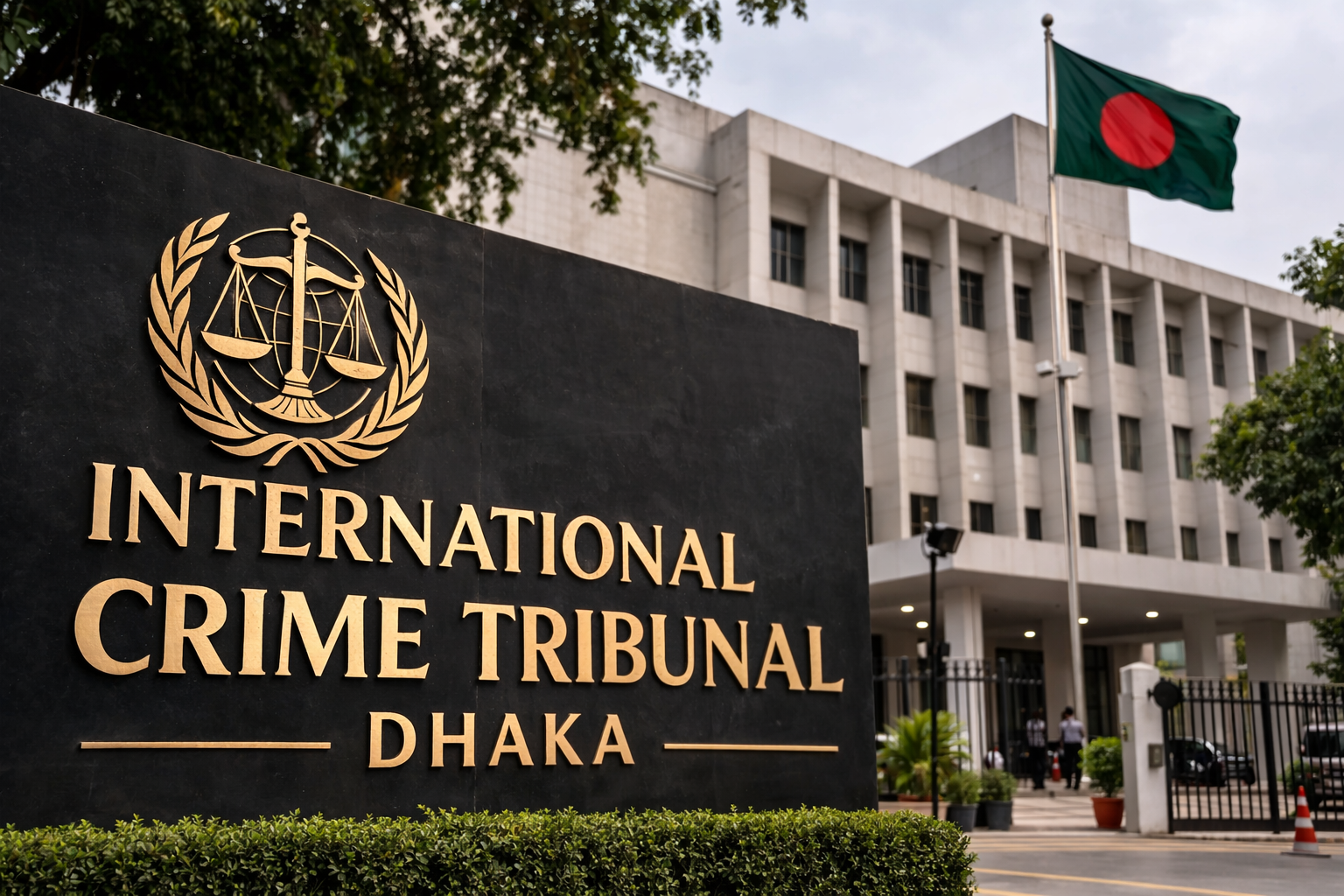
Few institutions in Bangladesh have carried as much symbolic weight as the International Crimes Tribunal (ICT). Established to prosecute atrocities committed during the country’s 1971 liberation war, the tribunal once represented a long-awaited attempt to deliver justice for one of South Asia’s darkest chapters. Today, however, the same institution is facing mounting allegations that threaten to undermine its credibility. Investigative reports, leaked communications, and internal disputes have raised disturbing questions about bribery, political manipulation, and institutional abuse within the tribunal—casting doubt on whether it still serves the cause of justice or has become a tool of political retribution.

Allegations of bribery and political targeting cloud Bangladesh’s International War Crimes Tribunal
Few institutions in Bangladesh have carried as much symbolic weight as the International Crimes Tribunal (ICT). Established to prosecute atrocities committed during the country’s 1971 liberation war, the tribunal once represented a long-awaited attempt to deliver justice for one of South Asia’s darkest chapters. Today, however, the same institution is facing mounting allegations that threaten to undermine its credibility. Investigative reports, leaked communications, and internal disputes have raised disturbing questions about bribery, political manipulation, and institutional abuse within the tribunal—casting doubt on whether it still serves the cause of justice or has become a tool of political retribution.
The tribunal was originally established in 2009 under the International Crimes (Tribunals) Act 1973 to prosecute individuals accused of committing genocide, crimes against humanity, and other grave offenses during the Bangladesh Liberation War of 1971. For decades, many Bangladeshis had demanded accountability for atrocities committed during the war, particularly by the Pakistan Army and its local collaborators such as Razakar militia, Al-Badr militia, and Al-Shams militia.
International actors initially welcomed the move. The United Nations offered technical assistance, while the European Union expressed support for the trials and encouraged Bangladesh to ensure that proceedings adhered to international standards of due process.
At its inception, the tribunal was widely viewed as a national effort to reconcile historical trauma with legal accountability.
The role and perception of the tribunal began to shift dramatically following the political upheaval that culminated in the removal of former prime minister Sheikh Hasina from power on August 5, 2024. After the political transition, the tribunal’s jurisdiction and operational priorities were altered through legislative amendments.
Under the interim administration led by Muhammad Yunus, the tribunal began hearing a growing number of cases against senior members of the former Awami League government as well as officials from Bangladesh’s civil administration, military, and law enforcement agencies. At the same time, pending trials related to genocide committed by the Pakistan Army and its collaborators were sent to cold storage.
It may be mentioned here that, Muhammad Yunus has been using ICT to punish Sheikh Hasina out of vengeance and personal vendetta for Hasina government’s “crime” of bringing charges of tax evasion and other serious allegations as well as not letting Yunus illegally hold the position of the managing director of Grameen Bank. In addition to other legal proceedings, Yunus also was sentenced to jail in Bangladesh for violating labor law.
Nevertheless, the controversy has already triggered an internal review within the tribunal’s chief prosecutor’s office to examine the bribery claims. For many observers, however, the damage to the tribunal’s credibility may already be significant.
Beyond allegations of corruption, legal experts have also raised concerns about the tribunal’s jurisdiction.
A Canadian jurist familiar with international criminal law—speaking anonymously—has argued that institutions like the tribunal must maintain a clear distinction between domestic criminal proceedings and international war crimes trials.
The International Criminal Court, based in The Hague, operates under international treaty law and deals with crimes of global concern such as genocide, crimes against humanity, and war crimes when national courts are unable or unwilling to prosecute.
The Bangladeshi tribunal, by contrast, is a domestic court created under national legislation. Confusing the two—whether intentionally or inadvertently—risks creating misunderstanding about the tribunal’s legal authority and procedural standards. The broader political environment surrounding the tribunal has become increasingly polarized.
Meanwhile, Yunus created a suffocating atmosphere in Bangladesh thus pushing the country towards the fate of a Caliphate thus threatening nation’s Bengali soul. Simultaneously, he weaponized the ICT and turned it into an instrument of targeting Sheikh Hasina by appointing Jamaat-e-Islami leaders into key positions in it. As a result, Hasina was handed death penalty in two cases, while she faces hundreds of murder charges—most of which were lodged by the activists of Bangladesh Nationalist Party (BNP) and Jamaat. The trials of Sheikh Hasina, some conducted in absentia, have drawn criticism from several international rights advocates who question whether due process standards have been fully upheld.
Yunus administration defended the proceedings as a necessary step toward accountability. These competing narratives have transformed the tribunal into one of the most contentious institutions in Bangladesh’s political landscape.
The International Crimes Tribunal was originally envisioned as a historic instrument of justice—a forum where the unresolved crimes of 1971 could finally be addressed through the rule of law. Yet the wave of allegations now surrounding the institution threatens to erode that legacy. Claims of bribery, internal corruption, and political manipulation—whether ultimately proven or disproven—have already damaged public confidence. For Bangladesh, a country whose history is deeply intertwined with the pursuit of justice for wartime atrocities, the credibility of such institutions is vital. Unless the allegations are investigated transparently and decisively, the tribunal risks transforming from a symbol of accountability into a source of enduring controversy.
The above writer Salah Uddin Shoaib Choudhury
is an award-winning journalist, writer, and editor of the newspaper Blitz. He specializes in counterterrorism and regional geopolitics. He also contributes for the Gatestone Institute, The FirstPost, The Organiser, Arutz Sheva, the Jerusalem Post, and The Seoul Times . Follow him on X: @Salah_Shoaib